Apple Podcasts
 Spotify
 YouTube
 Goodpods
 Amazon Music
 Overcast
 Castro
 PocketCasts
 Podchaser
 RadioPublic
 RSS Feed
 Nutrition, Microbiomes, and Colony Health with the Carl Hayden Lab Team (404)
Drs. Vanessa Corby-Harris, Kirk Anderson, and Mark Carroll of the USDA-ARS Carl Hayden Bee Research Center join Jeff and Becky for a wide-ranging discussion of honey bee health research. They explore nutrition, fat-body biomarkers, the honey bee microbiome, Varroa and amitraz resistance, agricultural stressors, brood rearing, β-ocimene, and the increasingly sophisticated tools researchers use to understand colony health.
What does honey bee health look like when researchers examine it from the inside out? In this episode, Jeff and Becky welcome three scientists from the USDA-ARS Carl Hayden Bee Research Center in Tucson, Arizona: Dr. Vanessa Corby-Harris, Dr. Kirk Anderson, and Dr. Mark Carroll. Their work spans insect physiology, nutrition, microbiomes, chemical ecology, Varroa, and the complicated ways multiple stressors influence colony health.
Vanessa explains why nutrition is one of the areas where beekeepers can directly influence colony health and how researchers use biomarkers—including the honey bee fat body—to connect individual bee physiology with brood production and colony performance.
Kirk describes research comparing colonies placed in diverse Conservation Reserve Program forage with colonies working canola and sunflower landscapes, then discusses a more recent case involving Varroa, amitraz resistance, viruses, nutrition, and agricultural exposure.
Mark explores another layer: how young workers interpret colony conditions and how pheromones such as β-ocimene may influence brood rearing during nutritional stress.
Together, the conversation shows why understanding colony health increasingly means looking beyond any single stressor—and why nutrition, physiology, microbes, pesticides, pathogens, and mites often need to be considered together.
Also in this episode, Jeff and Becky answer a Hive IQ listener question about preparing plastic foundation for bees.
Websites from the episode and others we recommend:
- Carl Hayden Honey Bee Research Lab: https://www.ars.usda.gov/pacific-west-area/tucson-az/carl-hayden-bee-research-center/
- Honey Bee Health Coalition: https://honeybeehealthcoalition.org
- Project Apis m. (PAm): https://www.projectapism.org
- The National Honey Board: https://honey.com
- Honey Bee Obscura Podcast: https://honeybeeobscura.com
Copyright © 2026 by Growing Planet Media, LLC

______________

Betterbee is the presenting sponsor of Beekeeping Today Podcast. Betterbee’s mission is to support every beekeeper with excellent customer service, continued education and quality equipment. From their colorful and informative catalog to their support of beekeeper educational activities, including this podcast series, Betterbee truly is Beekeepers Serving Beekeepers. See for yourself at www.betterbee.com

This episode is brought to you by Global Patties! Global offers a variety of standard and custom patties. Visit them today at http://globalpatties.com and let them know you appreciate them sponsoring this episode!
As a beekeeper, you want products that benefit you and your bees. When you choose Premier Bee Products, you choose hive components that are healthier for bees and more productive for you. Because we believe that in beekeeping, details make all the difference. Premier Bee Products: Better for bees. Better for beekeepers. Use promo code PODCAST for 10% off your next online order.

Thanks to Strong Microbials for their support of Beekeeping Today Podcast. Find out more about their line of probiotics in our Season 3, Episode 12 episode and from their website: https://www.strongmicrobials.com

HiveIQ is revolutionizing the way beekeepers manage their colonies with innovative, insulated hive systems designed for maximum colony health and efficiency. Their hives maintain stable temperatures year-round, reduce stress on the bees, and are built to last using durable, lightweight materials. Whether you’re managing two hives or two hundred, HiveIQ’s smart design helps your bees thrive while saving you time and effort. Learn more at HiveIQ.com.

We’d like to thank Vita Bee Health for supporting the podcast. Vita provides proven tools for controlling Varroa—from Apistan and Apiguard to the new VarroxSan extended-release oxalic acid strips—helping beekeepers keep stronger, healthier colonies.

Thanks for Northern Bee Books for their support. Northern Bee Books is the publisher of bee books available worldwide from their website or from Amazon and bookstores everywhere. They are also the publishers of The Beekeepers Quarterly and Natural Bee Husbandry.

Thanks to Bee Culture, the Magazine of American Beekeeping, for their support of Honey Bee Obscura. Available in print and digital at www.beeculture.com
_______________
We hope you enjoy this podcast and welcome your questions and comments in the show notes of this episode or: questions@beekeepingtodaypodcast.com
Thank you for listening!
Podcast music: Be Strong by Young Presidents; Epilogue by Musicalman; Faraday by BeGun; Walking in Paris by Studio Le Bus; A Fresh New Start by Pete Morse; Wedding Day by Boomer; Christmas Avenue by Immersive Music; Red Jack Blues by Daniel Hart; Bolero de la Fontero by Rimsky Music; Perfect Sky by Graceful Movement; I'm Not Running Away This Time by Max Brodie; Original guitar background instrumental by Jeff Ott.
Beekeeping Today Podcast is an audio production of Growing Planet Media, LLC
** As an Amazon Associate, we may earn a commission from qualifying purchases
Copyright © 2026 by Growing Planet Media, LLC

Nutrition, Microbiomes, and Colony Health with the Carl Hayden Lab Team (404)
Bob and Chris
Hey, this is Bob and this is Chris from Hive Noon. We're from Dayton, Ohio, and welcome to Beekeeping Today.
Jeff Ott
Welcome to Beekeeping Today Podcast presented by Betterbee, your source for beekeeping news, information, and entertainment. I'm Jeff.
Becky Masterman
And I'm Becky Masterman.
Global Patties
Today's episode is brought to you by the Bee Nutrition superheroes at Global Patties. Family operated and buzzing with passion, Global Patties crafts protein-packed patties that'll turn your hives into powerhouse production. Picture this.
Strong colonies, booming brood, and honey flowing like a sweet river. It's super protein for your bees and they love it. Check out their buffet of patties, tailor-made, for your bees in your specific area.
Head over to www.globalpatties.com and give your bees the nutrition they deserve.
Jeff Ott
Hey, a quick shout out to Betterbee and all of our sponsors whose support allows us to bring you this podcast each week without resorting to a fee-based subscription. We don't want that and we know you don't either. Be sure to check out all of our content on the website.
There you can read up on all of our guests, read our blog on the various aspects and observations about beekeeping, search for, download, and listen to over 300 past episodes, read episode transcripts, leave comments and feedback on each episode, and check on podcast specials from our sponsors. You can find it all at www.beekeepingtoday.com
Thank you, Bob and Chris, for that great opening from the North American Honey Bee Expo. You know, Becky, I used to live near Dayton, Ohio.
I used to live in Huber Heights.
Becky Masterman
Huber Heights, Ohio. That's a great name for a town.
Jeff Ott
It was a great place to grow up. You know, it's not too far from the Wright-Patterson Air Force Base and I remember no, I'm dating myself here, but you know, that was before they restricted sonic booms. And the jet fighters from uh Wright-Patterson would fly over in the sonic booms all the time was uh I guess that's why I like thunderstorms so much. That's great. Well thank you, Mark Rifris.
Becky Masterman
No, I want to know when they restricted sonic booms. I
Jeff Ott
you know, that's a good question. Maybe we should look it up. You know, if you find that out, I'll give you a hive tool.
Becky Masterman
Oh, that's exciting. Wait, do I get the hive tools?
Jeff Ott
Okay, this is fair. This is great.
Becky Masterman
Okay, let's move on to beekeeping.
Jeff Ott
Beekeeping. Thank you, Bob and Chris. Appreciate it. Becky, it's I can't believe it's September. This year is just flying by.
Becky Masterman
Yes, except there's there's plenty to do, right?
Jeff Ott
Oh my god.
Becky Masterman
We just have less time to do it.
Jeff Ott
That is the truth. That is the truth.
Becky Masterman
I still need to paint some equipment, so do you think I'm behind this year?
Jeff Ott
Well, at least it's assembled.
Becky Masterman
It's assembled. Yes, yes. But I do have some unpainted equipment out there that I need to um exchange with painted equipment so I can not feel super guilty exposing them to a Minnesota winter.
Jeff Ott
The fall is the time when I have the greatest angst over my bees because all of the things I put off All of the things I neglected. All of the things I know I should have done but didn't do because I chose to do something else show up because you know the row is too big or the colony is weak Or and I'm saying every anytime, you know, bees die naturally, but every time there's a weak colony I said, I should have done something better. Fall is hard that way.
Becky Masterman
It seems like you're about to write a poem called The Guilty Beekeeper. A woeful poem.
Jeff Ott
What a great book that would be.
Becky Masterman
It would be a
Jeff Ott
book of poems. sad, morose poems.
Becky Masterman
Nobody's buying that book. Yeah, no, it's it's always that's the uh the tricky part of the year for a lot of beekeepers is that they're running out of time. as far as the nights are starting to get cooler, if they need to get feed on the bees, they only have a certain amount of time when you're looking at Varroa control, although I think it's always appropriate if you've got a problem the efficacy is going to change based upon how long the bees have to really raise those winter bees without mite pressure. So it is it's a it's a tough, tough time of year. And so hopefully All of our listeners are ahead of the game instead of behind s in getting their bees ready for winter, regardless of the kind of winter they get to g go through.
Jeff Ott
Do as we say and as our guests say, don't do as we do.
Becky Masterman
Well I'm good with Varroa control and feeding. I'm on that. I just have unpainted equipment, Jeff.
That's all I'm worried about right now. That's on me, and I have to pay more for it if it if it I guess if I if it goes through too much wear and tear. So yeah.
The bees are fine.
Jeff Ott
The late Kim Flottum used to have all sorts of equipment unpainted and that's just the way it was. So there you go.
Becky Masterman
Then I'm in good company
Jeff Ott
if I
Becky Masterman
if I don't get paint on it. Although I I have the paint purchased. It's a beautiful lilac color, so very excited about that.
Jeff Ott
You'll be ready for the spring We have for our Hive IQ tool today, we have a question from Burton Scripture. Now, the Hive IQ question is a giveaway we have for our sponsor, Hive IQ. They've given us a quantity of hive tools, bright and shiny, with uh hive IQ on it and beekeeping today.
And for those listeners who send us a question and we are able to answer it online, We will send that listener a brand new hive tool. So we have one for Bri Burton. Did I say Brian before?
Becky Masterman
You know you said Burton. Are we allowed to say that this is a name I recognize?
Jeff Ott
Well you know so many people and you've met so many in your
Becky Masterman
in your meetings.
Jeff Ott
Yeah. Just a few.
Becky Masterman
I recognize this name What is Bert looking for as far as a question and an answer?
Jeff Ott
He wrote us um a nice short question. It says, what is the proper or best way to prepare plastic frames and foundation before placing in the hive for the bees to use.
Becky Masterman
So I wonder if Bert's thinking about next spring already. Do you think he's like all set for twenty twenty six and he's looking forward to twenty twenty seven?
Jeff Ott
Right now. That's true.
Becky Masterman
That would be a disaster. Don't do that, Bert. That's a good question. So Jeff, what do you what do you advise as as far as doing any prep work for plastic frames and foundation?
Jeff Ott
If it's brand new, it should be waxed and I don't do anything extra and I use it. I do not use plastic frames, so I don't have any direct experience with that, but I do use a good amount of plastic foundation That said, I know some people like to reuse their plastic foundation because they don't want to throw it out and put it in a landfill or whatever, and they scrub it clean, pressure wash it, and then what do you do with it? How do you prep it? And for that, the best approach is to apply a fresh coat of real beeswax using a roller or a uh brush. And then the more wax on there the greater and the quicker the bees accept it.
Becky Masterman
So are you saying hot wax then with the brush?
Jeff Ott
Yes, hot wax. You melt the wax Carefully, double boiler. Like double boilers?
Double boiler. You don't have any no fires. No flare-ups, please.
And then you brush it on or roller it on. Onto the frame, onto the foundation.
Becky Masterman
So this smells good. This smells good.
Jeff Ott
It's a fun job that
Becky Masterman
smelling activity. You can tell I've actually I really have never put any extra wax on foundation. And I've also never pressure washed a frame or a foundation in order to put it back in the colony. So so I'm glad you understand. If I could admit
Jeff Ott
something is that I don't reuse foundation. I punch it out and I throw it away. I feel guilty, but that's just time consuming for me to pressure wash it and reuse it and melt wax and put it back on. And it's also, yeah, it's just time consuming. I just don't have the time to do that.
Becky Masterman
Yeah, and it's hard, even I mean, even I bet some people are scraping that wax off and rendering it and I just worry about pesticides when you get to that level. If you're going to replace the foundation and it's been drawn out and used for the last five, six years, then I'm just worried what's in that wax. So let's not judge.
Let's not judge each other. How's that? So that we don't get judged.
Jeff Ott
I don't want to be judged. I will say though, talking about applying wax to a foun a plastic foundation this last summer when we spoke at the North uh North Dakota Beekeepers meeting or the tri-states meeting and I stopped in at Premier Bee Products And that's a short that we've produced. To see how they pre-wax thousands of sheets of foundation every day.
was amazing. The machine that spits them through and it sprays them, it cools them. It just it's an amazing process.
It's it's not a bunch of people with paintbrushes and rollers of hot wax.
Becky Masterman
And I know that I know that a lot of places when you're ordering that wax foundation, you can order double wax or triple wax even, right? So
Jeff Ott
And typically they say that the more wax on the foundation the quicker the bees accept it. So that's something to keep in mind.
Becky Masterman
I just make my bees work harder and just give 'em one layer or so.
Jeff Ott
Well you also live in an area where you have great nectar flows.
Becky Masterman
Yeah, yeah, they usually don't have a problem. Yeah, that's really great.
Jeff Ott
Hey, today's guest, this last summer I went to the COLOSS meeting in Pullman, Washington, and I met Dr. Vanessa Corby-Harris and her team, Mark Carroll and Kirk Anderson. They were there representing the USDA-ARS Carl Hayden Bee Research Center. Fantastic people. They agreed to be on the show and talk to us about what they're doing in the lab. I'm really looking forward to talking to 'em.
Becky Masterman
I love a USDA bee researcher, so this should be a lot of fun.
Jeff Ott
Well we'll hear from them as soon as we get back from this short word from our sponsors.
Betterbee
For more than 45 years, BetterBee has proudly supported beekeepers by offering high-quality, innovative products, providing outstanding customer service. Many of our staff are beekeepers themselves. And sharing education to help beekeepers succeed.
Based in Greenwich, New York, Betterbee serves beekeepers all across the United States. Whether you're just getting started or seasoned pro, Betterbee has the products and experience to help you and your bees succeed. Visit betterbee.com or call 1-800-632-337 -0. 9. Betterbee, your partners in Betterbeekeeping.
Jeff Ott
Hey everybody, welcome back. Sitting around this great big virtual beekeeping today podcast table. We have Dr. Vanessa Corby-Harris.
Dr. Kirk Anderson and Dr. Mark Carroll, all from the Carl Hayden Bee Research Center in Tucson, Arizona. Send some of the warmth this way. I'm glad you're here.
Thank you.
Becky Masterman
Welcome. This is so exciting to have the three of you here. It's going to be a great hour.
Jeff Ott
Please introduce yourself and uh tell us a little bit about yourself and how you got interested in bees. And then then we'll pass the virtual mic around to everybody else.
Dr. Vanessa Corby-Harris
Okay, yeah, so Vanessa Corby-Harris, I'm a research insect physiologist is my, I guess formal title at the USDA-ARS lab here in Tucson. So yeah, I guess as my title sort of suggests, I have a background in insect physiology. So I got my PhD at the University of Georgia and that was in genetics and then I came to Arizona to do a postdoc fellowship working on mosquitoes actually.
So we were working on mosquitoes and trying to make them less friendly to malaria using different genetic approaches. So that's where I got a lot of my true hardcore physiology training. And so that was uh a postdoc that was ending, gosh, I can't even remember how long ago.
I guess 20, that was 2010. So I was sort of In the insect world, and Kirk and I, we were postdocs together at this in this fellowship program at the University of Arizona. And I was sort of looking for my next step and Kirk said, hey, come come work with us on bees.
And so that's that was actually how I got started in bees. I was actually a postdoc with Kirk for gosh, was it three or four or five years? I don't know.
It was a long time. That's how I got my start with bees. And it turned out that a lot of the skills that I had learned with regards to insect physiology and insect nutrition was very applicable to a lot of the questions that they were studying here.
And so that was my entree into bees and So yeah, I started that in, I guess that was actually 2011 that I started at the bee lab. Since 2015, I've been a scientist here with my own lab.
Dr. Kirk Anderson
Yeah, I've been here for a while too, got my PhD at Arizona State, then came to the U of A as Vanessa mentioned, and I was working on ants, so I'm really uh a social insect ecologist. I've done a lot of landscape work on both ants and uh and honey bees, long enough to know how horrifying landscape work can be, right? Oh let's go out in the world and do these things and then see what happens, right?
But uh it's very difficult at at any rate. So Uh ironically, the ecology I work on is invisible. So I work on the honey bee microbiome and largely studying health and disease here So really it's just uh, you know, bacteria shared among niches and developmental states and queens and larvae and workers and how that influences their survival and their disease susceptibility.
So I've studied, you know, the queen microbiome in extensively. This work only studies really started, Vanessa was in on the beginning of this work. and did just meticulous work.
This is when I got to learn what a meticulous researcher of Vanessa is and really strives for perfection and just fantastic work. But the uh yeah, we moved into a number of different areas, plant compounds that affect, you know, host microbial health. Um Vanessa, we looked at short chain fatty acids and Vanessa 's become like the uh main component of fatty acid research uh tell you a lot more and all sorts of different fats I'm not sure how to say it correctly.
I guess you can tell us later. Yeah, we've worked out a lot of different things from diet to disease and now I 'm with Mark we're I'm working on the Varroa mite because it seems to be a problem in beekeeping. I don't know if you've heard about it But everyone's afraid of Tropilaelaps now coming in, which it probably will, given the tight ship that's being run country to country.
But yeah, I think that kind of is good for an introduction. Mark?
Dr. Mark Carroll
If I can go ahead, um yeah, I'm Mark Carroll. I'm a research entomologist here. at uh Carl Hayden Bee Research Center.
Originally I came out of Mae Berenbaum's lab, uh, University of Illinois for my PhD and uh made my way to CMAVE, which is a U a USDA facility out in Gainesville, Florida, and they had some exciting adventures. Um we looked at plant uh plant compounds Now compounds that induce plant defenses, things found in caterpillar spit and so forth that turn on the full The full range. And uh when I was there we did find inceptins, which is one of the main ways that beans of all kinds detect or under attack and respond to things I did, however, this was at the height uh around 2008 of all the problems that we were having with bees in the great expansion.
And like so many other people, I was given an opportunity to jump into bees. Peter Teel memorably said to me, he goes, Mark, do you want to go out there and learn you know work on bees and grow it? And I said, Um it's it's a fascinating uh field and he goes go out and get stung and do something, you know.
And that was that was pretty much uh my introduction. I was just down the road from Jamie Ellis, so I had some great help with collaboration with them and Jerry Hayes and some of the other folks to get me going. And then I came over here to Carl Hayden, mainly to work on nutritional ecology, looking at nutritional effects, uh seasonal effects, effects the diet.
with a little bit of a chemical ecology spin and chemistry. And it's been many things since then, but I've kind of gotten back to my roots uh lately. We're still doing chemical ecology looking at things like seasonal effects, uh overwintering.
These are big problems. I don't think I have to sell that hop that one too hard. But some of the other big questions that I'm interested in are how colonies manage to coordinate together to work against stress, and by stress I mean pesticides, pathogens, mites poor nutrition, the whole nine yards, the big peas that they talk about.
And also how how things uh can come apart and fail. And is there anything that we can do in particular to nudge them in a direction, give them support I'll come back to that, I think, a little later with this uh β-ocimene, which is kind of on the frontier of looking at how we might be able to improve uh brood rearing at times when the colony is actually under nutritional stress during dearth. It's kind of a fascinating topic and it's the work of many other people working with me as well.
Becky Masterman
Well, we're gonna need three more hours. So everybody clear your schedules.
Jeff Ott
This is gonna be a multi-part segment. Or multi-part episode. Oh well this is fantastic and this I'm not even sure where to start.
Me too. Yeah, it's it's I mean I'm I'm looking uh actually I see Kirk's table in the background is all these rocks and it just made me think of all there's so many things to choose from. Where do you start?
Dr. Kirk Anderson
Well I have guitars. I have guitars at home, but I can't bring 'em to work. Uh
Jeff Ott
the pleasure of working from home.
Becky Masterman
You just haven't set up the right experiment, Kirk. If you actually set up the right experiment, you'd have guitars at work.
Dr. Kirk Anderson
That is correct. Well they have an acoustic room in the basement. It's completely soundproof. W nobody really knows why it's there. We have our suspicions. But they
Jeff Ott
can't hear you scream in space, is that what you're saying? Yeah. Okay, on another topic. What's the big project, what are you most excited about that you're working on right now?
Dr. Vanessa Corby-Harris
I mean, I guess the problem is you could kind of get from our description of what we do is we're excited about everything, unfortunately. So So really it's a it's a ex it's an exercise in restraint in many ways because we have to focus on the things that we think are most important. So my my love is insect nutrition and insect physiology.
So I'll start out with that. So I think that nutrition is one of the few things that I guess we can do something about. So bee nutrition.
The topics that I look at are number one, what do bees need? What nutrients do they need? Number two, how do those needs change depending on different factors like where they're located, the time of year, different stressors that they're coming into contact with?
It could be anything from pesticide to mites, disease, things like that. And the third one is once you have an idea of what they need and how those needs change due to those certain factors. How do you give those those things that are missing back to the bees?
And so the two main ways that you can do that is number one by giving them access to uh you know, a diverse type of forage where they can get many different types of nectars and polls. That's always the best thing, right? Because it's natural.
And bees are really good at collecting that stuff from plants. And then the second way though, because a lot of times stuff is not available on the landscape either due to Things like bad weather or the way that agriculture is nowadays, where we have monocropping systems, that would be we we can give it back to them using diets. So supplements.
The reason why I think that is so important is just basically the reality of the system now that we're working with. So There's a lot of stuff that we have no control over. Obviously, we don't have any control over weather.
I don't think that I personally am going to be changing the way that modern agriculture is nowadays. And so, you know, we're left with those things that we can control and things like, you know, can we provide them different types of diets that are improved? compared to what we have now.
I don't want to develop an entirely new diet. I think there's a lot of stuff on the market that is a good starting place But essentially can we add little components to that might kind of give them a nudge in a positive direction?
Becky Masterman
The way that you evaluate whether bees are well fed is going to be different than uh how a beekeeper would do it. So how do how did you connect your research to the beekeepers? Because I think it's hard for especially for newer beekeepers to say, oh, this colony. has a has a nutrition deficit. Could you expand on that a little bit?
Dr. Vanessa Corby-Harris
Yeah, yeah. Thanks for giving me that opportunity. So essentially it's really hard to tell just based on the adults.
what you know the adults they kind of all look the same so so it's not the adults you have to open up the hive to essentially see you know what's going on So it's gonna be things like the boot area is smaller than it should be at that particular time of year. I think that you know We have to learn from each other in terms of what would be typical for a colony at that particular location at that time of year. So, you know, that's going to be different.
depending on location, but things like do they have brood, do they have all the stages of open and sealed brood, those sorts of things? Do they have stores at times of year where they should have stores Especially going into winter, you want to have plenty of pollen and nectar in the hive so that they're set up for success going in. And I mean I guess the one thing you can tell from the adults is just look at the hive entrance.
Are they bringing anything in when they should be bringing things in? Those are important. Now We do measure those things in our in our studies.
However, a lot of my earlier work, especially you know, when we bring up topics like physiology. That's kind of a really weird term for folks that are not familiar with it. And I just use it very casually, but but the reason why is because Every bee has their own way of dealing with what's coming into their bodies and how they're going to give that back to their hives.
And essentially how they manage that input and output ratio, that's going to end up manifesting in things like brood Okay, it's gonna end up manifesting in the amount of nutrient storage that there have. So for example, the nurse fees The young nest bees, they're the ones that eat you know most of the pollen coming into the colony Now, if the queen is laying a bunch of eggs and they're rearing a bunch of brood, it might be normal to not see that much pollen stored but you're going to see a lot of brood, okay? And it's going to be of all different life stages because those nurse bees turn that pollen, they metabolize it.
And they make it into brood food. Now, as foragers, they get older, they're, you know, they start out as nurse bees and then they work their way up in age and they turn into foragers. Bees that are malnourished in their younger lives, they're obviously not going to be doing so well later on in their lives.
So that might turn out to be things like you're not they're not foraging for the same amount of resources as you would expect. So they're not collecting the stuff that they might that they should at that time of year And all of this basically comes back to the how the individual managed that the nutrients coming in and the nutrients going out. And that individual has to, I mean, when we say manage those things, that individual has to make a lot of choices in the hive You know, are they feeding brood?
Are they supporting the queen? Things like that. So, but to answer your question briefly That input to output ratio and how those bees individually deal with those nutrients Whether or not that is successful is going to come out in things like brood and food stores.
And that's what the beekeeper can see
Becky Masterman
You're using a series of like biomarkers, aren't you, to make measurements. Could you briefly share that information?
Dr. Vanessa Corby-Harris
Yeah, absolutely. So one of the biomarkers that we use a lot these days is fat body content. That's another term that we use that maybe not everybody knows about, but uh the fat body is essentially it does a lot of stuff in insects.
It stores nutrients, so it stores protein that the individual consumes, it stores lipids or fats that the individual consumes. It's also a really key tissue for how that uh the physiology, sorry to use that term again, the physiology of the bee. So it produces things like antimicrobial peptides that might help the bee to fight infection, things like that.
So when we're looking at the fat body, we take that individual bee, and we unfortunately have to collect them from the colony and we dissect them and we can measure the amount of say lipids and proteins in those bees. That is a good measure of, that's a good biomarker for how healthy the bees are. And the reason why that is, based on the individual but also the colony, is because it turns out that it's those proteins that are stored.
That are recycled back to make things like brood food. It's those lipids that the bee needs to have energy to do all the things it needs to do in the colony. So that's one of those biomarkers that does a really good job of linking these kind of abstract topics in insect physiology to how a colony might look.
Jeff Ott
Well, that's really good. The fat body has received a lot of press in the last eight or ten years, I would suppose. Maybe I don't know the exact number, but it's I know when I started in beekeeping, you talk about fat bodies, you're talking about beekeeper Bob. But now, fat bodies in beekeeping mean something completely different, and that's really fascinating to hear how it's being used as a biomarker.
So let's take a quick break. We're right at the time and we'll hear from our sponsors. We'll come back and we'll hear from Kirk.
Premier Bee Products
Beekeeping is demanding work. The last thing you need is equipment that can't keep up. That's why Premier Bee Products builds every frame and hive body in our South Dakota factories with one goal in mind: reliability when it matters most.
From our Bee Pro frames to our Natural Pro hive bodies with rough interiors, we design for long life in the field and in the colony. Because we believe that in beekeeping, details make all the difference. Premier Bee Products better for bees, better for beekeepers.
Visit online at PremierBeeProducts.com or call us today.
Use promo code podcast for ten percent off your next online order.
StrongMicrobials
Beekeepers, if you're looking for a smarter way to support colony health, take a look at Bee Bites from Strong Microbials. Bee Bites are a new protein patty made with spirulina, chlorella, and targeted probiotics.
Designed to support new. nutrition without creating new problems in the hive. With 15% protein, Bee Bites are unique because they do not attract small hive beetles, a big deal if you've ever battled infestations during feeding.
Strong Microbials has been supporting beekeepers And farmers since 2012, developing high-quality commercial probiotics and nutritional supplements you can trust. Learn more about Bee Bites and their full line of bee nutrition at strongmicrobials.com.
Becky Masterman
Welcome back, everybody. Kirk, we're gonna we're gonna throw that same question, not about biomarkers as much, but but as far as what research are you doing right now that's exciting and you're really looking forward to seeing how it can change beekeeping.
Dr. Kirk Anderson
This is really oh well I'm gonna I'm gonna return to the marker-based uh physiology of Oh
Becky Masterman
fantastic. But
Dr. Kirk Anderson
Vanessa was talking about uh
Becky Masterman
That's great.
Dr. Kirk Anderson
So I'm reminded of a study we did in two thousand fourteen and fifteen and uh Vanessa was involved in this as well. So we went up And I've been reviewing this information because of what Mark and I are doing right now, where we went and collected a bunch of landscape level, you know, longitudinal data. that included Varroa and Virus and all this other scobbledygook.
But this particular example I complained about landscape ecology. But this particular example had a really stark result where we put some we put a whole bunch of colonies and canola and sunflowers. Which are wonderful plants, don't get me wrong.
And then a whole bunch of colonies, uh other colonies went into just what's called the CRP land, which has these, you know, nice flowers and wonderful nutrition for honey bees. And then we did uh we did collect a bunch of marker response over the course of four months or not four months, over the course of a year at four separate times uh during that year. So it was a longitudinal study as well.
So And we've looked at it through overwintering, so that very important time when when bees die off. So uh bees are constantly challenged by Pathogens and viruses uh all the time. And so there's just viruses that are consistently in their colony, and if you don't get good nutrition, you're simply gonna succumb to these things.
The same is true of I think most all organisms. If you don't get good nutrition, you're gonna succumb to things. And then the extent to which you're exposed to not only the pathogens that are in your hive But then the stuff that they spray on plants, for instance, maybe canola and sunflowers, are gonna make that much more difficult to respond from because some of the same systems in your body that respond uh to those poisons are the ones that respond to the pathogens as well s and which is something I'm learning and reading a lot about right now.
There's some of these same systems within the bee are shut down by virus, and those are the systems that would respond to the poisoning uh of the pesticides. Right. Although I know no by no means an expert on that kind of thing.
But yeah, we looked at these these two groups of bees that went into canola and sunflowers and bees that went into CRP land. with the really wonderful flowers and it was like night and day. The colonies that came out of the CRP land were just beautiful, just flowing over with bees.
You looked at them and you gasped You know, like the angels had come down and then you look at the other colonies and they were really bad. And none of 'em. So they come they come out of the situation overwintering, and then they go into almonds generally.
So really none of the bees that were in the canola and sunflower graded well for almonds, and all of those that were in the CRP land uh graded well for almonds. So The nutritional state, as Vanessa was talking about, was overwhelmingly good in those bees that had access to that good forage. The oxidative stress response.
And this is relative to the canola and sunflowers, of course, Rick, was overwhelmingly significantly better than the bees that were in sunflowers and canola And so was the immune response. The immune response. So they all kind of followed the nutrition, right?
Underlying the importance uh of nutrition on the landscape. Yeah, and it was very stark. It's really the most overwhelming result I've ever seen.
Of course I work on the microbiota where we get all sorts of funny looking results and often we're not really sure what they mean at all. But this one This one was quite evident. All right.
So anyway, lately I've been working with Mark on a uh kind of a Varroa virus watermelon question w where we followed these bees that went into watermelons. Mark went and collected all these and We were doing an entirely different experiment, but then it kind of became apparent that we should try to investigate this group of information. about what was happening because we have big collapses the past couple of years and this particular population collapsed as well.
So we decided, well We're gonna try to look at it with these markers to see what happened and we found that uh, I'm just putting this together, but we found that it collapsed. I don't know if you guys have heard about amitraz resistance probably So it turned out all the Varroa was really high going into overwintering, and all of those Varroa were resistant to amitraz And the beekeeper used amitraz towels, so they didn't have any effect. And these bees were also in watermelons where they where they sprayed neonicotinoids and uh apparently two different kinds of fungicides, but we don't really know which ones they were using because we didn't run a chemical analysis.
But all of the markers I just talked about were incredibly low in these bees going into overwinter, right. So they'd been uh what I would say exposed to the agricultural nightmare. at the very least, right?
And when that happens, then you lack this ability to fight off the viruses. So the virus loads went high. The Varroa helped spread all the viruses, the deformed wing virus, and then they also have the exacerbation of whatever pesticides they're using in watermelon, which although watermelon is considered one of the not the dirty dozen, I guess, but uh one of the cleanest, they say.
I'm not really sure uh what that means. So they do this uh What do they call it? Markimagation, where they pump the chemicals in the water to irrigate it, right?
With the and so the bees will collect that water too when it's hot out and so that it's just a direct A direct way of uh poisoning the bees.
Jeff Ott
Would you call that chemigation?
Dr. Kirk Anderson
Yeah, I think that's what it's
Jeff Ott
Yeah, that's the
Dr. Mark Carroll
technical term for it.
Jeff Ott
I never heard of that term before.
Dr. Kirk Anderson
Like irrigation chemigation Sorry I didn't talk about microbes, but I'm finishing a giant thing on microbes and people just get lost when I talk about microbes anyway. So I thought I'd talk about some of the stuff that's that's more in line with the rest of what's happening, I think, in the big bee world. The bees are the beekeepers are not concerned about the microbes.
They think they might want to get some probiotics that are gonna work. But we did a paper on that and we found that the probiotics really aren't doing anything. At least the ones that are popular on the market.
Yeah, they can't even be found. That's a whole nother podcast.
Becky Masterman
The microbiome work I think for that needs to be a video cast so that you can show the pretty pictures of your data because those data are they beautiful and um maybe artwork at the same time.
Dr. Kirk Anderson
Yeah, they're shocking, that's for sure So g sorry Mark I took too long.
Dr. Mark Carroll
I was just gonna say it's amazing because I feel like uh you know beekeepers are dealing with uh The horses of the apocalypse at all times. You know, it's it's land, sea and air, depending on uh what's what's getting at them. That was a Queen's study that we picked up right in the middle when everything kinda came apart for this.
And he was doing many things right. It just happens sometimes, uh, under the wrong conditions. I gotta admit the thing that gets me up in the morning and probably the thing that links a fair amount of the things I'm looking at is trying to figure out we have all these things.
We you know I'm an ecologist. Um I would say Kirk, you know Vanessa to a certain extent are ecologists too. That means we're kind of economists of life.
And we're looking at inputs, outputs, we're looking at what it actually produces and under what conditions and so forth like that, stressors, those horses of the apocalypse that are uh coming down on it. I thought one of the things that kind of uh woke me up about this was long before you kill bees You're gonna mess up how they operate for critical things. And when I say critical, it's not feels or stuff like that.
It's things like brood rearing and taking care of your queen Making sure that there's a good balance as far as nutrition. You see that go out of the window with no SEMA when things are out of whack there. And the thing that's amazing about this is that this is being done by young adult bees.
All these decisions that are being made for the colony are these young adult bees, they don't have much experience in their lives. And yet they're going to have to interpret whatever is coming in and hopefully make some good choices. And those choices, you know, a lot of the things we look at, you know, when their times are good, we go, those are what we want Some of the things are when things are bad, you know, not rearing brood, eating cannibalizing brood, maybe getting rid of your queen, those may be good at certain times, the beekeepers may not like those.
And the one appreciation above all is that this is a long game. You know, we're we're talking I started out with nutrition here and I was thinking, okay, let's look at nutrition um about a month or two before they go into almonds And then that got pushed back to let's look at nutrition in the early fall before they close up. We're having indications from coloss of all things that we gotta maybe even think further back as far as impacts on things.
And that's what makes it so complex. But I will say that uh a lot of what I do is uh and that's why I look at pheromones. Because what we're really trying to do is pheromones are a big part of how those bees, those young bees, uh interpret what's going on and hopefully make the right decisions for their colony.
whether or not to rear brood, whether or not to rear new queen or get rid of their queen in that case. And of course these feed into major issues of what we want to do. It's okay if they do those things when they're kind of doing them in the right way, aligned with beekeepers.
But I mean, for example, with brew bring, how many times have people had something in a holding yard or right before the season and they're feeding pollen patty there. And those bees are getting fat, but they're not doing squat as far as brood bearing. They're just kind of holding back on it.
Or you get a queen that's perfectly good just knocked off and you're wondering why did why'd they go why'd they knock her off? So that's why I look at the these pheromones and probably the best way to think of it, particularly with the brood pheromones, is They had some French researchers, Mason Ace, uh, Cedric Aloo, some of those folks, came out with the bright and brilliant idea that Everything ha everything in the colonies far as workers and larva and stuff have a little say in how in nudging these workers as they go from in their lives from being nest bees to foragers. how fast that goes, how much effort they're going to put in, they're kind of getting influenced by these pheromones.
And β-ocimene is one of those pheromones. It's made by a lot of β-ocimene is made in large amounts by eggs in very young larva. And it also doubles up as a β-ocimene also doubles up it's a um Essentially, it's a starvation signal and a feeding signal to workers.
It's like a baby bird chirping, trying to get attention and trying to be fed. We have researchers that showed that uh older larvae put out a lot of that and they get fed more if if they if they're putting that out. So There's a lot of ideas there.
I'm still interested in improving the bottom line of what we're doing here, but possibly on the margin. I think the latest thing that we have With that is looking at β-ocimene and looking at the fact that something that we picked up with and we were kind of shocked. It's not something that we can see or smell very easily.
But, you know, you if you happen to have a GC-MS or some other instruments just lying around which Tell everybody what that is.
Becky Masterman
Mark, you have to tell everybody, not everybody here. Yeah.
Dr. Mark Carroll
Just just pull it out of the garage and use it. You know, um with with that Well we noticed that we kept on getting things where
Becky Masterman
wait I'm not kidding Mark.
Dr. Mark Carroll
Oh no, no, I know. gas chromatography-mass spectrometry. So yeah, I'll explain whether that's just a thing that measures uh odoriferous compounds. You put it through it separates them out, you get peaks, and you can say, Ah the peaks are that big and I'm getting that much of it. It's another one of those instruments We talk about like everybody has one.
Becky Masterman
Now I think you have one in your garage.
Dr. Mark Carroll
That's a fair one there. It might have. Yeah, you got a cool 150,000.
It's it's right there. Um but we were we were surprised and shocked. You get these just so stories that occur in bees.
And a lot of these things with pheromones and with other stories like queen pheromones and stuff, those were made when times are good. You know, they looked at they measured queen pheromones, Winston and those folks. They figured that out when things were going well and when they were gone.
Same with uh β-ocimene. It's given off a lot by these eggs and young young brood when things are healthy and when there's lots of food And we were looking at things and we noticed in the mill summer dearth when we have no forage whatsoever, they weren't giving off β-ocimene at all So we're thinking, okay, it's uh it's a bit of a starvation signal, a little bit of a baby bird chirping uh signal for older larvae. What does it do for younger larvae?
And you gotta realize that younger larva, we're looking at the pivot point with brood productivity there. Because younger larvae..
When bees need to restrict the population, what they do is eat eggs and young larva. They don't eat older larva, they eat eggs and young larvae. That's a pretty definitive you're not going to get brood care kind of uh story there if you're gonna be eating.
Uh so I you know, our very simple thing that we looked and we're just looking at if you supplement it in, do you get more brood rearing at these times when you have bees, you've been feeding them lots of pollen patty, they're holding back because there's no nectar coming in. And sure enough, they in this in these cases it does. They do rear more brood through that page.
You could certainly come up with situations in your mind where maybe sometime of year when you're in a forage-free area where you're feeding the daylights out of your bees with supplemental feed, you wanna you wanna push them through it. But you know, we got a long way to go to look at that. It's going to depend on nutrition again, and we know that's gonna vary place to place.
Becky Masterman
Is it connected to the amount of brood food that you're going to actually visualize in a cell?
Dr. Mark Carroll
There's some of it in there, but it's mainly going to be you're mainly going to find it with egg laying queens, uh eggs themselves, and then the very young larva that you have there. Uh the older larvae give off smaller amounts, but they'll give it off in burst when they're they're being ignored. You if you ever see 'em when they some of the older larvae corkscrew out and fall out of the They um need to be fed a few hundred times during the fifth instar.
Becky Masterman
But if you have a lot of the β-ocimene, will you have a lot of brood food? Like if you're re you're seeing high levels, does do you see high levels of brood food?
Dr. Mark Carroll
That's an excellent question. That's kind of the thing that we catch on, is that they provision more brood food. You think of your young larvae, they're just basically they're not fed little piecemeals like a baby bird.
What happens is the larva the workers come in there. And you just kind of take some of those hypopharyngeal glands, those lar the brood food that Vanessa was talking about, that she measures, and they spit that up into the cell. And you there's your little larva sitting on this puddle of food It's really one of the more bizarre things about bees.
And that's what they're gonna that's what they're gonna get. If they don't you know, if they don't have good glands, they're not gonna make much food, they can't rear much larvae It's not gonna be good. If they don't get that, then they're gonna starve in a few hours.
And that will be that. And it'll be can they'll be recycled, I guess, back into the Food is short and yeah, it's it's gotta be kept within the colony.
Becky Masterman
And it seems like different genetics might have a different threshold for cannibalizing the young. Like like I think about Carniolans and they're not afraid to cannibalize eggs if the season changes.
Dr. Mark Carroll
I think unmistakably um you have you think about the Italian strains that we've selected for. We select for productivity, brood productivity like out of the gate And then we have other ones like you know Russians and Caucasians that hold back a little bit. This is a lot of the big differences between different subspecies and uh queen stocks that we have out there There's undoubtedly different thresholds for what they're willing to put up with and how those workers interpret the forage and nutritional environment.
Yeah, we do have uh I should say that just because they're making less brood doesn't mean they're they're poor. I would have to tip my hat to uh William Meikle, who is here and just recently retired And he did some work where he was looking at Russians and Italians and the Russians make less brood, but the but the workers they produce are longer lived by quite a l quite a bit. So it's a quality versus quantity thing in that case.
Jeff Ott
Well Becky, when you started this and said next three hours, I I think you're So accurate. Oh I was dead serious.
Becky Masterman
Make sure you invite them back now so they can commit on air and then if they don't come back, it's they're all gonna
Jeff Ott
be. And say if you want to have introductions to Vanessa, Kirk, and Mark, listen to this episode. We're going to continue the discussion on this next episode.
There's so much information here. I think we're only just looking at the tip of the iceberg. I wanted to ask you before we just quick answers on these, because I met you all at COLOSS in Pullman.
Was there anything about what you heard from researchers around the world at that meeting that surprised you? Was there something there that was Kind of stood out.
Dr. Vanessa Corby-Harris
I can say it didn't surprise me, but it stood out.
Jeff Ott
Yeah, no, that's great. That's fair.
Dr. Vanessa Corby-Harris
Yeah. It's always great when people are doing their independent research and you converge on the same answer. And I think what was really coming up a lot is how just because you have a certain species of plant that makes a certain type of nectar or pollen, it's not a static thing. It's not like you know, you measure it once and that's the nutrition of that plant. It really depends on the environment that the plant is in and how, you know, there can be variation in that, in those nutrients.
Jeff Ott
That makes sense when you say it, but we don't think that.
Dr. Vanessa Corby-Harris
No, no. I mean, to me it's just crazy, but but it doesn't you know but but maybe it's not crazy because that plant is a living thing too. Right. And it's got to balance its needs.
It's all about, I think a lot of it can be boiled down to trade-offs. So a plant has to put its energy into growth, so be its leaves and how tall it gets, or reproduction, its pollen and nectar. And It's kind of I'm very simp I'm simplifying this a lot, but it's kind of a choice.
How are you gonna budget those nutrients And if it's not to the pollen and the nectar, and they don't actually have to be budgeted the same, you know, you might have really good nectar, but not great pollen. All of it's a balance. And so that's all affected by the different aspects of the environment that the plant is experiencing.
Becky Masterman
It's interesting because even with just with that, I was just reading an older text while Frank Pellet. American honey plants and basswood, I think it was it two to three great crops every five years or something like that. So so we've like known it, but not known it.
So it takes scientists like you all to like help us help us get there. Yeah. Yeah.
Yeah, absolutely. I think it's really important that beekeepers understand the work that you're doing. It's it's it's honestly so revolutionary because right we used to measure the health of the colony by maybe the amount of honey it puts up.
But you're going into the organism and understanding what the actual health of the bee is and then connecting that to the health of the colony and helping us to interpret colony health, colony death, all of that. But but the work that you're doing inside the bee is so critical. Can you each just comment on that?
And 'cause it's it's not like we've been able to do this for years and years. This is this is kind of a newer newer field for science and for livestock, isn't it? Or for honey bees?
Dr. Kirk Anderson
Deep in that gut there's a lining of microbes. There's also a lining of microbes throughout the entire colony. There's microbes on the honey, not that many.
Because that's an age of the honey. But there are microbes on the bee bread. Also not that many, right?
There's microbes on the cuticle of the worker bee. and microbes all over its face and microbes on the queen's face and mouth parts. And microbes everywhere in that colony.
And one of the uh so this is a very new field and what you as you mentioned. And what happens with a new field is uh well the process of science is edit and refine and edit and refine, right? It seems to be the process of society in general, but it's also the process of science.
And so what is happening is we're in a big uh I feel like I'm in a big refine moment, right? Or big edit. Well yeah, produce produce produce has gotta be in there somewhere.
Produce, edit, refine, right? It's the thesis, the antithesis, and the synthesis. So I guess there's gotta be three of them, right?
So I'm just making up words here that other people have said better than me, but Yeah, I'm in a process of like, well, a lot of garbage has spun forth out of the microbial world. A whole lot of it. And it's it's it's fueling a lot of speculation about making probiotics and it's it's creating well that this, you know, false hope is the same as hope, but that's where, you know, this is where things come from.
So It's uh but you know, it should narrow out and then through the editing process maybe we will find something that works. But right now it's it's about shedding all of the garbage off of the field. So there's an incredible amount of garbage in the microbial field now.
It's uh I'm writing a paper about that presently, but uh And it's due to a lot of lot of different things, primarily misunderstanding how to do the analysis. And it's a it's a cut and paste thing now where you can send your samples away to a lab and you get them back and then you can choose little default parameters about how to analyze them and you go click click click click and then it spits out a thing. And then you look up those microbes and learn something about them and write it down.
And it's like a it's like a plug and play or, you know, cut and paste. And is these people haven't really and maybe it's the nature of a lot of things now, but perhaps they haven't earned the right to look at that data. And it may it may be true of a lot of things, but you go through there's a lot of loops you go through to try to learn that stuff. Don't don't put that on. That's horrible thing you say. I don't want to discourage anybody, but uh yeah.
Dr. Vanessa Corby-Harris
I mean if I can just jump in here, I think I think you're just talking about one very small layer of the onion. So we're just we're just peeling back all these different layers of the onion. Right?
And you get to go into a new layer of onion when you develop new methods and techniques. Right? And that helps you understand a very specific layer of the onion.
Right? And then there's going to be a new layer and a new layer. All of that needs to come together to help us understand how not only the colony functions.
the individual functions, but then even within the individual, you know, how that all functions. So so all of these layers, it is revolutionary because We have all these new things to measure and understand. However, you can't get you can't get like distracted by all the onion layers, right?
And you have to I mean it's really easy to get distracted, right? And just really get in, you know.
Dr. Kirk Anderson
Was I getting distracted?
Dr. Vanessa Corby-Harris
No, no. Absolutely not But you really have to, you know, working for the ARS, I can only speak to that really with bees, our job is slightly different because Our job is to help agriculture. And so you have to always be focusing on the layers and the aspects of the layers that eventually are going to make colonies happier, colonies healthier, and help crop pollination. So there's a lot of stuff out there, but you really have to focus.
Dr. Mark Carroll
Vanessa, I don't like onions, but I like your medicine right there. It's it's you know, when I was I will say when I was young, when I was young and started into this, you know, and always seemed to be that uh my friends at bees uh needed help about the time that they were harvesting honey and you probably could guess why. The one thing about it was you know back then looked at it and you see the wealth of it was in the honey in the frames and stuff like that and you're missing the it's misses the whole point.
It's having healthy colonies that where the true wealth of uh beekeeping is. If you can do that, the rest of it follows uh through, especially in this time when everything's coming at these colonies and destroying them. Yeah, I think if people even tried to work in a particular part of the field, they can't ignore these other parts.
You know, folks who work on Pathogens have to think about what pesticide exposures are going to alter things there. The nutrition parts, uh looking at forage and nutrition. Well, what if you get exposed to something um like a strong pesticide when your colony is weak and is going to get taken out by it just kind of can't put down all the parts and it that's why we always seem to inevitably end up working on several different things at once But it makes for lots of collaboration.
Jeff Ott
And that's one of the reasons why the honey bees is one of the what the most studied insect in the world, so it's so fascinating on so many different levels, so many different peels of the onion. To beat that metaphor again Well, I will have to say this has been a total pleasure, worth the wait. I enjoyed talking with you all and I look forward to having you back.
I would I'd almost like to say let's do this on a semi-annual basis. Every six months we'll just uh kind of circle back. And I will break that cycle.
Uh I will we're w uh just a little sneak peek. I will be in Tucson in November for other events. We're we're gonna try to get into the bee lab for a visit and uh a field report So I'm looking forward to that.
But beside that, maybe next spring we can have you back and we can talk about future research and some of the things that you're looking forward to. I think that would be exciting. Absolutely.
Thank you.
Dr. Vanessa Corby-Harris
Yeah, we can talk about bee research all day. So
Dr. Mark Carroll
the three-hour talk, it's coming up right now. Well thank you so much and we look forward to having you back.
Jeff Ott
Thank you. Thank you. Take care.
Dr. Vanessa Corby-Harris
Thank you.
Jeff Ott
I don't know how many times I can say this during an episode and I'm sure there's folks out there who are counting it, but I really enjoyed having them on the show. I knew when I met them in June that they would be fun to have on the podcasting They met all expectations.
Becky Masterman
Oh, you were so you were so right. That was just a jam-packed conversation. There was so much information, so many layers that we still could peel back.
and explore. It's just a new road that research is taking. I think for last early last year, for February, because it was blood-related, which is not called blood, it's insect hemolymph.
But I wrote an article for Bee Culture about biomarkers in Hemolymph and how many different avenues there are now to actually measure the health of bees through biomarkers, which really gives a researcher so many more tools to analyze colonies and colony health. So to talk to three people who are kind of doing some work around there, it's it's that was exciting.
Jeff Ott
They're right in the mix of all the excitement and they're connected around the world. I'm looking forward to having them back. I'm looking forward to talking to them hopefully in November and then again next spring we can take a deeper dive into something. I'm sure we'll find something.
Becky Masterman
I'd love these USDA researchers. We've got Jay Evans. We just talked to Vince and these three areas.
Jeff Ott
Vanessa Kirk and Mark, yeah.
Becky Masterman
There you go. And
Jeff Ott
that about wraps it up for this episode of Beekeeping Today. Before we go, be sure to follow us and leave us a five-star rating on Apple Podcasts or wherever you stream the show. Even better, write a quick review to help other beekeepers discover what you enjoy. You can get there directly from our website by clicking on the reviews tab on the top of any page. We want to thank Betterbee, our presenting sponsor, for their ongoing support of the podcast.
We also appreciate our longtime sponsors, Global Patties, Strong Microbials, and Northern Bee Books for their support in bringing you each week's episode. And most importantly, thank you for listening and spending time with us.
If you have any questions or feedback, just head over to our website and drop us a note. We'd love to hear from you.
Thanks again, everybody.
PhD, Research Entomologist
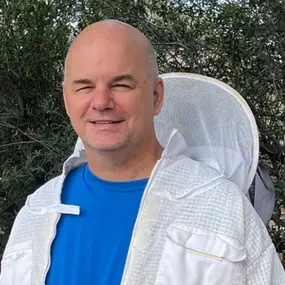
I am a Research Entomologist at the USDA-ARS Carl Hayden Bee Research Center in Tucson, Arizona. I received my BS in Natural Sciences from New College of USF and my MS and PhD in Entomology from University of Illinois with Dr. May Berenbaum. I worked with Dr. Eric Schmelz of USDA-ARS CMAVE on the basics of how plants detect attacks before joining the world of honey bees in 2006.
My research focuses on how colony stressors (poor nutrition/forage, parasites, pathogens, overwintering/seasonal stress, and chemical treatments) disrupt colony cohesion, communication, and performance, and the development of practical solutions to reduce these effects. Honey bees thrive worldwide through considerable flexibility and adaptation under a wide range of conditions. Many stressor effects impact key colony functions, such as queen maintenance, brood production, and nutrition, that are necessary for colony performance and survival. I am particularly interested in improving queen retention, overwintering bee nutrition and productivity, and Varroa mite control to promote colony health and performance. A better understanding of how bees respond to stress and how we can work within these confines is a path to improved beekeeping.
Ph.D., Research Insect Physiologist
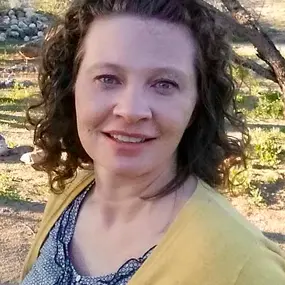
Dr. Vanessa Corby-Harris obtained her B.S. in Animal Science from North Carolina State University in 2001 and her Ph.D. in Genetics in 2007 at the University of Georgia. In 2011 she joined the USDA Carl Hayden Bee Research Center as a postdoctoral scientist. She was hired as a Research Insect Physiologist in 2015. Drawing on her expertise in other insect and non-insect systems, her research seeks to improve colony health through better nutrition. Her main questions are: 1) What nutrients do honey bees need? 2) Do these nutritional needs change depending on season, location, stress, or other variables? 3) How can we make sure that honey bees get these nutrients through supplemental diets or natural forage?
https://corbyharrislab.weebly.com/
USDA Honey bee Scientist
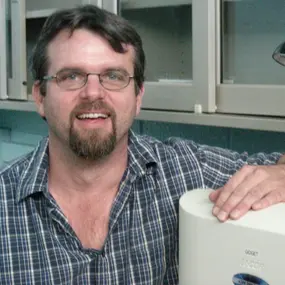
Dr. Kirk E. Anderson has conducted research in the ecology and evolution of social insects for 25 years and his present focus is honey bee microbial ecology. He is Lead Scientist of the active 5-year research plan “The Honey Bee Microbiome in Health and Disease”, at the Carl Hayden Bee Research Center in Tucson AZ. His research is aligned with the Action Plan for ARS National Program 305 – Crop Production.