Apple Podcasts
 Spotify
 YouTube
 Goodpods
 Amazon Music
 Overcast
 Castro
 PocketCasts
 Podchaser
 RadioPublic
 RSS Feed
 From Spacecraft to Beehives: Dan Seitz and ApisNode (402)
Spacecraft engineer and beekeeper Dan Seitz joins Jeff and Becky to discuss ApisNode, a compact colony-monitoring system measuring temperature, humidity, sound, vibration, gases, and other data inside the hive. Dan explains how AI, beekeeper-recorded inspections, long-range communications, and the Open Apiary Project could help reveal patterns in honey bee colony behavior that conventional inspections may miss.
What happens when a spacecraft engineer becomes fascinated with honey bees? In this episode, Jeff and Becky welcome Dan Seitz, an engineer from Los Alamos, New Mexico, whose career designing instruments for spacecraft eventually led him to tackle a very different remote-sensing challenge: understanding what is happening inside a honey bee colony.
Dan began experimenting with commercially available temperature sensors but quickly wanted more precise and frequent measurements. That curiosity evolved into ApisNode, a compact sensor system designed to sit between frames and continuously measure multiple aspects of the colony environment—including temperature, humidity, sound, vibration, and volatile compounds. The system can collect dozens of individual data metrics and transmit them from the apiary for analysis.
But collecting data is only part of Dan’s idea. He is also using artificial intelligence trained with honey bee research literature to look for patterns and correlations in colony behavior. Importantly, the beekeeper remains part of the system: voice-recorded inspections provide observations that can be combined with sensor data to give the AI essential real-world context.
Dan shares a fascinating example from his own apiary, where sensors detected changes in brood temperature and colony vibration during smoke from a wildfire roughly ten miles away.
The conversation then turns to Dan’s Open Apiary Project, an effort to build an anonymized, openly available database of consistently collected honey bee colony data. Could thousands of instrumented colonies eventually reveal patterns that individual inspections—and individual beekeepers—cannot see?
Also in this episode, Becky answers a HiveIQ listener question about allowing bees to build foundationless comb in Langstroth frames.
Websites from the episode and others we recommend:
- ApisNode: https://www.apisnode.com
- Honey Bee Health Coalition: https://honeybeehealthcoalition.org
- Project Apis m. (PAm): https://www.projectapism.org
- The National Honey Board: https://honey.com
- Honey Bee Obscura Podcast: https://honeybeeobscura.com
Copyright © 2026 by Growing Planet Media, LLC

______________

Betterbee is the presenting sponsor of Beekeeping Today Podcast. Betterbee’s mission is to support every beekeeper with excellent customer service, continued education and quality equipment. From their colorful and informative catalog to their support of beekeeper educational activities, including this podcast series, Betterbee truly is Beekeepers Serving Beekeepers. See for yourself at www.betterbee.com

This episode is brought to you by Global Patties! Global offers a variety of standard and custom patties. Visit them today at http://globalpatties.com and let them know you appreciate them sponsoring this episode!

As a beekeeper, you want products that benefit you and your bees. When you choose Premier Bee Products, you choose hive components that are healthier for bees and more productive for you. Because we believe that in beekeeping, details make all the difference. Premier Bee Products: Better for bees. Better for beekeepers. Use promo code PODCAST for 10% off your next online order.

Thanks to Strong Microbials for their support of Beekeeping Today Podcast. Find out more about their line of probiotics in our Season 3, Episode 12 episode and from their website: https://www.strongmicrobials.com

HiveIQ is revolutionizing the way beekeepers manage their colonies with innovative, insulated hive systems designed for maximum colony health and efficiency. Their hives maintain stable temperatures year-round, reduce stress on the bees, and are built to last using durable, lightweight materials. Whether you’re managing two hives or two hundred, HiveIQ’s smart design helps your bees thrive while saving you time and effort. Learn more at HiveIQ.com.

We’d like to thank Vita Bee Health for supporting the podcast. Vita provides proven tools for controlling Varroa—from Apistan and Apiguard to the new VarroxSan extended-release oxalic acid strips—helping beekeepers keep stronger, healthier colonies.

Thanks for Northern Bee Books for their support. Northern Bee Books is the publisher of bee books available worldwide from their website or from Amazon and bookstores everywhere. They are also the publishers of The Beekeepers Quarterly and Natural Bee Husbandry.

Thanks to Bee Culture, the Magazine of American Beekeeping, for their support of Honey Bee Obscura. Available in print and digital at www.beeculture.com
_______________
We hope you enjoy this podcast and welcome your questions and comments in the show notes of this episode or: questions@beekeepingtodaypodcast.com
Thank you for listening!
Podcast music: Be Strong by Young Presidents; Epilogue by Musicalman; Faraday by BeGun; Walking in Paris by Studio Le Bus; A Fresh New Start by Pete Morse; Wedding Day by Boomer; Christmas Avenue by Immersive Music; Red Jack Blues by Daniel Hart; Bolero de la Fontero by Rimsky Music; Perfect Sky by Graceful Movement; I'm Not Running Away This Time by Max Brodie; Original guitar background instrumental by Jeff Ott.
Beekeeping Today Podcast is an audio production of Growing Planet Media, LLC
** As an Amazon Associate, we may earn a commission from qualifying purchases
Copyright © 2026 by Growing Planet Media, LLC

From Spacecraft to Beehives: Dan Seitz and ApisNode (402)
Dave Meister
This is Dave Meister from Illinois and I just really enjoy the Beekeeping Today podcast and welcome to listen and get ready to learn.
Jeff Ott
Welcome to Beekeeping Today Podcast presented by Betterbee, your source for Beekeeping news, information, and entertainment. I'm Jeff Ott.
Becky Masterman
And I'm Becky Masterman.
Global Patties
Today's episode is brought to you by the bee nutrition superheroes at Global Patties. Family operated and buzzing with passion, Global Patties crafts protein-packed. that'll turn your hives into powerhouse production. Picture this. Strong colonies, booming brood, and honey flowing like a sweet river. It's super protein for your bees and they love it. Check out their buffet of patties, Tailor Made. For your bees in your specific area, head over to www.globalpatties.com and give your bees the nutrition they deserve.
Jeff Ott
Hey, a quick shout out to Betterbee and all of our sponsors whose support allows us to bring you this. Podcast each week without resorting to a fee-based subscription. We don't want that and we know you don't either. Be sure to check out all of our content on the website. There, you can read up on all of our guests, read our blog on the various aspects and observations. About beekeeping, search for, download, and listen to over 300 past episodes, read episode transcripts, leave comments and feedback on each episode, and check on podcast specials from our sponsors. You can find it all at www. beekeepingtoday.com Thank you Dave Meister there in Illinois for that great opening recorded at the North American Honey Bee Expo in January. We're gonna be Right up next to Nobby again, and that's great. I love these openings.
Becky Masterman
That was the North American, not the Midwest?
Jeff Ott
North American. We're all out of the Midwest openers.
Becky Masterman
We are. Okay. 'Cause they're mighty close to that location in Illinois, so well fantastic. So basically these Openers are really expo openers. I think we could just rename them.
Jeff Ott
You know, I'd be thrilled if someone would call in or leave an opening from our website. You know, on the lower right hand corner there's a microphone on the webpage at beekeepingtoday dot com. And if you just click on that button, you can record an opening. You can record a question. You can just record hey and say hi and say goodbye. But that possibility is there.
Becky Masterman
So you just want that button used. You don't care how it's used.
Jeff Ott
I'm lonely here. I just want to hear someone's voices. Oh boy. Yeah, that's sad here. Thank you, Dave, for that opening and thank you for everybody throughout this year who's gave us openers. From the different expos we've we've been at and uh even a couple conferences here and there.
Becky Masterman
It really makes the show special, so that is nice.
Jeff Ott
Becky, we have a listener question today.
Becky Masterman
A HiveIQ listener question, Joe.
Jeff Ott
A HiveIQ questioner. Folks, since last October, we've been running a promotion with one of our sponsors, HiveIQ, who is providing a beautiful shiny branded HiveIQ tool with our Beekeeping Today podcast brand on it. To listener who provides a question that we read and answer on the air, today we have a question from Brandon J. He sent it in through our website. Okay.
Becky Masterman
You ready for this? I'm ready. I'm ready.
Jeff Ott
Alright, so I'm gonna parse through this He says hi there, I'm a new beekeeper in the OSU master beekeeping program. I assume that is Ohio State University or Oregon State. Yeah, we don't know until we get this address. Brendan, let us know. He was wondering if he could make a frame similar to the Kenyan top-bar hive. They have a starter strip attached to the top bar. He writes, could I put a starter strip and a Langstroth frame and put some wire through it to help strengthen the comb as the bees build I'm not talking about wax foundation or plastic foundation. I want to put a starter strip at the top of the frame and let the bees build up comb through the entire frame however they would want to. Do you think this would work? Or do you think the bees would build some crazy comb? Question mark.
Becky Masterman
That's a good question. It's a fun question because it's a really fun way to have the bees draw wax. sew or build comb.
Jeff Ott
Have you done this?
Becky Masterman
I have done this. I have done this a fair amount. When I was running bee Squad, we had a customer who did not want the plastic foundation. So I became pretty used to getting colonies started on just their own beeswax comb that they would draw on their own. And we used a beeswax starter strip. So we did take the beeswax foundation and just a small, gosh that maybe a half inch strip at the top, and use beeswax to make sure that's it's held in there and put literally would start a colony on um a package colony. If it was just the weirdest thing to do, but start the package colony on ten frames. tightly pushed together with those starter strips and they drew beautiful comb. The warning is and that's all we did, there are some other methods out there where you use popsicle sticks for strength and things like that. But what you need to do You can you can do that if you want, but you can just have them start with the starter strip and then they build these beautiful combs, but you have to remember that they don't have reinforcement. So then when you're checking your colony instead of just flipping the comb up, you need to rotate the comb around so that the uh comb is never subject to gravity. And it's it's a skill that it was pretty easy to learn. And it's just that's the most important thing. The other thing that he will see is the bees will draw out a fair amount of drone comb. And so our trick there was to If we wanted to reduce the amount of drones that they were building, we would put those, rotate those drone frames to the outer edge, so that's where they would store honey and pollen. So very cool. It but it's so pretty. It's so pretty. And you have to feed 'em a lot. You have to make sure that they have a lot of syrup and a nectar flow is good. So this time of year wouldn't be good for it, but next spring and timing it with a nectar flow, it is so much fun.
Jeff Ott
Did you insert the wire like Brandon suggest. No, okay, so you just did it freestyle.
Becky Masterman
Easy peasy. And there like I said, there's some there's some you could do wire, you can do popsicle sticks, you can do uh things like that, but we found that it worked beautifully. And then the beauty of the whole process is that you just cut them out if you want to build like rotate out comb, you just cut it out and then you can have them start again and they will do it's really rare that I find a colony that kind of is a crazy comb builder. I'm guessing that's kind of genetic, but I think most of the colonies that we've ever tried this with have just done a great job building Really perfect combs.
Jeff Ott
Oh, very cool. I was always warned not to do that, but because they would build crazy comb, but and now I'm searching back through my memory. Which is a very short file case, let me tell you. I don't remember being told to use starter strips way back when. So th the thought was, you know, putting them just wooden frames and letting them build from that, which they of course would build it any which way they could. So I like that. Brendan, that's a great question. I'm glad you asked it. I think I'm gonna play with that next spring.
Becky Masterman
I've often thought of doing it again, but it hasn't risen to the top of my list.
Jeff Ott
Very good. Well thanks, Brendan. I don't have your mailing address, Brendan, so if you want to send it, that Postal Service would get you a brand new shiny HiveIQ tool, I'll get it in the mail for you. All right, coming up. Anybody who knows me and has been listening to the show long enough knows I really like technology in the hives and technology in the bee yard. Our next guest Daniel Seitz. Where is it? Seats? Seites? Seats?
Becky Masterman
We're gonna find out.
Jeff Ott
We're gonna find out. We're gonna talk to Daniel about his new company. And some of the new technology he's working on right after these words from our sponsors.
Betterbee
For more than forty-five years, Betterbee has proudly supported beekeepers by offering high quality, innovative products, providing out Outstanding customer service, many of our staff are beekeepers themselves, and sharing education to help beekeepers succeed. Based in Greenwich, New York, Betterbee serves beekeepers all across the United States. States. Whether you're just getting started or a seasoned pro, Betterbee has the products and experience to help you and your bees succeed. Visit betterbee.com or call. Call 1-800-632-3379. Betterbee, your partners in Betterbeekeeping.
Jeff Ott
Hey everybody, welcome back. Sitting around this great big virtual beekeeping today podcast interview table. We sitting down in Los Alamos, New Mexico. We have Daniel Seitz Becky's up in St. Paul, Minnesota, and I'm of course in Olympia, Washington. Daniel, welcome to the show. Yeah, glad to be here. Thanks for having me.
Becky Masterman
And we're really excited that you could join us. Thank you.
Jeff Ott
Anybody who's listened to the show anytime knows that I really like technology in the bee yard. I just mentioned that earlier, and I'm really looking forward to talking to you about your new product that you've been working on. But before we get into that Can you tell us a little bit about yourself and how you got into bees and then how you've incorporated your work into your bees and where we are today?
Dan Seitz
Yeah, I live here in Los Alamos, Bomb City. I grew up here. Surrounded by technology and PhDs. I've spent my entire adult life here working for the laboratory. I'm an engineer. I work in the space sciences division, so my day job is designing and building spacecraft that go to either orbit the Earth or land on Mars or other places.
Jeff Ott
Very cool.
Dan Seitz
So uh life of technology, remote sensor development, things designed to survive in hostile environments, unattended, and also uh reliable Surprisingly, I was never interested in bees for many years until another engineer friend who has a farm down in the valley invited me to a honey harvest, me and my wife. We went down, it was great. Got a big old sticky mess with him and he tried to send us home with some bees and of course We we uh politely said no. It wasn't a lie, but it's uh it was an easy one as in Los Alamos we have a lot of bears up here. And I just couldn't think of a way to keep the bears out of the hives. So this went on for a couple of years. We go to the harvest, hew it off for bees. I would say no. And then finally he uh Went and saved a uh somewhat of a swarm or a neglected hive in another farm and said, I've got your bees for you, I'm coming over. And uh okay, so then I went uh tractor supply Did some research. It takes about a joule of energy to get a uh a bear to stop. So I bought a 30-mile fence energizer and used it for about 30 square feet of an apiary So it's a bit of a Fort Knox. I always tell people to stay a long ways away from the fence until I disarm it. But we've slowly grown the up apier up to four hives now. And we've never had a bear incident. Which is great. They come by, they just steer clear. And then the sensor development started pretty early I immediately was interested in, you know, what's going on in there. You can sit outside and drink your coffee and watch them come and go, which was great, but then you really wonder what's really happening. I did what most people probably do. You get out on the internet, you look for sensors and things, and I started with a very, very basic wireless temperature sensor for your home. I was immediately disappointed in the quality, both of the data and the repeatability and the frequency, all this stuff So then I upgraded slightly and I continued upgrading kind of COTS devices that were designed for more home use than anything, home automation. And still I just was not happy with many of the things. And then I decided to do what I do for a living is I went all in and started designing a sensor system from scratch. that would meet all the requirements I had personally said for myself around reliability and traceability and metrics that I could understand, metrics that I could use to do uh bit of citizen science and uh also compare against the white papers there's tremendous body of literature scientific literature on bees and Usually these are performed in a lab environment with undergrads and you know all sorts of work. So I was trying to replicate basically white paper-like hive monitoring uh in my backyard
Jeff Ott
When you took a look at what was consumer available and said this just wasn't meeting the needs, was it from an accuracy standpoint or was it from a ease of use? I think it was all the above.
Dan Seitz
Like even simple things like what is the frequency of the data collect? How often are you collecting data in the hive? And a lot of stuff it is based on temperature deltas. So once it reaches a delta, it'll report out a delta to you, which to me isn't that interesting because As I found out, bees are tremendous at regulating their environment, and I watched hives move by fractions of a degree over 24 hours, which was something I just couldn't even begin to measure using commercial devices.
Becky Masterman
Daniel, will you share what a temperature delta is? Because Ah, sorry.
Dan Seitz
Temperature delta would be a change in temperature That quantity. So if the bees are sitting at say 94 degrees and they move to 95 degrees, that's a delta of one degree. And typically commercial sensors will consider that not actually a change and they won't report it out. Because in your home, a one-degree change is not really significant. But for bees it's very significant as people have written about.
Jeff Ott
The accuracy or the lack of variability of the temperature in the colony is pretty amazing. It's pretty consistent.
Dan Seitz
Yeah, it's uh it's astounding. It's almost magic.
Jeff Ott
You started looking at the temperature. What else intrigued you? What else did you want to start looking at? So temperature is great.
Dan Seitz
You know, people know to look at temperature to track bee health. Uh it's like, okay, now humidity. So living in at 7,000 feet up here in New Mexico, we're regularly in single digit humidity for most of the year. It's like, okay, so what do the bees do? I put a humidity sensor in there. As it turns out, they also control humidity very tightly. Uh it can be 7% outside and it'll be sitting at 50% inside. So then you start thinking about, well, where's the water coming from and how much water does it actually take to make that climate happen inside the hive? And then of course I just couldn't help myself. So then the next thing was what's it sound like in there? People talk about, you know, sound and frequency bands and precursors and all that. So That was a whole nother journey picking a small MEMS, which is a microelectronics device that goes on a PCB. to record the sound inside the hive.
Jeff Ott
You said PCB?
Dan Seitz
Yes, sir. So uh all part of this was uh developed a custom PCB which is just a circuit board. So get the sound in there. And the first thing, you know, I wanted to track was just how noisy is it overall? And you could watch the hives through the day. They get they get louder during the day and quieter during the night. And that's interesting. But then you read the papers and you realize, well, there's actually these discrete frequency bands that bees use to communicate. They, you know, people heard of the waggle dance and queen piping and swarm indicators. Those are all very specific energy bands in frequency space that you can measure. So that I just replicated the white paperwork that all the great scientists have done. I started recording these discrete bands over time And say, Oh yeah, you know, these guys are right. This is real stuff. The bees really do talk and you can look at it And since I really couldn't stop at that point, I kept going. Because once you start reading the papers, there's been so many wonderful experiments done trying to figure out how bees communicate. It's very complex. You know, you think a hundred thousand living creatures all acting in unison. Is uh incredible. And how does that actually work, or how do we maybe gain insight into how that works? So the next step would be the vibration. So Again, great experiments have done been done where they embed accelerometers into honeycomb. And bees, the lower frequencies aren't audible. They're more vibrations in the honeycombs. The theory is that these are different versions of communication that communicate different things to the colony. We won't get into exactly what they all are, but so then, you know, develop the sensor to also sense all this. That's all great. So then I stopped there last winter. I let all the sensors ride through the winter, which was great I never opened 'em up once. I didn't have any colonies leave. I was actually kind of hoping that a colony would die. That sounds awful, but I wanted to see Well, what if there's a precursor? Yeah, it's uh yeah, I want to see the data, like what happens before they die. Is there a precursor? Some of the beekeepers I talk to, they say, yeah, one day the bees just left. And I was like, well that's weird. They all decided to leave, like why did they do that? So there's gotta be some form of communication to get them all to leave. in unison, but actually still waiting to capture a swarm or a hive absconding. Maybe I'm taking too good Of care of the bees because none of my bees have left.
Jeff Ott
Well I'm sure that there'll be a lot of listeners, including myself, would be happy to put a sensor in my colony next spring because you'll hear a lot of swarming. Okay, that sounds great.
Dan Seitz
Yeah, that's kind of the idea is let's do that. So then after the winter, I decided that I was gonna do one more rev of the custom hardware and the last thing I wanted to measure was the gas metrics in the hive. the volatile condensates, the you know the concentrations of various chemical compounds. So I uh also put in a gas sensor that analyzes Ten different steps of resistance on a hot plate. So to explain that a little more, the way the gas sensor works is that there's a very small piece of silicon on the board. like one millimeter by one millimeter with a heater on it that sits off ninety-nine percent of the time. When I turn it on, it steps through a temperature range and it and it measures the resistance of this piece of silicon As the temperature raises, the resistance changes as the volatiles are effectively burned off the silicon. So I can't tell you exactly what is getting burned off the sensor other than over the course of the summer I've I've developed kind of a gas fingerprint for a hive. All four of them are different. where they all have similar characteristics in gas, but they're all slightly different from each other. And you can see As they're starting to fan and cure honey, you get more volatiles coming off the honeycomb, and I can measure that somewhat indirectly. I can't tell you exactly. what the volatiles are, but I can see that they are in the hive and they're actively fanning and is leaving the hive.
Jeff Ott
And you're saying you can't tell us it's because you don't know what they are, it's not because you're keeping secrets.
Dan Seitz
Yeah, correct. So The way the way that these sensors are usually used is that I would take the same sensor, I would stick it in a bell jar, and I'd introduce, say, a couple micrograms of a known chemical. And then I'd measure it. So I'd have to do a baseline. That's kinda like the next big leap in science I'd have to do is I'd actually have to go procure these chemical compounds and do the testing in a controlled environment to get a calibration curve. That might happen later this year. I'm not sure. It's going to be a bit of a science project. And I think some of the chemicals are probably ones I don't want to handle in concentrated quantities But it's still it's informative because you can see, you know, when they're actively curing honey, which is kind of an indicator that there's active forage going on out there. You can see that also tracks with humidity as they bring water into the hive or any number of things.
Jeff Ott
Wow, so you have one, two, three, four. Five different sensors, five different metrics you're measuring, or is it more?
Dan Seitz
It's it's a little more, so it's you're correct. It's like five sensors, but if you think of the metric space, it's actually thirty So when I measure the sound, I'm not just measuring just sound on a microphone like we're speaking now. I'm measuring discrete frequency bands that are binned. So I'm doing ten of those and I'm doing ten gas metrics and ten vibration metrics. So it's it's not just as simple as how loud is the hive or how much is it shaking or what does it smell like. And all that combined is it's a lot of stuff to look at. So I realized very quickly that we live in the world of AI. And I wanted to put it to work. So I built the back end to run Amazon Web Services, which is kind of how the whole world works right now. I ship all the data off automatically from the hives to Amazon. I populate giant databases with it that's all tied to the person's uh user account. And then I run a uh an AI analysis once a day for people, or I tell AWS to do it. The AI is actually trained on all the scientific white papers that I could find on bees. So in ways I kind of built a custom AI platform that's like the smartest beekeeper in the world according to itself. Oh yeah, yeah. We all know it. I love our theory. So then I run all the data across this the world's smartest beekeeper, quote unquote, and have it give over time I've I've changed my tactic. First it was just a raw analysis of what it sees in the data. And I realize that's too much to think about for normal people, including me. So now I have it do uh diurnal analysis, so which is basically analyzing the high's day-night cycle for patterns that there's very obvious ones that you can find immediately. And then I also looked for correlations. So I found it very useful. You can actually track your hives. You know, they're they're they have incredible clockwork. I don't know how they do it. But they wake up and they go to sleep at almost the every the same time every morning and night, at least for me. So when they start varying off that pattern, you also see other things change in the data And that's where the correlation analysis comes in where they're waking up later. We'll just use that as an example. Is there also a reduction in say vibration or sound, or is there less humidity, or is there more humidity? And it's kind of an attempt to correlate outside actions to what the hive has decided to do that day. Part of this is also all these metrics I described are also recorded in your Apiary through an outside unit. So I have a baseline of what your backyard looks like, and then I can compare what inside your hive looks like to that. So Yeah, gives you that baseline that, you know, if it's been consistently hotter, it would track that the bees are working harder to cool their hives.
Jeff Ott
I have to admit, this is way too much for me to handle right now. Let's take a quick break. We'll hear from our sponsors, and we'll come back and we'll delve a little bit deeper into all of this because this is really striking a fancy for me. This is great news
Premier Bee Products
Beekeeping is demanding work. The last thing you need is equipment that can't keep up. That's why Premier Bee Products builds every frame and hive body in our South Dakota factories with one goal in mind. Reliability when it matters most. From our Bee-Pro frames to our Natural-Pro hive bodies with rough interiors, we design for long life in the field and in the colony. Because we believe that in beekeeping, Details make all the difference. Premier Bee Products better for bees, better for beekeepers. Visit online at PremierBeeProducts.com or call us today. Use promo code PODCAST for 10% off your net. Online order.
StrongMicrobials
Beekeepers, if you're looking for a smarter way to support colony health, take a look at bee bites from strong microbials. Beebites are a new protein patty meal. With spirulina, chlorella, and targeted probiotics, designed to support nutrition without creating new problems in the hive. With 15% protein, bee bites are unique because they do not attract small hive beetles, a big deal if you've ever battled infestations during feeding. Strong Microbials has been supporting beekeepers and farmers since 2012, developing high-quality commercial probiotics and nutritional supplements you can trust. Learn more about Bee Bites and their full line of bee nutrition at StrongMicrobials.com
Becky Masterman
Welcome back everybody. I would just like to share a little behind the scenes at Beekeeping today Because both Jeff and Daniel have parrots and both parrots are communicating very consistently throughout this recording. So I'm hoping that Jeff leaves some of the parrot sounds in so that they can be part of the podcast.
Jeff Ott
I don't think they can hear each other, but maybe they can. I don't know. Who knows?
Becky Masterman
I'm used to Frisco, so I know what Frisco sounds like. Daniel, what's your parrot's name?
Dan Seitz
Audasha.
Becky Masterman
Adesha?
Dan Seitz
Adesha.
Becky Masterman
Adesha. So Adacia sounds beautiful.
Jeff Ott
And she's a red eclectus? Yeah, a female look like just a beautiful bird.
Becky Masterman
Okay, I have a non-parrot question.
Jeff Ott
Back to bees.
Becky Masterman
So I'm just really curious because I can see a lot of researchers getting pretty excited about what you're doing. And I thought specifically of there's a study out there that shows that the bees foraging changes the day before the weather changes. So the day before a rainstorm. they forage differently. And I'm wondering, have you started to connect some of your metrics to those kinds of studies?
Dan Seitz
I've actually never looked directly at foraging based on weather. The sensors do record barometric pressure, so I could use that as an indicator of incoming weather. A very interesting one that came up, somewhat related, is that here in northern New Mexico we have a lot of wildfires, unfortunately. I noticed over the course of like three days that all the hive temperatures were getting depressed Basically they're about five degrees lower than they were the previous weeks. I started getting concerned that there's an apiary wide or an environmental factor going on here and I better do something about it, right? That's what you want to do. But then I realized it was actually the forest fire. So, you know, us beekeepers, we like smoke in our hives to get in there. And that elicits a very kind of primal urge to save themselves. They start gorging, they go in survival mode, right? So I eventually pieced it together using the gas analysis and then just looking out the window seeing the smoke that the hives were actually preparing to leave. They thought there was a fire coming. They stopped maintaining brood temperature. I could see that very clearly. And I could see the vibration patterns change significantly. Fortunately, the fire was put out and about two or three days later the bees decided not to leave and they went back to raising babies and Collecting nectar.
Becky Masterman
How close was the fire to that apiary?
Dan Seitz
Probably about ten miles as the crow flies. Is it a national forest?
Becky Masterman
I know we get both well Minnesota wildfires but also we get smoke from Canada and it comes all the way down to the Twin Cities area but beekeepers have been really curious about how does that impact foraging And there are no, I think, studies out there that actually show that. So that's really interesting that you were able to see that impact.
Dan Seitz
kind of in preparation for this conversation and just to you know a appraise w all I've done and what this is and what it isn't. I wrote a small article that's on the webpage. I'm sure you guys will provide a link. And it's basically My observations over the course of some period of time with these sensors, my B's, my location, and I even I wrote up and I showed the data from this forest fire event. Like real traces from the data and showing how the colonies reacted. And the whole paper was just kind of an honest evaluation of myself. So you gather all this data So what? I mean what are you gonna do with it? Is it meaningful in any way? And what do you do? Like do you run out there and like do something to the bees to save them? You know, that's really the crux of this whole thing, I think. Um I'm kind of a newcomer to the whole bees are dying, colony collapse disorder, all this stuff. The way I approach it is collect the data. I'm not trying to tell beekeepers they need to do anything to their hives. I'm just trying to collect as much data as possible. And then let them decide what to do with it. Because it really comes down to your local bees, your local environment, the way you like to keep your bees, your tactics, your procedures, all these kind of things. Just trying to get more information and then maybe a little more informed decision making. Unfortunately, heard stories from other beekeepers where they go in there with the best of intentions and they squash their queen You know, and I that happens, right? You go in there and these days I'm I'm almost I won't say I'm hands off. I'm very hands on with my hives, but I try to minimize. I try to minimize uh crack in the seal is what I say. Like when you do it, you're really it's it's really an invasion into their micro environment And I gotta believe that it affects them in some way. There was a couple interesting papers I've read where some folks actually found the boundary for some bees where they would actually leave after so many inspections and it was extreme. It was like get in there every day for a week. Well the bees are gonna leave. I mean they're not stupid. Something's wrong, they're gonna leave. So There's gotta be a balance between just our natural curiosity as beekeepers to get in there and you know just see the bees, which is an incredible thing to see, and just letting them be bees in there. It's a very fine line, I think.
Jeff Ott
Is this a single sensor? It's collecting thirty different metrics at least. And you added maybe another one with the barometric pressure. But anyways, how big of a sensor is this? Is this Like another box you put on top of the colony or is this Oh no.
Dan Seitz
It's a PCB that's approximately two inches by three inches. I designed the mount for it. I call it a dangler It's kind of a goofy name, but effectively it looks like a T shape and it just slides between two frames. So it's you know it's one bee space wide, which is like three-eighths of an inch or whatever you want to call it. So it just slides in between normal frames. Nothing, nothing fancy there. I always give them to people with a small solar panel. They do have batteries on them, so this comes down to data frequency. If you Are only interested in what your bees are doing once a day, you can just run the sensor off a battery. It'll last weeks and weeks and weeks, months. It just keeps going. Very low power thing. But I like lots of data. So my baseline that I set up for people is every five minutes the sensor wakes up. Collects all this data and ships it off to Amazon to be cataloged and analyzed. In doing that, the battery will last maybe about seven days. So you install the dangler and then I actually use a headphone cable like you'd use for headphones. That's the power cable. So you just plug that into the dangler, run it out of your hive, you can crush it between your boxes, it doesn't hurt it, and you just plug it into a USB solar panel and it Basically runs forever at that point.
Becky Masterman
So did you design this for a two-deep configuration and to go into the bottom deep?
Dan Seitz
I didn't design for any specific location other than I think the best place is in a brood box. But you could put it anywhere. I'd I haven't done it yet, but I'd like to for this winter I want to put one in every single box. One of the ones I'm gonna overwinter as an experiment is Three deeps all brewed that sounds really goofy with a super on top and I'm not I haven't touched that hive all year. I'm not gonna take the super off I'm not gonna harvest any honey. I'm not gonna open it other than to install a sensor in every single box before it gets cold. And I want to capture the bees moving up the hive. I mean everyone says they move up, right? I want to actually measure it and watch them move up through the hive through the wintertime, watch them do the thing that we all know they do, just for a data point. And then I also want to watch them redescend back to the bottom brood. I assume that's what they would do. Maybe they start making babies in the top box and move down. I actually don't know.
Becky Masterman
Your third deep should be just pretty full of honey, actually. I would think that's a good thing. That's usually what happens. That's what happens. That's what happens in Minnesota. Dirt Deep gets real honey both. Yep, it's yeah. You probably don't need that super, but Yeah.
Dan Seitz
Try an experiment.
Becky Masterman
That's exciting. That's exciting.
Jeff Ott
So it's a two inch by three inch dangler between the frames. You um put it maybe probably wherever you want, but I would assume center of the brood box would probably be ideal. One or maybe two per colony is what you have it configured currently, sort of. Power is a coin cell battery, I assume.
Dan Seitz
It's actually a uh very small lithium pouch. It's uh 1000 milliamp hour, which is it's it's a very small lithium pouch, just so I get good energy density.
Jeff Ott
That can be solar powered. Oh that's so cool. And then Communication. So how do you communicate with a dangler? How's that work?
Dan Seitz
Another wonderful rabbit hole in technology. So You know, the home automation scene, they use a radio protocol called Zigbee, which was developed a long time ago. For basically low-power mesh network communication where you have these little sensors scattered around your house that live forever on a battery and relay like single bytes of data for long periods of time. Started with those. That was all last winter. Worked pretty well. But then I realized a lot of people don't have their apiaries like right next to their house. They're out back in the backyard. They're wherever on some random field somewhere. So I pivoted to a technology called LoRa, L-O-R-A. It's a long-range radio communication standard that's been developed over the past couple of years. The commercial product you usually hear people talk about these days is called Meshtastic. which is kind of an underground movement to make solar powered radio networks across the world for like emergency text messaging activities or emergency response. So basically I took the same radio technology And I wrote my own version of software for it that allows the beekeeper to have that same long-range radio in their hive. and let their hive be, you know, up to a mile under cer certain circumstances from their home. Which is kinda nice. Have sent kits out to a gentleman up in Montana and his hives are further out from his house than most. And it allowed him to, you know, monitor his hives where he didn't need to bring a Wi-Fi hub out there. He didn't have to bring power out there. He basically just relies on my low power radio. to get it back to his house and then the base station, which is actually the exact same board that's in the uh in the hive, to receive that data packet and then get on your Wi-Fi at your house. and upload it all to Amazon. Amazon Web Services.
Becky Masterman
So do you have an alternative if you don't keep your bees anywhere near your house?
Dan Seitz
You can always do the super remote thing, which is have something there to talk to a cell phone or a Starlink. Or any of the other super remote means that people use these days. Right now it's centered around the hives are within one to two miles of your house, and at your house you have Wi-Fi. There's nothing to say that your house could be replaced with a Starlink dish or a Verizon router or any number of other more long-range backhauls.
Jeff Ott
You have this environment, you have this network monitoring your colony, monitoring your hives. You approach this subject a little bit But how do you pull it all in together? What's your dashboard into your colony and is see what your hive is doing, what your colony is doing?
Dan Seitz
That's also evolved over time. There is a an iPhone and an Android app That I give people. It's free. With that, you can look at any number of your hives from any anywhere in the world on your cell phone like you would a normal app. You just log in. It since it's all on Amazon Web Services, you're actually talking to Amazon. You're not talking to anything I own. I don't manage any of this stuff directly. You have a username, a password, again, all managed by Amazon. You can see it from your cell phone. That's pretty that's pretty neat. You can see all the data. You can do the AI analysis. The third part I haven't talked about yet, which I almost forgot was on the app. You know, I talked about the world's smartest beekeeper, which is this AI. You know, AIs are great at thinking they're smart, but you know, we've all used them and we know their limitations. So I decided earlier this year is that part of this whole thing is you need to actually add in like the beekeeper's experience into this whole loop. Like any one of us have observations just walking out to the apiary, the AI will never experience. So Part of the app on your phone is that you do a hive inspection. And it's like when you go to the doctor now and they set down their phone and they hit record and you just chat them up. It's the same thing. You show up to the apiary. You click on the hive that you're working on, you hit record or inspect, and it just records your voice and you just kind of talk to yourself the whole time. You can mumble. You can talk about things that have nothing to do with bees. It doesn't matter. And when you're done with that hive, if you hit stop record, it sends all that up to Amazon. It gets transcribed. And then that's part of the injection into the AI is that I've told it, you know, the order of precedence in your analysis is the beekeepers first. If you or I says say that I see swarm cells, that should be addressed right up front by the AI. And then that's the baseline truth. That's the actual reality of what's going on in the hive. And without that, the AIs, they hallucinate, they invent things, they become less useful. So it's a long way of saying you need to have the beekeepers actual insights in there that's actually telling the AI reality. The next form of interaction with your hives would be just a website. I found that most of us live in front of computers most of the day And wouldn't it be nice just to have a website where I could log in and look at my bees all day, every day? People like watching live cams, they like watching whatever, right? YouTube videos. So there's a website, you log in with your username and password You have access to all your hive's data, all the metrics, the graphs, the analysis, and then I also added in a chat feature where you look at all this stuff and you're confused. You're like, what in the heck does all this mean? There's just a chat box that gives you direct access to your full database of all your data, all your hive's history. And all the knowledge the AI has gathered, and you can just chat with the AI about your personal apiary. You can say, hey, what happened on last Tuesday at three o'clock? It looks like You know, the temperature spiked or the sound did this or the vibration did that. It'll go into your database, it'll find that date, it'll find those data records. And then it will attempt to form a story around what might have happened at that date and time. Or you can ask it general things like, do you think my hive's gonna swarm? And then it'll give you its best guess.
Becky Masterman
How many colonies in an apiary did you envision this working for? So if somebody has fifteen colonies in their apiaryA or thirty colonies in an apiaryA, where do you see this technology fitting into that? scale of beekeeper.
Dan Seitz
I would love to see it in very large apiaries. The ones that are super dense, lots of bees, maybe even different uh configurations of hives. Commercial production is an interesting thing. There really is no limit to the technology, how many you could put in an apiary. It's just a matter of uh getting that many boards to the end user and then you know getting it all set up effectively. 30 hives would be much more of a burden in terms of like actually opening them all, inserting all the sensors. You know, it'll take more work, but the way it's designed, hopefully it's just a one-time effort. And then you just kind of leave them in your hive forever. I guess one other thing I haven't brought up yet is I had this other kind of it's not really a novel thought, but you know, if we're gathering all this data It's kind of like, you know, just the beekeeping community. Wouldn't it be great if all this data was available to everybody? So Part of signing up to get these kits right now, they're actually free. Uh I make people fill out applications and I usually talk to them on the phone to make sure they're they're actually interested in gathering scientific data, not just a widget, like get on board with the project. And then uh part of that is you agree to releasing all your data. It'll be anonymized. It's not identifiable by a person to what I'm calling the Open Apiary project, which is It's a big stretch, but I'm trying to make the world's largest open database of consistent bee data If that makes sense. So all this data I'm gathering is all being uh anonymized and aggregated and presented or available to anyone at any time for free to do their own research on the data. If it's someone gets really interested in some giant uh collapse thing that happened somewhere in the country or world and I happen to have sensors somewhere in that region, they can have all that data for free. And the hope is that if we collect enough data for enough time on enough hives and enough locations, maybe we can start to figure some things out we haven't learned yet. I don't know if that's true, but I know we will not figure it out unless we have some kind of consistent data. You know, the beekeepers were all great. But we all think about it differently and we do different treatments, we do different tactics, and without the consistency, it's it's hard to unconfound like the results of what actually is happening. And that to me is the hardest part.
Becky Masterman
Do you want to input that information through that inspection and that recorded hive inspection information and then Is it that powerful that it can note that point in time where, oh, I've got chalkbrood in the colony, or oh I just did a mite test and I've got, you know, 4% mite, something like that. Is that is that what you're thinking as far as that information?
Dan Seitz
Yeah, that is that's gold. I mean that is That is the stuff I'm after, is the the anomalies or the problems or the issues that you encounter in the hives. And then trying to correlate that to real kind of baseline data metrics. It won't guarantee that, you know, the fingerprint that I can sense when you make that inspection is always going to be like chalkbrood or something, but if enough of us report infestation and enough of us have data that seems to compare in all in a major kind of way. Maybe we can start saying that we can either see early onset of these diseases or these infestations, or we can actually watch colonies like that give mites, maybe over time we can watch it evolve from infestation to regulation and then back down to somehow the bees have taken care of it.
Jeff Ott
And that would be interesting to see it slowly develop and see how the bees respond to and I was just thinking about the in the in the southeast where they haven't you know, they just declared this last summer. The uh yellow legged hornet has actually landed, it's it's embedded in the States and the sea a normal colony and then A day later the yellow legged hornets show up and you can see the difference in the hive. And I imagine the same thing. At what point does chalkbrood become a problem for the hive and you start noticing the difference as opposed to here and there outbreaks?
Dan Seitz
You know, I mean we all know bees have been around a very long time and they can definitely take care of themselves. They've proven that But there's strange new things happening. They're encountering chemicals and environments they've never been exposed to, new species of animals, insects. I mean the world's a much different place and it's changed a lot even in the last hundred years. So who knows what they're experiencing and how they're gonna deal with it?
Becky Masterman
I have to go back to volatiles and y and you just said it. You said chemicals. Were you thinking when you are looking to measure volatiles, were you thinking of the pesticides that might come in on the pollen or go through Hopefully not, but the nectar, are you thinking about that? Is that was that one of your reasons to look at volatiles?
Dan Seitz
Absolutely. Yeah. It's uh You know, you hear people that you know they're speculating that a neighbor sprayed for bees and now all their bees are dead. There's probably a lot of truth to that But if you could actually capture and see that yes, the bees introduced a new volatile to the colony and three days later all the bees were dead. That's some interesting information. Right now, the way I have the gas sensor set up is doing a range of temperatures, ten different steps. I can't claim that those ten steps will capture a specific chemical compound, but it was a place to start. And it was kind of informed by the white papers, the scientists that had kind of done similar things, but they're more interested in, you know, honey curing and pheromones and whatnot that are in the uh healthy colony So there's nothing saying it couldn't be expanded. So it'd be a science experiment. I would go by, you know, bee-killer pesticide. and introduce it to a bell jar and I'd measure it with my sensor and see, you know, at what temperature I could maybe detect this stuff. And then I just add that to the list of measurements I would make. It's kind of the progression.
Becky Masterman
It'd be really interesting to have beekeeper's note entombed pollen and chlorothalonil. fungicide that would be because that's something you can actually see in the colony and there's a high likelihood that if you see entombed pollen it does have that fungicide. So I'll send you things.
Dan Seitz
Yeah, maybe that should be our first thing.
Becky Masterman
I see it in brand new colonies sometimes. So it's it's definitely s something and it's a risk factor for death. So it's it kind of hits every uh checks every body.
Dan Seitz
kind of first targeted analysis tool is detecting something like that, like a specific thing that people see and can verify.
Jeff Ott
Daniel, this has been really, really fun and I look forward to learning more as you find more ways to use the ApisNode sensors. Where can people find out more information about what you're doing?
Dan Seitz
ApisNode. com, ApisNode.com. And if you're interested in Open Apiary, that's openapiary.org. And yeah, and if you'd like, go ahead and fill an application. I'll uh I'll receive it and then expect a phone call. I'd like to talk to you about it. And uh then I'll send you a kit out, free of charge, no shipping, nothing. All you gotta do is agree to collect good data
Jeff Ott
That's amazing. We are out of time, but I want to thank you so much. I look forward to learning more and if you would or be so willing, we'd like to have you back. and several months to find out how things are going. Maybe after the winter and into the spring.
Becky Masterman
Several months I bet you're gonna get invited back next month, Daniel. Yeah that's Yeah.
Dan Seitz
I'm happy to talk anytime. As you can tell I get a little excited about it.
Jeff Ott
Wow, can you imagine that from spaceships to hives? I mean, that's fantastic.
Becky Masterman
I might have enjoyed that more than you did, actually. I Well, I'm sure you enjoyed it immensely. I was so impressed with the full circle of the technology. And I think we just talked to the future.
Jeff Ott
Pulling it all together is really, really cool. And I was surprised that I had to compete for questions. I figured
Becky Masterman
I know, I apologize for that job.
Jeff Ott
I figured I would I had a list of questions here ready to go, but I didn't even go to it because You were right there.
Becky Masterman
I know. I really thought I was gonna sit back and I think maybe phone this one in was something I was I was going to do, but boy, oh boy, that was So fantastic.
Jeff Ott
So if anyone's interested at all in technology in the bee yard and technology in your hives and an understanding what's happening in your hive, I encourage you to go out to the ApisNode website, look at what Daniel's doing, and if you're so inclined, reach out to them and maybe you can be part of the project there. And that about wraps it up for this episode of Beekeeping Today. Before we go, be sure to follow us and leave us a five-star rating on Apple Podcasts. or wherever you stream the show. Even better, write a quick review to help other beekeepers discover what you enjoy. You can get there directly from our website by clicking on the reviews tab on the top of any page. We want to thank Better our presenting sponsor for their ongoing support of the podcast. We also appreciate our longtime sponsors, Global Patties, Strong Microbials, and Northern Bee Books for their support in bringing you each week's episode. And most importantly, thank you for the next one. for listening and spending time with us. If you have any questions or feedback, just head over to our website and drop us a note. We'd love to hear from you. Thanks again everybody
Creator of Apisnode
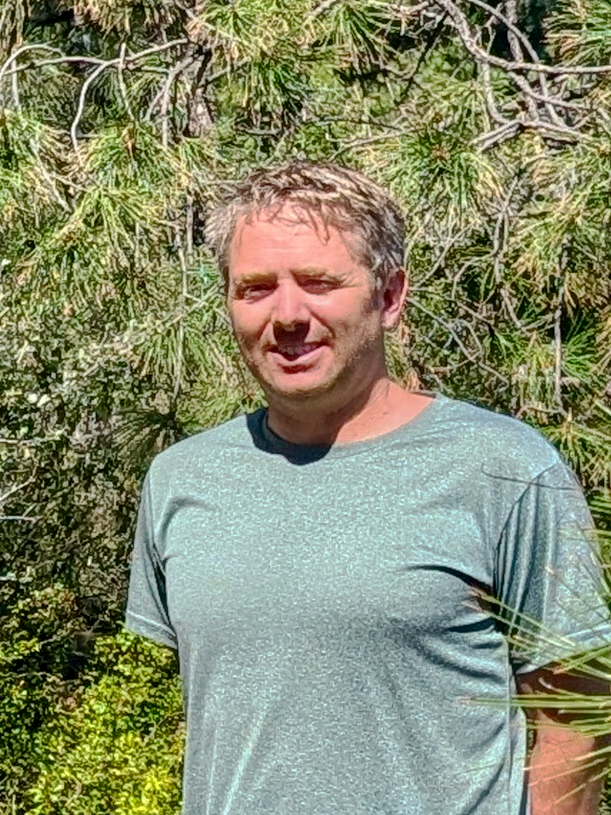
I've spent my professional career designing and building sensors for space and other difficult environments. Beekeeping wasn't my idea. An engineering colleague spent years trying to talk me into it, and I finally folded — he gave me my first hive.
Within weeks I was less interested in the honey than in what was going on inside the box. Bees turn out to be remarkable environmental engineers. My hives hold their brood nest at 92.7 °F, within about a degree, while the outside air swings from 41 to 97 °F — no thermostat, no one in charge. That's a control system, and control systems can be measured.
So I started measuring. After about a year of designing and testing sensor configurations, I settled on a 30-metric baseline: not just temperature and humidity, but the hive's acoustic spectrum, its vibration signature, and a chemical fingerprint of the air inside.
The hard part turned out not to be collecting the data. It was turning it back into something a beekeeper can act on — which is most of what I work on now.