Apple Podcasts
 Spotify
 YouTube
 Goodpods
 Amazon Music
 Overcast
 Castro
 PocketCasts
 Podchaser
 RadioPublic
 RSS Feed
 Chris Hansen on the Business of Hauling Package Bees (389)
Chris Hansen joins Beekeeping Today to discuss the fascinating and often-overlooked world of package bee transportation. Drawing on nearly thirty years of beekeeping experience and years operating a specialized bee-hauling business, Chris explains how package bees are safely transported across the country, the importance of airflow and temperature management, and the logistical challenges involved in moving thousands of bees. Jeff and Becky also discuss spring management, honey supers, swarm prevention, and answer a listener question about common misconceptions among third-year beekeepers.
Moving package bees across North America is a specialized business that most beekeepers never see firsthand. In this episode, Jeff and Becky welcome Chris Hansen of Rhinelander, Wisconsin, a longtime beekeeper, bee supplier, and professional package bee hauler, to discuss the unique challenges of transporting thousands of honey bees safely across the country.
Chris shares how his beekeeping journey began nearly thirty years ago and how a small sideline operation gradually expanded into bee sales, a beekeeping supply business, and eventually a dedicated package bee transportation company. What started as a necessity to move his own bees evolved into a specialized service trusted by beekeepers throughout the United States.
The conversation explores the science and logistics of package bee transportation, including airflow management, temperature control, loading and unloading procedures, route planning, driver coordination, and the importance of minimizing stress on the bees during transit. Chris explains how years of experience and trial-and-error led to the development of specialized trailers designed specifically to move large numbers of package bees safely over long distances.
Chris also discusses the realities of operating a trucking business, including fuel costs, regulatory requirements, equipment investments, driver recruitment, and the responsibility that comes with transporting living livestock. Along the way, he shares lessons learned from early failures and the continual refinements that have improved bee survival and package quality.
Before the interview, Jeff and Becky discuss honey super timing, spring nectar flows, colony growth, swarm prevention, and answer a listener question about common misconceptions among third-year beekeepers.
Whether you manage two colonies or two thousand, this episode provides a fascinating look behind the scenes at one of the least-discussed but most essential parts of modern beekeeping.
Websites from the episode and others we recommend:
- Hansen's Honey Farm website: https://hansenhoneyfarm.com
- Honey Bee Health Coalition: https://honeybeehealthcoalition.org
- Project Apis m. (PAm): https://www.projectapism.org
- The National Honey Board: https://honey.com
- Honey Bee Obscura Podcast: https://honeybeeobscura.com
Copyright © 2026 by Growing Planet Media, LLC

______________

Betterbee is the presenting sponsor of Beekeeping Today Podcast. Betterbee’s mission is to support every beekeeper with excellent customer service, continued education and quality equipment. From their colorful and informative catalog to their support of beekeeper educational activities, including this podcast series, Betterbee truly is Beekeepers Serving Beekeepers. See for yourself at www.betterbee.com

This episode is brought to you by Global Patties! Global offers a variety of standard and custom patties. Visit them today at http://globalpatties.com and let them know you appreciate them sponsoring this episode!

As a beekeeper, you want products that benefit you and your bees. When you choose Premier Bee Products, you choose hive components that are healthier for bees and more productive for you. Because we believe that in beekeeping, details make all the difference. Premier Bee Products: Better for bees. Better for beekeepers. Use promo code PODCAST for 10% off your next online order.

APIS Tactical is a beekeeping brand focused on innovation. We create a wide range of gear for beekeepers of all types—whether you’re managing a few hives or working bees every day. We combine science and artistry to create purposeful, hardworking gear. We’re here to help you care for your bees with confidence, so you can focus on what matters most—your hive.

Thanks to Strong Microbials for their support of Beekeeping Today Podcast. Find out more about their line of probiotics in our Season 3, Episode 12 episode and from their website: https://www.strongmicrobials.com

HiveIQ is revolutionizing the way beekeepers manage their colonies with innovative, insulated hive systems designed for maximum colony health and efficiency. Their hives maintain stable temperatures year-round, reduce stress on the bees, and are built to last using durable, lightweight materials. Whether you’re managing two hives or two hundred, HiveIQ’s smart design helps your bees thrive while saving you time and effort. Learn more at HiveIQ.com.

We’d like to thank Vita Bee Health for supporting the podcast. Vita provides proven tools for controlling Varroa—from Apistan and Apiguard to the new VarroxSan extended-release oxalic acid strips—helping beekeepers keep stronger, healthier colonies.

Thanks for Northern Bee Books for their support. Northern Bee Books is the publisher of bee books available worldwide from their website or from Amazon and bookstores everywhere. They are also the publishers of The Beekeepers Quarterly and Natural Bee Husbandry.
_______________
We hope you enjoy this podcast and welcome your questions and comments in the show notes of this episode or: questions@beekeepingtodaypodcast.com
Thank you for listening!
Podcast music: Be Strong by Young Presidents; Epilogue by Musicalman; Faraday by BeGun; Walking in Paris by Studio Le Bus; A Fresh New Start by Pete Morse; Wedding Day by Boomer; Christmas Avenue by Immersive Music; Red Jack Blues by Daniel Hart; Bolero de la Fontero by Rimsky Music; Perfect Sky by Graceful Movement; I'm Not Running Away This Time by Max Brodie; Original guitar background instrumental by Jeff Ott.
Beekeeping Today Podcast is an audio production of Growing Planet Media, LLC
** As an Amazon Associate, we may earn a commission from qualifying purchases
Copyright © 2026 by Growing Planet Media, LLC

Chris Hansen on the Business of Hauling Package Bees (389)
Walter
All right, hi, I'm Walter and I'm from Germantown, Wisconsin, and this is Beekeeping Today Podcast.
Jeff Ott
Welcome to Beekeeping Today Podcast presented by Betterbee, your source for beekeeping news, information, and entertainment. I'm Jeff Ott.
Becky Masterman
And I'm Becky Masterman.
Global Patties
Today's episode is brought to you by the Bee Nutrition superheroes at Global Patties. Family operated and buzzing with passion, Global Patties crafts protein-packed patties that'll turn your hives into powerhouse production. Picture this. Strong colonies, booming brood, and honey flowing like a sweet river. It's super protein for your bees and they love it. Check out their buffet of patties, tailor-made, for your bees in your specific area. Head over to www. globalpatties. com and give your bees the nutrition they deserve.
Jeff Ott
Hey, a quick shout out to Betterbee and all of our sponsors whose support allows us to bring you this podcast each week without resorting to a fee-based subscription. We don't want that and we know you don't either. Be sure to check out all of our content on the website. There, you can read up on all of our guests, read our blog on the various aspects and observations about beekeeping, search for, download, and listen to over three years. 300 past episodes, read episode transcripts, leave comments and feedback on each episode, and check on podcast specials from our sponsors. You can find it all at www. beekeepingtoday. com. Thank you, Walter with no last name from Germantown, Wisconsin. That was from the Midwest Honey Bee Expo. That was fun. Walter, I'm sorry I didn't catch your name and it's not in my notes, so please let us know who you are, but we appreciate your opening.
Becky Masterman
It's nice to hear from Walter. Hopefully he's having a good bee season so far.
Jeff Ott
It's been a crazy bee season. It's early. It's early and cold here, so it's
Becky Masterman
I mean I mean with transitions out of the cold finally, but early and cold usually don't go together. But I think when there's a lot of pollen available, that's kind of like a a factor that you have to count as far as figuring out whether or not your bees are gonna ignore the weather and just brood up and get ready to go, despite the fact that the temperatures aren't aren't warm enough for you to take a look at them.
Jeff Ott
We had unbelievable weather for about ten days. It was in the 70s and eighties. It might have been a full two weeks. And we started having swarms in the trees everywhere. And then it all shut down in last week, or in the last week of April, beginning of May. It went back in the 50s. And it's just It's been amazing. It's just been a very disruptive spring, so that it's hard to plan for.
Becky Masterman
Right. Right. I mean it it is interesting, especially depending upon your the number of colonies you're managing, a lot of like sideliners are out there with a bigger number of colonies and if you don't have good weather you are going to be stuck with some really long bee days once once you have warmer days, or you're going to get a little bit behind in management and then catch up.
Jeff Ott
Yeah, the first warm day they swarm. I mean after all that long cold and it's just like whether you're ready or not, they're taking off at one o'clock in the afternoon and it's It's fun, frustrating and fun at the same time.
Becky Masterman
Yeah, it's it's nice to see them healthy. I I started dividing so early. because my colonies were so they're so big coming out of some a lot of them were so big coming out of the winter. But that's a whole nother problem to get queens in early April in Minnesota means that I'm having them shipped in potentially temperatures that are a little cooler. So we should put a do make a board game, right? As far as as far as it's like Maybe it exists already, but it just seems like you're rolling the dice sometimes.
Jeff Ott
That sounds like a drinking game is what it sounds like. It's been an early season. We've already talked about that. But how soon do you like to put on your honey supers?
Becky Masterman
As soon as I divide, I usually will put on honey supers. Now if I'm dividing in April, which is is very early, I I will probably wait a I do wait a little bit. But if I'm dividing in any time in May, then supers are going on. So I try to make sure that I'm a box ahead of the game. Unless they're doing something else for me, like drying out comb. You know, sometimes you you give bees other jobs and then then they can't think about honey.
Jeff Ott
Keep them busy. I watch and as you know I have the the scales on the the colonies and as soon as I start seeing the weight gain And I start seeing other signs in the col in the top bars of the upper deep. I'll throw a super on because I just want to give them that space to expand into. theoretically theoretically dampen the swarming congestion type uh impulse, it's probably more for me than the bees.
Becky Masterman
The problem is that the bees when the bees start thinking about it, it's it's a lot of times before we can visually tell that they have a problem. And so we have to be ahead of the bees. And so that's why I like during a nectar flow, I try to always keep two empty supers or one deep super. on a colony so that they always have a room to fill it because I've seen them f draw and fill a deep super in a week. It's amazing and cool and and lovely when it happens, but it does happen and then it can get you into trouble
Jeff Ott
So that was one of my other questions. If do you like to put on one super at a time or do you like to put on several supers at one time and just get 'em on there?
Becky Masterman
I don't do more than two empty supers or one deep super. I I know some people have done it like if they're gonna leave town or s or or they really wanna be proactive, but for an outdoor Or no ARDS, but I'm I'm at my APRAs enough so that that I can check. Plus, that's a lot of equipment to have on hand and we all know Okay, maybe we all don't know that, but I'm not exactly I don't have a ton of extra equipment, so so I'm not wasting it. I'm just timing it.
Jeff Ott
That's that's good. Becky, you've moved bees in pickup trucks and back of the car
Becky Masterman
Yeah, I've moved bees definitely in Lucy the Pickup Truck, my 91 Chevy. Uh she's great. She's got a long bed. It's fantastic. And I've definitely done other weird things too where they I they've been on the seat next to me. They've been in the driver's seat or the passenger seat. I I still drive.
Jeff Ott
Yeah, I hope so. I'm sorry officer. The the hive is sitting next to you on in the passenger seat?
Becky Masterman
Yeah. Yeah. That's it.
Jeff Ott
So that's you have it strapped together obviously.
Becky Masterman
I have a great picture of a nuke that's like overflowing with bees. I think I've shown it to you, but yeah. So yes, I've definitely moved them inside the vehicle and in a bed. How about you? Have you brought them into the vehicle?
Jeff Ott
Only in in nucs, but not overflowing in the nuke.
Becky Masterman
Yeah, I mean a good SUV, we we've done a lot for the bee Squad, uh we've done a lot in the back of an escape that there it's just, you know You just you make sure that they're not flying and or they can't get out for the most part and they're they're good passengers and then you can control temperature.
Jeff Ott
So there you go. How many hives have you moved at one time?
Becky Masterman
You can do oh me the most I've moved is eight. Yep, that's my max.
Jeff Ott
Yeah, I think I've done well pickup trucks. So there's two there, two there's probably six or eight maybe. No not eight, there's probably six. Maybe five. Whatever you can get in the bed of the truck.
Becky Masterman
It does not impress my commercial beekeeper friends. I mean I'm darn proud when I do it, but it's it's not really there's very little excitement.
Jeff Ott
Well speaking of commercial beekeepers, you know, they have to move bees and lots of bees at one time.
Becky Masterman
They do. They're moving pallets of bees and And I think it's somewhere around four hundred and forty singles can fit. I is that it or doubles? I you know, I okay, don't ask me. Obviously I'm not in this business, but it's a lot of colonies in one hall I have had some great conversations with a beekeeper who actually has gotten into the bee trucking business And he's been doing it a while. Boy, it's a different world out there.
Jeff Ott
So So he's a bee mover and shaker, bee mover, bee trucker.
Becky Masterman
He does I I wanna say he does everything. But but he actually does have a trucking business involved specifically for bees. I actually thought that we could maybe learn a little bit from him. His name is Chris Hansen And I thought that if we could get Chris to join us, we all might understand moving bees just a little bit better.
Jeff Ott
I'll look forward to talking to Chris right after these words from our sponsors.
Global Patties
Looking to re-queen a hive, make a split, or build your own nucs this season? Betterbee has Mated Queens available. For shipment or pickup in Greenwich, New York. Choose from Kutik K9 Queens, bred for hygienic mite resistance and strong honey production, gentle carniolan Queens, known for managing hide populations. With the flow, or Betterbee's locally raised northern queens selected for winter hardiness, disease resistance, temperament, and honey production. Order your queens today at betterbee. com. This episode of Beekeeping Today podcast is brought to you in part by Apis Tactical, a beekeeping brand focused on innovation. They use new designs, new materials, and new ideas to bring more joy to beekeeping. Apis Tactical creates a wide range of gear for beekeepers of all types. They use new designs, new materials, and new ideas to bring more joy to beekeepers. Their products are built with purpose and they're already getting attention well beyond the US, with beekeepers in Europe discovering them through this podcast. If you're looking for well-made beekeeping gear from a company that understands the work, Take a look at Apis Tactical. You can learn more at apis-tactical. com.
Jeff Ott
Hey everybody, welcome back, sitting around this great big Virtual Beekeeping Today podcast table. We have Chris Hansen. Where are you in Wisconsin, Chris?
Chris Hansen
Northern Wisconsin. Rylander would be the town.
Jeff Ott
Rylander, Wisconsin, northern Wisconsin, and Becky's and kind of southwest of you in um Minnesota. And I'm out in Olympia. Welcome to the show, Chris. Thank you for having me. We invited you on the show to talk to us about well, you have a business. It's uh bee hauling business. That's going on nine years of doing this show. I don't think we've ever talked to anybody whose business is hauling the bees. Now we've had people who haul bees as part of their business because they are beekeepers, but no one who specialized in hauling bees. And I think it's about time. So thank you for joining us. Well you're welcome.
Chris Hansen
Glad I'm not in a truck.
Becky Masterman
Chris, can you share just how you got started in beekeeping to begin with?
Chris Hansen
Uh I can certainly try. I'm creeping up on, I think, 30 years of actual beekeeping for myself. I would joke that I'm a third or third generation beekeeper. My dad and my grandpa had both bought bees years before I did, but never really took it anywhere. their idea of a large operation was I think grandpa had six hives in his backyard in Chicago. And then my dad kinda carried on that, had three or four hives, and then we found out my sister was deathly allergic to bees Which put an abrupt end to that when I was probably eight or nine years old. And then uh the year she got married I got B's, they overlapped for a couple months and it's that's been thirty years now already. It's been kind of crazy. They both thought I was crazy. They're like, why would you want to make a business out of beekeeping? And they now they're all looking back going, I can't believe you actually did it.
Becky Masterman
I'm not sure I have, but I'm trying When did you transition from these are my bees, I'll sell a little honey to, hey, I wanna support beekeepers and and s Cell supplies and truck bees.
Chris Hansen
I'm not sure when that actually happened. I think it was it's always been a little by little. In the beginning, my uh I think my original business plan 30 years ago was to be the biggest beekeeper in Wisconsin and produce honey and send my bees into winter just all wrapped up and take the winter off and go snowmobiling and ice fishing.
Jeff Ott
True in Wisconsin. Yeah, I was gonna say I have not been successful there.
Chris Hansen
I have a snowmobile I put 20 miles on this winter and I didn't drill a hole in the ice, and that's pretty normal for every winter since I have um managed to maintain probably one of the bigger beekeepers in Wisconsin, mostly in size.
Becky Masterman
How many colonies do you keep managing for yourself?
Chris Hansen
Less and less every year, unfortunately. All the different things we got going on, it's taking its toll. I think at my peak I had We were leasing on a bunch of extra bees. I physically owned a couple hundred, two maybe three hundred, and then with lease we're upward of twelve hundred total. And so it was every year with the store growing and our trucking company growing, it was taking its toll, and we keep seeming to add to that because that seems to be what's paying the bills. Beekeeping's just tough.
Becky Masterman
That's a bumper sticker for beekeeping's tough.
Jeff Ott
That is. We have an ongoing promotion with a sponsor, Hive IQ. And they have provided us with a bunch of really nice high IQ tools and they've co-branded it, put our logo on the back side of it. And for our listeners who send in questions, both email and or leave a voicemail message on our website, they ask us questions and typically Becky and I answer them or try to answer them. And occasionally we ask our guests to help us with an answer. And it's your lucky day, Chris We actually we thought because uh you run a store, you meet so many different beekeepers who come in who are first-time beekeepers or starting their second or third year. Anytime beekeeper. You answer a lot of questions, so this falls right into your Bailey Wick. So Becky, who do we have a question from today?
Becky Masterman
So this week's question is from Jay Richeson. And Jay asks, as a third-year beekeeper, I'm realizing how much there is still to learn. Oh Jay, that's so true. But his question is What are the most common things third-year beekeepers think they know or have figured out, but are actually wrong about?
Jeff Ott
Boy, this is wide open, isn't it?
Becky Masterman
This is a thinking question. It really is.
Chris Hansen
I would say generally what I see when people come into the store in that three to five year mark is they kinda had um an idea of of how they were gonna manage and they're kinda transitioning into going They don't necessarily know what that might be. Or their idea may not have been what they thought it was going to be, and it's going to require more work. Generally, when it comes to mite management. They need to change their practices, try something new, try something different. It's that, or they start to transition out of beekeeping. It's not what they wanted to be, it's not what they expected it to be. But The I I usually joke it's a three to five year itch where they're excited and then they're starting to get discouraged and then So it's generally what I see as is they can't get the colonies that they want or that they envisioned, I think it is. that I I hate to say treatment free because there are successful treatment free beekeepers, but they're not doing maybe a good enough job to be a full on treatment free beekeeper. They're kind of half in, half out, and so That's usually what I hear is something to that effect. And then they transition and they they start picking up different plans and programs and then they start to get their feet underneath them a little better and they they either they're in or they're out. And and generally the ones that are committed to trying to do a better job do a better job and they're are much better the next five years, ten years and on.
Becky Masterman
I think that what I've figured out is that and you you've got this history too, is that beekeeping used to actually be fairly easy before those mites. And I think that a lot of beekeepers, because there are so many challenges of of the mites and then you have to learn how to navigate queen problems and identify them early enough so it doesn't interrupt the population growth. And I think that a lot of beekeepers in the beginning don't really know what a healthy booming colony is. A colony that you have to divide more than once because if you don't, they're gonna swarm because they're so big and so strong and I think that's a that's a in the beginning I think it's hard to have that that perspective.
Jeff Ott
Yeah, I think it's a lot of what Chris said, you both are saying, is that that three year mark you might have had a successful season or two And I think it really the three years needs to be three successful winters in today's age, you know, a successful winter overwintering with the mites. But if you get to that three years, then you feel like Oh, I've got it made. I am booming now. But everything kind of changes at that point. Maybe their equipment's a little bit older, the wax is older, you don't know what's in that wax. You don't know what's What's happening? I think that is, Chris, you you hit it right. There's that slump or that three to five year slump where things just don't work and they either have to punch through it. are they decided to bow out, which is unfortunate for 'em because there's a lot of enjoyment in bees yet.
Chris Hansen
Well for sure. Well said, Jeff.
Jeff Ott
Well thank you, Jay, for that question. W there's no specific answer to that in terms of one technique or one approach. I think it's more of a understanding that there is a lot to learn about beekeeping and there it's a lifelong process. For those of us who've been in it for a lot of years and pre-varroa, post varroa, there's That transition we all had to make. And all the changes with climate and everything else that's going on. It's a constant learning process, whether you're a three-year beekeeper or a thirty-year beekeeper So hang in there, Jay, and keep learning and you'll enjoy beekeeping. Let's take this opportunity for a quick break and we'll be right back and we'll talk more with Chris about hauling bees.
Global Patties
Beekeeping is demanding work. The last thing you need is equipment that can't keep up. That's why Premier Bee Products builds every frame and high body in our South Dakota factories with one goal in mind. Reliability when it matters most. From our beefy pura frames to our natural profila high bodies with rough interiors, we design for long life, in the field and in the colony. Because we believe that in beekeeping, Details make all the difference. Premier Bee Products better for bees, better for beekeepers. Visit online at PremierBeedproducts. com or call us today. Use promo code PODCAST for 10% off your network. Next online order.
Vita Bee Health
We'd like to thank Vita bee Health for supporting this podcast. Vita provides proven tools for controlling Varroa, Apistan, and Apiguard to the new Roxan extended release oxalic acid strips. Helping beekeepers keep stronger, healthier colonies.
Global Patties
Beekeepers, if you're looking for a smarter way to support colony health, take a look at bee bites from strong microbials. Bee bites are a new protein patty made with spirulina, chlorella, And targeted probiotics. Designed to support nutrition without creating new problems in the hive. With 15% protein, bee bites are unique because they do not attract small hive beetles. A big deal if you've ever battled infestations during Strong Microbials has been supporting beekeepers and farmers since 2012, developing high-quality commercial probiotics and nutritional supplements you can trust. Learn more about Bee Bites and their full line of bee nutrition at strongmicrobials. com.
Becky Masterman
Welcome back everybody. Chris, let's get let's get into trucking. Could you tell us how did you get started? Was it the trucking came before the trucking bees? Or did you decide that's what you're gonna do and you're gonna you're gonna learn 'em together?
Chris Hansen
Well, I I had a little bit of a background in trucking already. I was hauling fuel oil locally. prior to this and I think one day I was hauling a truck full of bees and a trailer with the loader on the back and I got pulled over by my local DOT guy and he's like, What are you doing here? And I'm like, moving bees and he goes Where's your DOT number? Where's your UCR? Where's all these documents that I now have that I didn't have before? And he he said some things that probably aren't safe to radio, but uh um he was very nice. He since pulled me over probably about twenty or thirty times. He lived down the road from me at the time And I swear he'd pull me over just to ask how the bees were doing.
Becky Masterman
I love it. And I'm like, I'm not my name all over it.
Chris Hansen
And everybody thinks I'm doing something wrong. And he's just chatting me up about the bees because he's got like 45 minutes He never admitted to that, but through that it's like, Okay, well we got Our DOT number, our trucking authority, and all these other pieces that have kind of come together to slowly form our our own trucking company. And then we started it kind of All of it happened together. Like we started running our own bees for honey production, and then we had the idea, let's sell some bees. We're buying packages. Let's sell some packages to help subsidize some of our operating costs, you know what and that grew and grew and grew and grew, and then There was we were working with I think Galivaras at the time and they were offering some hauling and we got to like a half load and they delivered to us and then You know, we kept growing and it's like, well, what's going on here? And then we couldn't get hauling one year, I think was was the ultimate start of the package bee hauling. So I'm like, well, it can't be that complicated. Let's let's build a truck and trailer. Honestly, I almost lost my house in the whole deal. It was we chose the trip to hell. And it was quite seriously that. You know, I broke down twice on the way back. I had I think ninety thousand dollars of bees at the time, which are half what they are now, you know, so that was a huge load of bees. I got home and I had uh I'm impressed with the customers we still had from those days because they they probably saw us at our absolute worst. and I'm handing off half dead packages. I gave away all the bees I bought for myself. It was it was a a really steep learning curve. And we have since watched other people go through this and I'm like, honestly it'll make you a better person. you know from a hauling perspective. If you think it's easy, you'd you've got a free ride. It is a lot more complicated than it wor looks. There is a lot of risk involved. And I felt horrible, you know, losing the bees, not only because of a customer standpoint, like trying to give people the best I possibly can, but also that I'm I'm a caregiver for animals and livestock and I didn't do them right. And so, you know, over the next couple of years I put into trying to research, well, how can I haul them better? What can I do to make things better, more efficient, faster? And we keep Here we are 15 years into hauling packages and we're I think we're constantly making things better. At least I w I hope we are.
Jeff Ott
So that first trip, maybe the first one or two trips, what were the biggest lessons learned?
Chris Hansen
Airflow being a big part of it. The amount of airflow that needs to happen. to keep your bees there's a couple things going on cool as well as just proper amount of oxygen in the trailer. They are living, breathing organisms. They they require air just like the rest of us. Well if you put them as an example I made earlier with package bees on a polytote and you put the lid on it, they don't last too long in there. They overheat, they start running, they sweat, they regurgitate, they suffocate, you know, all kinds of bad things. And all of that transpires into you know a lousy colony for your season. You know, even if they're still alive, they're generally shot in some way, shape, or form. Overheated bees do not do well. It it does screwy things to the queens. I have no scientific backing for that other than first hand experience. Hot bees just don't do well. They almost do better on the cold side of things when they're all sucked up tight in their package and they look like a one-pound package instead of a three-pound package. That all is better. But airflow is one of the hugest things that you know when I started going out west tall and bees and I look at these guys' warehouse and the volume of air I I just remember the first trailer I built and walking into their warehouse going, I don't have enough air in here if this is what's required. It it was like a light went off going I'm in trouble. You know, it's like I was moving air. I wasn't moving the volume of air that I needed to. And we've seen that time and time again. I see guys, you know, all the time we pass 'em up going down the road with their enclosed trailer and I I feel bad. I look at what they're hauling and I wonder how they're gonna look when they come out of their trailer. And and we we keep picking up those kind of customers that are that it's just not worth the risk to them anymore. And the compliments we get, you know You always have somebody that complains, but generally the feedback is always positive and well worth the money.
Becky Masterman
This is not a paid commercial, but last year Jeff and I were writing a book and I needed package piece for for photos. And so I bought I bought several packages from you and and I will tell you they looked beautiful and very, very for you, dead bees on the bottom, which is which is exactly what you want. So you've obviously figured it o out, which is exciting.
Jeff Ott
When you say you need it open up for airflow, does that mean like more openings on the side or in the front of the truck or is it fans?
Chris Hansen
We we've kind of created a design that gives us a false floor under the packages. And actually, one of the key things that we do is we palletize. So we want the loading and unloading process to be as fast as possible so we can control the airflow within the trailer. So the longer the doors are open, the worse it is for the bees in the truck. We hate making stops. We hate leaving the back doors open. If everything is shut and locked up, even if my truck goes down, because we have massive generators on these trailers We're able to sit idle and park and pull air through that trailer just as if we were driving down the road. And so the the trailer has lower vents and upper fans and the fans are just pulling air through the bees, pulling the air up from the floor and exhausting off the top. We're taking heat rising to its natural element and we're allowing it to rise and scalping it off the top. I want to say some of our earliest math says I exchange the air in the trailer twenty-someth times a minute. So we're we're moving large volumes of air. And then there's some fans on thermostats, some are always on just We always want air moving in the trailer. It's just how much and how hard do we want it pulling through the trailer. And we can close off different parts with vents and stuff like that. And the design has gotten refined over the years. But it is kind of crazy. My kids love playing it in the spring when we're set up, we got a bunch of girls and we'll shut the doors and turn the fan on and their hair is blowing up around their head. So we move a lot of air. If it can pick your hair off your shoulders and blow it around in your face, it's it's a lot of air.
Jeff Ott
That is a lot of air. And you said you've you've gone through a couple different designs. Is it different trailers or different boxes?
Chris Hansen
There there has been some trailers as we've continued to grow. The core design is always the same, but we've I think we've kind of settled into what we like and what we see. And so I've in the last four years now I built two new trailers. And so I've gone off that original design and I'm like, okay, here's features I liked, here's features I didn't like. Here's features that worked and here's ones that didn't really provide any benefits. So like this year we were I bought a new new to me trailer last year and I think I built the trailer in a month. you know, for half the price of my old house, but it it's kind of crazy how much money you can bury into a trailer and and everybody's like, what did you do to it? Why would you cut holes in it? Why did you chop it all up? And It was a perfectly good trailer until you did that. And I'm like, well, it's not a good trailer. It just has a different purpose now. But uh yeah, we've we've currently have three, I guess technically four, trailers. And we've added two of them in the last couple years. And this year we ran a full season with three three trailers. There was some request for possibly a fourth trailer, so I don't know. We need to have some more drivers first before I can even entertain the idea of investing that that much money into another trailer. But and really it it it's more than just the trailer. It's also our drivers. You know, I can't I can't put enough Thanks on those guys because it's not just me. We've got two guys in every truck and that truck rounds runs around the clock. If we're taking a load out of Northern California and coming back to Wisconsin, say Minneapolis, we can be there in thirty-two to thirty-four hours from the time that we leave. So if we leave sunset, you know, we're delivering at sunrise in Minneapolis the following day. So the speed in which you do it. You gotta have guys that are willing to drive like that. Driving teams, there's not a lot of people that want to drive as a team. There's a lot of things going on. But my drivers are amazing. And they're all beetroopers, so that helps.
Becky Masterman
When does the season start and end for trucking?
Chris Hansen
Generally, so art, I probably should clarify a little bit trucking, because I don't know that we've really said it, but it's specifically package bee hauling or transportation. We have done flatbetting, so it's it's not I don't really enjoy flatbedding. Climbing around on B's and throwing nuts isn't isn't the most fun in the world. So we're specifically hauling package bees all out of Northern California and at least right now all out of Northern California And then we do, I think this year we started March 28th, and we had the last truck home on the 7th. Seventh or eighth of May. In that time we hauled twenty-one semi-loads full of package bees all across country. The farthest one went from Oreland, California, all the way up into north central Vermont Literally coast to coast. And we're finding a lot more of these East Coast halls. I'm not sure what's up with that, but If the bees look good, I'm fine with hauling them.
Jeff Ott
So So it's not just to northern Wisconsin. You're you're hauling obviously to Vermont and wow.
Chris Hansen
And it's all for hire. So some of our some of the producers we work with, they're contracting with us to haul the bees for them. And then other ones, it's the customer. Like they're like, hey, we hear about you. We want to haul, you know, we want to buy you know, we're we're starting to have to figure out we have to put a cutoff in there. Like there needs to be enough packages to make it worthwhile. And it's not that we don't want to work with people. It's that or hey, I need you to meet at this guy's place because he's already buying five hundred packages. We're trying to decide that because we've had a few stops to try to help, but you're handing off the back of the truck. So you're breaking the pallets down, you're you're downstacking off the back of the truck, which The design again is all about keeping the doors closed to move the air properly. A normal stop is five to ten minutes. You know, a guy's got his loader there, we open the doors, he pulls his pallets off, stacks them on the ground, grabs the next pallet And then we close the doors again. And then we'll go and we'll look through all the packages, make sure everything looks good and everybody's happy. And then here, sign off. You receive them in the best possible condition that can bring them to you. If there was a claim, we would try to take care of it on the spot, but in the 15 years I had 11 back bad packages on one wood. Whoa, that's impressive. You got 2,000 packages on a load. And that was one of those extreme situations and and we've I wouldn't want to haul on the extreme sides, but we've been from everything from zero to as high as 108. and hauling temperatures. And so I I like 60s and 70s. That's like the perfect window.
Becky Masterman
But yeah, it's it's uh it's a crazy gig Yeah. I think that it goes back to I I've seen stacks of packages and I think it's hard for people to sometimes understand just how hot they can get. even if they're you know they're if they're in like a seventy five degree room for storage, they the cluster around that queen will break up and they will be trying to keep themselves as cool as possible. It's it's very, very dramatic how how warm they how the heat they generate.
Chris Hansen
Yeah, and in the package it's actually worse because they're trapped and so while you have screen sides they get hot, they start running and now all of a sudden they can't get rid of the heat Because they're covering and blocking the screen. If they're clustered, then that works better. Which I think is why having that large volume of air actually keeps MBs clung to each other. allowing that heat to come off. But the minute you and we we see it all the time like a loader a a rough forklift operator or a skid steer operator picking his packages off the back. Unintentionally, you know, you drop off the edge of the pavement or a curb or a hole and you knock those packages loose. Immediately the whole pallet just revs right up. You know, if it's hot out, you know, we see it the worst. You know, now they're running up and down the screen and and you have a heck of a time getting them cooled back off again. But if you could gently get them into shade or the dark. Dark is another great thing. You know, when it's dark they'll stop running so much. Just getting some air blowing on them, a big box fan, if nothing else. You know, all of that helps.
Becky Masterman
I know that whenever I get pickup packages, the first thing I do is I spray 'em down with syrup. Do you ever I would think that wouldn't be practical when you're moving bees to actually do any kind of spraying
Chris Hansen
Yeah, the packages usually have a syrup can, and then the these farther east drops are generally just about empty if they aren't already empty. And they'll they'll last like that for even a couple days after being empty. You know, I don't even want to necessarily say I'm bragging about this, but I had a couple packages here. We were waiting for customers and I finally gave up waiting and we installed them But they sat on my floor for four days without syrup in the cans. And we just kind of kept watching them as an experiment. You know, I finally felt bad and I put them in a box and gave them some feed And and they went out there yesterday and they look great. You know, they're they're building comb, they're bringing in nectar, they're they're doing everything they should have. No. Did that package have you know, is that that given them any kind of favors? And I don't think it did by any means. Sooner you can get them out the better. But they can they can handle a few days without syrup But if you let them go too long, you get into trouble. So I don't normally spray unless I have to, but what I have seen is if it gets hot, hosing them down. Taking garden hose and just lightly mist over the top of them. That'll cool them off as well as just kind of cleaning up, you know, offering that water because they're only getting syrup. Give them a little bit of water too to help them cool faster
Jeff Ott
Since you're only hauling packages, I suppose you don't have to worry about bee spills or any kind of the accidents.
Chris Hansen
I get all those calls whenever anybody hears about one.
Jeff Ott
I know they're like I know.
Chris Hansen
I I pray we never get in that situation.
Jeff Ott
There was one north of Seattle last year and it just was just really bad nasty. I mean it's bad for the bees. No one was hurt or killed, but it was really nasty for the bees.
Chris Hansen
Oh yeah. Yeah, I I would imagine this would be an absolute mess and and we've picked up hauling jobs because of stuff like that. You know, guys that would haul themselves. I know a few years back we had a guy that was hauling four or five hundred packages on the back of his truck and he was going through the Sierra Nevadas and I don't know if he came around the corner a little fast. It wasn't real clear But the packages rolled off of his truck and ended up in the canyon. And they went and picked all these packages up and tried to put them back together on his truck and and probably lost a a portion of those bees And uh he's just like, it's not worth it. You know, when you guys do such a good job, you know, we have a lot more at risk in the volume that we have on the truck. And again, I pray that never happens, but you know, you're out there enough, something will eventually happen.
Becky Masterman
How do you manage fuel prices? and fluctuating fuel prices.
Chris Hansen
This year I ate it. Okay. That that really kinda hurt. We we kinda the the people that ask for prices because they're trying most of them are reselling package bees. And so we we quoted a price and then when the fuel hiked, I was like, what am I gonna do? Because when we started, I think it was about a dollar more And towards the end of the season it was pushing the dollar and a half to two dollars more in some spots. I debated what to do, but I'm like, you know, somebody's gonna eat it. And and I don't know where it's fairest to have that And I I talked with my wife about it and we just kind of elected to eat it. We figured we'd be fine As the books are are settling down and the dust is getting it dust is settling out a little bit, I probably should put a fuel surcharge on there. I think all I can say is I got paid my wages for driving, but there there ain't anything extra at the end of the year to, you know, warrant upgrades and repairs and stuff like that. There there's a little, but It definitely is not. It's normal good season by choosing to eat that increase that I probably should have passed. Oh, that's tough. Yeah. I I wanna say that starting the season with our projected mileage And amount of fuel consumption, we were probably looking at losing close to $17,000 in fuel increase. And I think it was well over $20. So It it's you know, we're we're all feeling it. I know the guys out west are feeling it. I I've tried not to complain about fuel prices being close to five dollars a gallon in most places when I was taking pictures of the California fuel pumps at eight. And even their regular gas was $599 to $6. 99. I'm I don't know how they can afford to live there. And There's a reason why I guess everything in California costs what it does.
Jeff Ott
And it's the whole west coast and Washington State it's really high too.
Chris Hansen
It hit at the worst time, but it always does. There's never a good time for something like that. And so yeah. I I it's stuff to be watching for for the future and and trying to make a better plan.
Becky Masterman
Well hopefully if you plan for it it will never happen again. Right.
Jeff Ott
Guarantee make all sorts of plans for something.
Becky Masterman
Yeah, yeah. If you put a lot of thought into it and a little bit of energy and and come up with a plan for customers, hopefully you never have to invoke something like that. That's tricky.
Chris Hansen
Yeah, I don't know how the guys do it that are hauling all day, every day, all year long. It just it we're only doing it for six, eight weeks. You know, at the most. Uh how are these guys doing it that are all year long? I don't know how they do it.
Jeff Ott
Besides the trucking or the package hauling that you do, you also run a store?
Becky Masterman
Wait, does he run the store or or maybe his daughters are in charge of that store right now? Based on the social media I've seen.
Chris Hansen
Yeah, we do. We have uh oh you know that was one of those things Uh actually came about after we started selling some extra packages to help pay for our bee is we started having customers, you know, if you had this Or if you had that, you know, we'd we'd buy that from you when we pick up our bees. And I'm like, oh, okay, sounds good. And and so it's turned into its own monster. And and it's actually continues to grow. You know, I I'm blown away by the the amount of people that buy from us. You know, it's like even people across the country and and even now I'm I'm trying to work on some things that will maybe open up more internationally. I I I might be an idiot for trying to push that hard, but we are passionate about what we do. We love keeping B's, and I'm like, you know what, if I can't If I can't run my own bees to produce honey to the volume that I want or need, I my love is running bees. I I love working them. I just wish I didn't have to depend on them to predict pay the bills But I love being able to help beekeepers and serve beekeepers, big, small, and everything in between. I love going and hanging out with beekeepers. I love some of the working relationships, like the trucking aspects, but also, hey, what do you need? Is there something I can help you with? You know, doing those kind of things. I I do enjoy that. And and my kids see that and they're starting to appreciate some of those same things and so the the store continues to grow and you know now we're doing more manufacturing. We've got a lot of pieces coming in and And it just keeps growing. It's it's it's been a true blessing.
Becky Masterman
I just want to mention or ask you actually the question, what's the population of Rhinelander? It it might be a trick question, but I think you said seven or eight thousand?
Chris Hansen
I think so, but it's really there's more rural than that, but yeah.
Becky Masterman
Right, right. You're in you're in an area that's I don't know what's your closest major metropolitan area?
Chris Hansen
I guess Wausau would be it's a little over an hour away from us to the south. And what is what? Twenty, thirty thousand maybe? I uh that's a guess. I have no idea.
Becky Masterman
Yeah, so so it's it's it's just interesting.
Chris Hansen
Yeah, we're really in the middle of nowhere.
Becky Masterman
I didn't want to say that. I And I'm not saying that, Chris. It's an interesting venture. I mean Wisconsin's a you know, it's a big beekeeping state, right? But but your customers are a lot of them are driving to see you. You know, that they're not, you know, coming from yep, an hour plus I bet
Chris Hansen
Yeah, 'cause I think uh if I go northeast a little bit, it's probably a little over an hour to Michigan or to the Michigan border. And for a lot of those beekeepers, we're the only one in the area like that they can drive to, pick stuff up Somebody once asked me how many customers we had and I would I would say our walk-in customers are between two and three thousand. Oh wow that that physically come here, maybe not every week, but you know once or twice a year that come in and they're You know, they're buying their B's or they're picking up some queens or they're, you know, they need XYZ supplies. You know, we've got a really nice little store going on here. It's You know, it's not huge. It's easy to find. You know, generally we try to keep stuff in stock. It's hard, but well, we're always getting shipments of stuff in. So
Becky Masterman
You have more than two daughters, but you have two daughters in the store or do you have more right now? Two and a half. We're gonna say two and a half. Two and a half daughters working in the store. But there's a lot of talent as far as I mean it's very impressive. It's it's uh and great customer service too. Just excellent customer service. So
Chris Hansen
Yeah, I've got eight kids total. The the two oldest are working full time and then number three is still in school, so she's doing well, I shouldn't say number three. She's number four. She's doing some part-time work while she's still finishing up school. And then, you know, the little ones, you know, they'll come up and help where they can, but they're not really interested. They want to go play their summer away, so But there there's more help coming, I hope. And then hopefully someday they marry on and bring more help. I love the business strategy.
Jeff Ott
Yeah, the business strategy.
Chris Hansen
This is the first year for our trucking season that I was probably um probably the less least stressed I've been in as long as I can remember. The girl had a really good grasp on the shop taking care of orders, keeping customers happy. You know, it didn't have to all fall on my shoulders. I actually hired a part-time guy to help do some of the logistical stuff behind the scenes, reaching out to our trucking customers and producers and And kind of do a lot of that networking. So that took a lot off my plate. I actually got to be a driver instead of wearing four different hats while while driving. So it and trucking is not fun, but that made it easier. You know, and same thing here around the shop. Just knowing the girls had it under control and they were solving a lot of those issues was really a a blessing this year.
Jeff Ott
As we're coming towards the end of our time here, if someone came up to you and said, Chris, I'm really thinking I'm going to get into the bee hauling business, package hauling business. What would be your one bit of advice to them to help them find their way?
Chris Hansen
If they're smart enough, don't do it.
Jeff Ott
What would be your second bit of advice?
Chris Hansen
Put a lot of homework into it. Don't uh Don't try to cut the corners. Cutting corners every time that we've even tried to skirt the corner, we've always paid for it in some way, shape, or form. Yeah, don't rush into it. Take your time, do it right It it sounds simple. Any job sounds simple until you really start to dig into it. You know, we see that all the time with beekeepers getting started. Oh, well just have a hive in our backyard and we'll just Put some bees in it and we'll come back in the fall and it'll be full of honey. Take your time, do it right. It's more than just taking care of customers. You're you're taking care of livestock. There's there's enough things going against us already. We don't need to be doing it on purpose. If you if you're interested if you need a driving job, you know, I guess. They want me to add another truck. I can always use more drivers.
Becky Masterman
Pull that out on radio, but we've never done that before, have we? Help wanted.
Chris Hansen
I added that part out.
Becky Masterman
Absolutely not. We're leaving that in.
Chris Hansen
That's solid. That's sticking.
Becky Masterman
Yeah, that was that's good.
Chris Hansen
You know, right now it's helpful that I know all my guys. They're all relatively local and I can jump in on 'em anytime and say, hey, how are things going with your bees? You know, it's You start dealing with people too far away and it's like, well, you don't know how they're how they're doing, how their family's doing, how their animals are doing. You you just
Becky Masterman
There's a lot of unknowns that way if you start looking too far from home, but Okay, so only if they're in Wisconsin. I think that's the message we're getting. Yeah, yeah. Maybe nor maybe Wisconsin. Or maybe maybe if they're right on the edge of Michigan, right?
Chris Hansen
Yeah. Or or crazy. You know, it takes a a genuine balance of crazy to do beekeeping and trucking. So you could throw that in there too. But yeah, uh if you're interested, you know, research it, do your homework There's work out there if a person's willing to do it, but it's it's not easy work, it's hard work.
Becky Masterman
And honestly, all kidding aside, if you do want to start a trucking, package trucking or or beehauling, maybe it does make sense to work for somebody else first. learn the ropes and then instead of trying to start starting to I don't know any of my guys that are actually interested in doing it on their own.
Chris Hansen
They're like, uh I think you're pulling enough of your own hair out. I don't want to do that to myself I do stress probably more than I should about them. I want to make sure they're taken care of, they're safe. I want them to come home to their families and It's it's tough, you know, when you got a guy that you only see once a year or twice a year, but you trying to sleep behind him when he's driving all night long. It's hard. Every bump in the road you start to jump and twitch and wonder if you're gonna be in the weeds or, you know, Nevada's got the rumble strips right on the wait line. They start hitting that and you s you wonder if they're falling asleep, and so you're not sleeping because you're worried if they're not sleeping, you know, or they're sleeping or not. And So there there's a lot of a lot of stress involved with trying to drive by and somebody else that you only see a couple times a year So it's a hard thing to do, driving team.
Jeff Ott
That brings a whole new perspective on that driving perspective. Really nice. Yeah Well Chris, it's been enjoyable talking to you today about the bean hauling business and uh I learned a lot.
Chris Hansen
Sounds good. You're welcome. Yeah, thank you, Chris.
Jeff Ott
Becky, I think we should buy a truck. And get into the bee hauling business.
Becky Masterman
You know what? I had an idea, but it wasn't that one. Here's my idea. I think it's better than yours.
Jeff Ott
I'm sure it is.
Becky Masterman
He know we've done a a queen series, although we've got more that we're adding. We've got building your bee business. We're talking about how to get into beekeeping I like a bee hauling series. Now we don't have to do it all at once. That was such a great introduction into hauling packages. We learned so much and I I still want to learn more. We've got hauling colonies. We've got big time and little time, there's there's a lot of nuances that we could talk about.
Jeff Ott
I learned a lot. You get around anybody talking about Holland Beach they hear about airflow, but I've not heard it described so intensely as what Chris was doing and and how important that is. And that makes sense. I mean if anybody's been around bees, they you know they overheat really quick.
Becky Masterman
We didn't go into it, but you know when you mentioned the initial calculations for airflow suggested I was like, who's doing those calculations? That's like That's like big time big time math equations, so I mean how cool is it that but it's it's a business based on actual data that support the bee health. I thought that was fun
Jeff Ott
And that about wraps it up for this episode of Beekeeping Today. Before we go, be sure to follow us and leave us a five-star rating on Apple Podcasts. or wherever you stream the show. Even Better, write a quick review to help other beekeepers discover what you enjoy. You can get there directly from our website by clicking on the reviews tab on the top of any page. We want to thank Better B, our presenting sponsor, for their ongoing support of the podcast. We also appreciate our longtime sponsors, Global Patties, Strong Microbials, and Northern Fee Books for their support in bringing you each week's episode. And most importantly, thank you for the next one. for listening and spending time with us. If you have any questions or feedback, just head over to our website and drop us a note. We'd love to hear from you. Thanks again, everybody
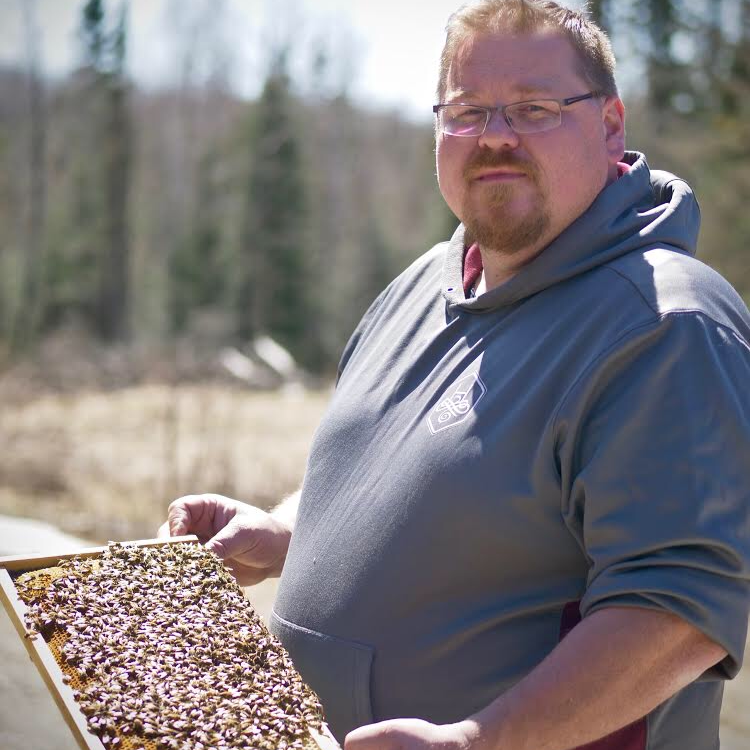
CEO - Hansen Honey Trucking
Chris Hansen is a Wisconsin native who first started keeping bees in 1998 on the dairy farm where he was raised. Since starting his own honey farm, Chris has dabbled in just about everything the beekeeping industry has to offer. Originally a farmer, mill worker, and truck driver by trade, Chris has carried his many skills over to his life as an apiarist. Combining his love of honeybees and history of truck driving, he founded Hansen Honey Trucking in 2012. Originally just wanting to transport his own bees, he moved outside of the industry standard and designed his own custom package bee transport trailer. Now 15 years and four trailers later, he has become a leader in the package bee transport industry. When he isn't working, Chris enjoys spending time camping, fishing, and watching movies with his wife and eight kids.