Bee Swarmed with Mateo Kaiser (381)
Swarm season moves fast, and knowing when—and how—to respond can make all the difference. In this episode, Jeff and Becky talk with Mateo Kaiser about how Bee Swarmed is helping beekeepers connect with swarm opportunities in real time.
Mateo explains how the platform streamlines swarm reporting, reduces confusion for the public, and increases the chances that swarms are safely collected and rehomed. The conversation also explores practical swarm management decisions, including when to split colonies and how to stay ahead of swarming pressure during rapid spring buildup.
Looking ahead, Mateo shares how emerging data tools—like swarm timing predictions and trap placement insights—are giving beekeepers a new way to anticipate swarm behavior rather than simply react to it.






Mateo Kaiser joins Jeff and Becky to discuss how Bee Swarmed is changing the way beekeepers find and collect swarms. Built to connect the public with local beekeepers quickly, the platform helps remove the chaos that often surrounds swarm calls and replaces it with real-time alerts, cleaner communication, and better outcomes for both bees and beekeepers.
The conversation begins with a timely Hive IQ question about swarm prevention and colony expansion. Jeff and Becky talk through the challenge of managing strong spring colonies, when to divide, and why waiting too long can cost both bees and honey production. That leads naturally into Mateo’s work and the growing role Bee Swarmed plays in modern swarm management.
Mateo explains how the system works, how beekeepers receive and claim swarm alerts, and how image recognition is helping filter out wasps and other mistaken reports. He also shares how Bee Swarmed has expanded beyond simple notifications into public education, library outreach, and large-scale data collection.
Looking ahead, Mateo describes new tools under development, including local swarm timing predictions and swarm trap placement guidance based on environmental and historical data. For beekeepers hoping to catch locally adapted bees, reduce missed opportunities, and better understand swarm patterns, this episode offers a practical look at where beekeeping and technology now meet.
Websites from the episode and others we recommend:
- Bee Swarmed: https://beeswarmed.org
- Honey Bee Health Coalition: https://honeybeehealthcoalition.org
- Project Apis m. (PAm): https://www.projectapism.org
- The National Honey Board: https://honey.com
- Honey Bee Obscura Podcast: https://honeybeeobscura.com
Copyright © 2026 by Growing Planet Media, LLC

______________

Betterbee is the presenting sponsor of Beekeeping Today Podcast. Betterbee’s mission is to support every beekeeper with excellent customer service, continued education and quality equipment. From their colorful and informative catalog to their support of beekeeper educational activities, including this podcast series, Betterbee truly is Beekeepers Serving Beekeepers. See for yourself at www.betterbee.com

This episode is brought to you by Global Patties! Global offers a variety of standard and custom patties. Visit them today at http://globalpatties.com and let them know you appreciate them sponsoring this episode!

As a beekeeper, you want products that benefit you and your bees. When you choose Premier Bee Products, you choose hive components that are healthier for bees and more productive for you. Because we believe that in beekeeping, details make all the difference. Premier Bee Products: Better for bees. Better for beekeepers. Use promo code PODCAST for 10% off your next online order.

APIS Tactical is a beekeeping brand focused on innovation. We create a wide range of gear for beekeepers of all types—whether you’re managing a few hives or working bees every day. We combine science and artistry to create purposeful, hardworking gear. We’re here to help you care for your bees with confidence, so you can focus on what matters most—your hive.

Thanks to Strong Microbials for their support of Beekeeping Today Podcast. Find out more about their line of probiotics in our Season 3, Episode 12 episode and from their website: https://www.strongmicrobials.com

HiveIQ is revolutionizing the way beekeepers manage their colonies with innovative, insulated hive systems designed for maximum colony health and efficiency. Their hives maintain stable temperatures year-round, reduce stress on the bees, and are built to last using durable, lightweight materials. Whether you’re managing two hives or two hundred, HiveIQ’s smart design helps your bees thrive while saving you time and effort. Learn more at HiveIQ.com.

We’d like to thank Vita Bee Health for supporting the podcast. Vita provides proven tools for controlling Varroa—from Apistan and Apiguard to the new VarroxSan extended-release oxalic acid strips—helping beekeepers keep stronger, healthier colonies.

Thanks for Northern Bee Books for their support. Northern Bee Books is the publisher of bee books available worldwide from their website or from Amazon and bookstores everywhere. They are also the publishers of The Beekeepers Quarterly and Natural Bee Husbandry.
_______________
We hope you enjoy this podcast and welcome your questions and comments in the show notes of this episode or: questions@beekeepingtodaypodcast.com
Thank you for listening!
Podcast music: Be Strong by Young Presidents; Epilogue by Musicalman; Faraday by BeGun; Walking in Paris by Studio Le Bus; A Fresh New Start by Pete Morse; Wedding Day by Boomer; Christmas Avenue by Immersive Music; Red Jack Blues by Daniel Hart; Bolero de la Fontero by Rimsky Music; Perfect Sky by Graceful Movement; I'm Not Running Away This Time by Max Brodie; Original guitar background instrumental by Jeff Ott.
Beekeeping Today Podcast is an audio production of Growing Planet Media, LLC
** As an Amazon Associate, we may earn a commission from qualifying purchases
Copyright © 2026 by Growing Planet Media, LLC

Bee Swarmed with Mateo Kaiser (381)
Gwen Mosley
Hi, my name is Gwen Mosley and I'm here at the North American Honey Bee Expo in 2026. And I'm from Laurille, Ohio. Welcome to Beekeeping today.
Jeff Ott
Welcome to Beekeeping Today podcast presented by Betterbee, your source for beekeeping news, information, and entertainment. I'm Jeff Ott.
Becky Masterman
And I'm Becky Masterman.
Global Patties
Today's episode is brought to you by the Bee Nutrition superheroes at Global Patties. Family-operated and buzzing with passion, Global Patties crafts protein-packed patties that'll turn your hives into powerhouse production. Picture this: strong colonies, booming brood, and honey flowing like a sweet river. It's super protein for Your bees and they love it. Check out their buffet of patties tailor-made for your bees in your specific area. Head over to www. globalpatties.com and give your bees the nutrition they deserve.
Jeff Ott
Quick shout out to and all of our sponsors whose support allows us to bring you this podcast each week without resorting to a fee-based subscription. We don't want that, and we know you don't either. Be sure to check out All of our content on the website. There you can read up on all of our guests, read our blog on the various aspects and observations about beekeeping, search for, download, and listen to over 300 past episodes, read episode transcripts, leave comments, And feedback on each episode and check on podcast specials from our sponsors. You can find it all at www.beekeepingtoday. com.
Thank you, Gwen, for that wonderful opening from the floor of the North American Honey Bee. Expo.
Becky Masterman
When sounds like one of our young beekeepers. How fantastic is that?
Jeff Ott
So much fun to see those young beekeepers come up and they're so excited to be there with their parents or their grandparents, as the case may be And they're so excited to be around all the bees and bee equipment, it's really infectious.
Becky Masterman
Can you imagine if well you did get started younger.
Jeff Ott
Yeah Not that young.
Becky Masterman
Okay. Okay. Fair enough. I wish I I got a head start on it. I mean, that's that's just a great way to get introduced into beekeeping. Maybe in the future of beekeeping is in great hands because we've got some youth coming up who who are really learning a lot at a young age.
Jeff Ott
I used to take my daughter to the bees with me. If you've anybody's been to the honey show, Amanda's now helping us at the expo. uh n North American Honey Bee Expo. And but when she was little, she would go help me with the bees and and work the colonies and everything with me as as much as a three or four year old can. Anyway, so So then she used to go to daycare and so one day I got this call from the person who got daycare and she said, Oh your daughter got stung by a bee and you know and it's just like, Okay, well no no big problem. When I picked her up She said, I like the bees so much, I wanted to show my friends how nice they were. So I went to pick one up and it stung me. And it was so funny. Because she had never been she hadn't been stung. In the bee yard, working the bees. So it was it was quite the shock to her.
Becky Masterman
Uh-oh. That's one way to get introduced. Is she still a beekeeper today, Jeff?
Jeff Ott
No. But she would like to get bees, they just can't get them on the property, right?
Becky Masterman
Okay. So that wasn't an exit state?
Jeff Ott
No, no, an exit. No. Okay. No, she's really involved in them. Likes them. This is a great time of year. Things are picking up. I'm excited. It's just like through the winter, it was like a drudgery day after day. And now it's like There's always something to do with the bees.
Becky Masterman
Yes, it's been it's been a a really cold spring for my bees, and so it is nice to have temperatures. That don't make me feel guilty if I need to get in and check something.
Jeff Ott
For today's high by cue question Hive IQ tool comes from Michael Fredou from Newberry, Vermont. Let's uh play his question and then we'll come back and talk about it.
Michael Fredieu
Hello, my name is Michael Fredieu and I'm from Newberry, Vermont. My daughter and I have eight colonies and we've been working more with strong overwinter hives going into the spring buildup. My question is about swarm prevention versus colony expansion. When a colony is rapidly expanding and pushing seven to nine frames of brood, how do you decide between splitting the hive, manipulating the brood nest, are simply adding space with supers. I want to prevent swarming, but we also do not want to slow down honey production or weaken the colony too early What indicators are you looking for inside of the hive that tell you it's time to act and how aggressive should that intervention be?
Jeff Ott
Thank you, Michael, for that wonderful question. It's a very timely question. It is a question of eons of beekeepers. How do you see that bees are going to swarm? And what can you do to prevent it? What do you do, Becky?
Becky Masterman
So that's such a good question.
Jeff Ott
I don't have an answer.
Becky Masterman
How about for sure something? For sure something. I want to go back to a podcast that we recorded with Steve Donahoe and Paul Horton. Paul talked about the fact that he never divided. And I was I was just in shock. One, he didn't need to because he had so many survivors. He he divided very few if if anything to keep his number where he wanted it to be. He didn't divide then, but I immediately asked the question, how do you do that? Because it would be exhausting to keep trying to curb your bees desire to divide because swarming is a natural reproduction of the colony. And so if you have a healthy colony, if you have resources coming in They're going to want to swarm. And his answer was that he actually had a source for queens with genetics that had a very low tendency to swarm. They were very comfortable to be very, very crowded. in the colony and to stay put and so so he didn't have to do as much swarm prevention. My message though to Michael is that if you don't have those genetics If you don't do a divide or something like a Demaree method where you are literally dividing the bees put on top of each other, if you don't make that step for the bees they're very likely going to do it for you. And that's when you really do lose your your honey production because you've got your colony dividing, the bees are going to lose a good portion of their foraging force. And then even if you have a strong population when the nectar flow comes in, if they're not of foraging age, then that that nectar flow is just going to pass you by. So eight to nine frames, I I would I would a hundred percent be dividing those colonies at at that point. That's that's a kind of a standard number for a divide. And if you don't want the extra B's, you can do a demarae method, but even if you have eight to nine frames of brood, that's still a lot to to do a Demaree. Although somebody can disagree with me, but that's still a really strong colony that is going to want to swarm as soon as those resources start coming in, like that nectar flow starts.
Jeff Ott
It's a difficult and challenging question, especially if you're a small scale beekeeper with two hives and you don't want to grow to three hives or or four hives. I typically advise against going through a search and destroy of queen cells in a colony 'cause one, it's so disruptive and two, it doesn't work all the time. I mean, they'll still swarm. You miss one swarm cell and they're still gonna swarm.
Becky Masterman
Sometimes you're gonna find it on the end honey frame, just like magically appeared. So so I I agree with you. I think that's good advice that you you share because it is that search and destroy. Seek and destroy. That's a good Metallica song, but it's not a good beekeeping method.
Jeff Ott
It always comes back to Metallica, doesn't it, Becky? I suggest maybe if you can't expand to three or four colonies and you have two in the back, or you just don't want to expand at all. You could always find another beekeeper who's looking for a nuke and you can work out a situation where you can do a divide and give that beekeeper a nuke. and charge or not, it's up to you. But I think the divide's the best way to go. Just letting them swarm and be freebies is not the best way to handle it these days. It's a difficult seasonal question that beekeepers have to face.
Becky Masterman
The more proactive I think you are, the less stressful your your season might be. And If you start looking for signs, it's really a matter of being ahead of their space and growing instead of reacting to their congestion because the signs that they use to decide if they're going to swarm are signs that are really difficult for us to maybe see. And so we can tell if there's nectar in the brood nest. we can tell if there's there's congestion, but they they started getting those signs earlier than we were able to read them. So being aggressive for me personally with making sure they have enough space, understanding what that nectar flow does to the colony and and just how much they can put up as far as honey in a week if they've got a good flow and a good population. That's really important. But there are ways to divide your colony where you make sure that you can leave the parent colony, the older queen in place so there's not a disruption of brood, and you let that divide grow more slowly, so then it's your parent colony that's going to produce that honey. And your divide colony is is great to prep for the next winter. It is a I think a solid strategy.
Jeff Ott
Well, Michael, we hope we answered your question or provided some insight into how you can address that. And your whole topic about swarming is a perfect lead-in to today's guest, Mateo Kaiser of BeeSwarm.org. And that's someone you want to be aware of in case you don't Get in front of the swarming situation.
Betterbee
Swarm season's here. Are you ready? Get the Colorado bee vac made just for Betterbee. The CBV as beekeepers call it. Is the top hive relocation vacuum out there. It's built to gently collect up to 10 pounds of bees with very little loss. Don't miss out, grab your Colorado bee vac today at betterbee.com. That's betterbee dot com.
Apis-Tactical
This episode of Beekeeping Today podcast is brought to you in part by Apis Tactical. A beekeeping brand focused on innovation. They use new designs, new materials, and new ideas to bring more joy to beekeeping. Apis Tactical creates a wide range of gear for beekeepers of all types. Designs, new materials, and new ideas to bring more joy to beekeeping. Their products are built with purpose and they're already getting attention well beyond the US, with beekeepers in Europe discovering them through this podcast. If you're looking for well Made beekeeping gear from a company that understands the work. Take a look at Apis Tactical. You can learn more at apis-tactical.com
Jeff Ott
Hey everybody, welcome back. Sitting around this great big virtual beekeeping today podcast table. Down in California, we have Mateo Kaiser. Lead Bee, if you will, for right now of beeswarmed. org and Becky and St. Paul. Welcome to the show, Mateo Thanks very much for having me.
Becky Masterman
Oh, I'm so glad you accepted our invitation because you are doing some great things. So this is going to be a fun, fun hour.
Jeff Ott
The first time I heard of you is when my local bee club, Olympia Beekeepers Association last year signed up and said today became part of the Bee Swarmed organization. I hadn't heard of it. And so it's like, wow, this is a really cool idea. Why don't you tell us a little bit about yourself? Then we'll get into Bee Swarmed and what that does for beekeepers and communities and people around the country.
Mateo Kaiser
Sure thing, yeah, so I'm a I'm a California master beekeeper from the UC Davis and I've been beekeeping now for yeah, five or six years. Uh didn't realize this when I got started beekeeping, but I'm actually the fifth in line of my family who's gotten into beekeeping. Oh wow. Wow. But uh it skipped a generation and then and then got to me. Like you said, yeah, I run I run uh b swarm. org and is now I guess the largest swarm reporting community, not just in North America, but in Australia as well. And so we send storm alerts to beekeepers. And I got started with beekeeping, catching a swarm kind of spontaneously. I've been I've been thinking about getting into beekeeping, I've been doing all my studying, watching my YouTube videos, doing my reading. But hadn't taken the leap and then a swarm landed in a neighbor's yard and it meant that it was time to go. And so ran over to the forward box and brought him some keys. And the rest is the rest is history. Um and so Was uh was uh maybe think that that now I spend all my time working on swarms.
Jeff Ott
One way or the other. Give us a high-level overview of what be swarmed is and then we'll go into it a little bit deeper.
Mateo Kaiser
The core goal is to get swarms to beekeepers uh more quickly and more easily, right? So most beekeepers don't have a website, they're looking for swarms. through word of mouth, through I was looking at my local Facebook pages, that sort of thing, and usually you're too late. And people when they see a swarm, right, they're usually a little bit panicked. I can't tell you how often I've shown up to pick up a swarm and the person who was there before me was the local police officer. Uh right, people people that are really they're really often quite panicked. And so got thinking about well what what would a really a a better way be to to notify beekeepers really, really quickly. And so what we do is is the public reports swarms either through our website or one of our many partners. We work with I think sixty or seventy beekeeping uh organizations and different kind of bee adjacent nonprofits. So I just basically anyone with an interest in in protecting swarms. And then we send those reports out to the local beekeepers. We then can claim the swarm really, really quickly. So now we're able to get a beekeeper out to to swarms usually within within 15 minutes and get the public health quickly and make sure the bees get into a hive.
Jeff Ott
Now is this a app that the beekeeper carries on their phone? How are they notified?
Mateo Kaiser
Yeah, so it runs our website and we send notifications via email, WhatsApp, and text message. So of course that way beekeepers are are getting notified really, really quickly.
Jeff Ott
Is it first come, first serve, or I mean you're gonna have two beekeepers fighting over the swarm saying who got the text first, or is it you grab it and you you have it. Yeah, exactly.
Mateo Kaiser
So the first beekeeper to claim the swarm gets it, and that's not just for the beekeepers. Of course it's annoying when you show up and someone else is is already there. Um I've heard plenty of stories uh about beekeepers butting heads But of course it's it's also for the public. I always feel bad for people if they if they post a beautiful swarm on Facebook and put their phone number in the caption because you know they're getting twenty, thirty messages maybe if they're in a in an area with a lot of beekeepers. And each beekeeper is trying to be the first one to come pick it up. That can be quite quite hectic to the person who's reporting to bees who just wants wants help and just wants a clear answer on what's what's gonna happen next. So the way it works is that the first beekeeper to claim the report gets the contact details and the exact address. And the beekeepers are notified based on their location. So when they sign up, they can set a radius, right? So some beekeepers, they only want to catch swarms for a couple of miles around around the point that they set And some beekeepers are willing to go 100 miles for a swarm. It really depends on where you are. And so beekeepers can set their alert radius, they get those notifications, they get a look at the notification, right? So they're they're getting kind of the basic information, oftentimes a photo. uh a nice photo of the bees, uh the situation, how long have they been there, are they in a tree, in a wall, on the ground, some details, some comments from the the person reporting it as well. And then they're able to of course follow up. If they're claiming this one, they're able to follow up and get get all the details that they need to to respond.
Jeff Ott
That's really nice. And you're right. Forever and a day it's been a phone call and you go there and drive twenty-five miles and there's nothing there or someone else has already picked up the bees and And you don't know. So this would be real handy to have as a beekeeper, especially in the springtime.
Becky Masterman
But yeah, you work really hard to make sure that beekeepers aren't collecting wasps. or actually physically going out when it's it's a wasp report. Can you go through some of of what you're doing in order to both help the reporter and the beekeeper?
Mateo Kaiser
Through this project I I've become a bit of a data nerd, and so I spent a lot of time pouring over the numbers here. And last fall we were seeing sometimes Some weeks in fall, thirty percent of the reports were were obviously wasps, right? People I think this is a really interesting topic that that so many people, right, they think honey comes from the supermarket and they can't tell the difference between a bee and a wasp. I have now invested a lot of time and and money into perfecting a system to to uh keep up with with people's people's, I guess, inability to tell the difference. beautiful high resolution pictures of hornet nests or or obviously yet yellow jackets. And so I thought there's gotta be a fix for this. And so we've now trained an image recognition model. that can identify, yeah, it's around ninety-seven percent accurate I'd say, identifying wasps and hornets. And so with the help of some beekeepers, uh it was actually really nice. Uh we put together a little game called the Bee Detector and beekeepers could review photos. And some beekeepers obviously spent obviously spent all weekend reviewing photos because in a couple of days they reviewed over 25,000 photos And so these boards. Yeah, yeah, so ZumdKub has got really into this. Uh adding a leaderboard uh makes people competitive than comes out. So uh so people are are uh yeah, spent I was I looked at it after we I posted it and went away for the weekend and and then uh took a look back and and realized that that yeah that the beekeepers had some of them had spent all weekend uh playing around with this. And of course is a huge help because the the model was trained on tens of thousands of photos from my naturalists and from Swarne's own database. But of course There are some edge cases here and there's not a great database of honey bee swarms. And so we don't have the largest database out there of honey bee swarm reports. Most of the research that I look at is based on a couple of thousand, right? We now have tens of thousands of storm reports that we've saved. And of course It takes some time to train the model here, and so we needed actually human help to look at some of these edge cases where maybe it's a a blurry a human can obviously see it's a swarm. the dark outline in a tree of a kind of a sphere, but uh the model needed some help there and and beekeeper's really stepped up to to help us out there and train the model. And so it's getting better. I just pushed out an update, so it's it's getting better and better. And now what's able to do is it's able to send Well beekeepers can now in their settings choose to get only reports that have been verified to be these. So then you're maybe if you're in an area where there's a lot of reports coming in, I I wanted to avoid beekeepers getting fatigued if they're getting three, four, or five alerts a day. during the spring, so they can they can choose to only be alerted of really the highest quality swarm swarm reports where we're sure that these are honey bees. And then of course you can you can leave that setting off and then you get notified of reports without a picture, reports where where our model wasn't quite sure. So we let people filter that way. Uh and it's useful for the public now too because we're able to filter out wasps entirely. So if we're sure if we are sure that it's a wasp nest, then I don't send it to beekeepers since most beekeepers they don't want to hear about wasps. And I'm able to show kind of an information page to the public letting them know that look, these aren't bees, these are actually wasps, here's how you might want to deal with them. And actually the same thing we're able to do this for for bumblebees now as well. So we use the Zer the Xerce Society's bumblebee resources. Since it's it's quite rare, but it does happen that we get reports of a bumblebee nest and of course there we try to explain to people that you shouldn't you shouldn't get rid of these bee bumblebees. They're they're really valuable and will actually leave on their own, right? Since they are they w unlike a bee swarm, they won't take up permanent residence in your in your wall, um they will leave after the after the spring season or will disappear. And so it it helps to really quickly be able to provide a much better experience to the public, where otherwise they're waiting for a beekeeper to tell them it's a wasp. and I'm annoying beekeepers by some sending them uh wasps. And so now it's a much smoother system and especially this year, where we're expecting three or four times as many reports as last year, it'll be really important to to filter those out and get beekeepers some some more high quality information.
Jeff Ott
It's quite the undertaking. Is it just you doing the program and do you have a team working with you? How did this start as an application and where is it going?
Mateo Kaiser
Yeah, so it started out well actually a little bit as a way I I I thought it'd be a nifty idea to to see if I could get this off the ground and and thought it'd be a nice way to teach myself some some web development. Uh and so the first version was was built 100% by by me, myself, Nai Uh but as it's grown, it's it's uh it's outstripped my capabilities. And so now there are there's a developer and a and a data scientist who who helped me out. and a couple of research advisors who volunteer their time to help validate some of the data, validate ideas that that I have for for the new data mapping. uh then the new data map dashboard that we're building and so they've they've helped uh to kind of validate the direction there as well. Um and then the data scientists have been building that. So that far outstrips my own my own capabilities and and nowadays I spend most of my time Talking to beekeepers and doing outreach as well. So one of the benefits of having this as a national service is that I'm able to do all kinds of outreach that a local beekeeper or a local association it wouldn't make sense for them to do So that looks like well, I run I run some Google ads to basically steal swarms away from exterminators. That's when people are maybe ending up with an exterminator, making sure that they see swarmed first and and get to a beekeeper that way. This year did some outreach to 14,000 libraries across the US and we organized a couple hundred Beekeeper talks in libraries. So having a beekeeper uh come in and give a talk to 20, 30 people. Um sorry sometimes really small scale, really local. I've reached out to about 7,000 farmers markets this year I have them put up flyers since it's also a place where people are are maybe interested in in doing things for bees. What else? Thirteen thousand cities across the US, letting uh things like City Arborist and City Vector and Test Control and Animal Control letting them know there's a resource out there for for reporting high UV swarms and there's also um 911 dispatchers have also turned into an important way to get get information out there Since they get calls about B swarms all the time and and many of them, many of these dispatch senders don't have a beekeeper or anyone to call. And so they route calls uh into the system as well. And so beekeepers are getting getting alerts that way as well.
Jeff Ott
Oh that's really smart. I hadn't thought of uh reaching out to the 911 operators. That's really good.
Becky Masterman
I signed up on Bee Swarmed, I think, late, late last year, so I saw some of the the wasps. come through and everything. But this spring or actually it was winter, when you sent the email about your plan to get beekeepers into libraries on a large scale that you just mentioned I was so, so impressed. I because you're not just providing a service for beekeepers, but you're actually you're getting beekeepers out there. And some some beekeepers are already doing talks, but what a great gateway for beekeepers who are involved in your website so you know that they've got some swarm experience, which is one of the most fascinating things to talk about, but then to give them that introduction into a public library. I was so impressed. But how hard was that to schedule those two hundred talks?
Mateo Kaiser
Yeah, I I I generally don't think about how hard something will be before doing it. I I think how cool it would be if it would work. Um but there were some there were some hiccups. Uh it'll definitely it'll go smoother next year, but it came about naturally. Some libraries when I when I reshot them last year about hanging up flyers. were interested in having a beekeeper come in and I I I didn't have the the capacity to do it then. But what's been really nice is that the beekeepers are super, super engaged, right? They everyone is really excited about catching swarms. And so They want to get out there and so sent out a little survey and hundreds of beekeepers said, sure, I'll do it. So then got put them in touch with libraries and and so I I get emails every couple days from a beekeeper saying I just had my talk or I scheduled one. That's really nice to hear and I I hear from the public all the time too, right? And and most of the time I'm talking to beekeepers, so it's always nice to hear from the public that that this is working when when they say, I reported a swarm, I was I was freaking out, right? I had sixty thousand beats on my car. Uh and then Geekeeper So-and-so came over and walked me through it, showed me the queen, it was amazing. But uh I think we sometimes forget that that for people this is This is maybe the wildest experience in their week or month or a year even. Uh they've never e they've never even thought about a beast warm and and have never seen a beekeeper and then have a beekeeper come by and I think most of us are are more than happy to share, right? And then and then uh as you're collecting the bees it turns into a whole little a whole little TED talk sharing everything you know and I think that's that's that comes naturally to us. But I I think it turns into a really nice uh yeah, uh nice community education aspect too, because people they have they have no idea where their where their food comes from, I think And so for so many people this is a total eye opener. Even at a small scale, right? Two hundred talks, thirty, forty people, it adds up and I think the the quality of the experience that people have is is meaningful. I hope. I think it's right it's it's up to the beekeeper who goes out and does it. And I think All of the the positive th stuff that that Swarmed is able to do is is down to the beekeepers who are actually showing up, right? I I'm sitting at my computer making the tool work, but it's it's the beekeepers who who go out and catch the swarms and and and help the public out So they're the ones who are are engaged and are actually making this happen. It's always for me really rewarding to see these see see these wacky ideas pan out and see that speekeepers are totally willing to show up and and go do these things.
Becky Masterman
The number of libraries that ask that same beekeeper back the following year is probably going to be pretty high because it's a great seasonal topic and so you didn't just create an opportunity, but I bet you maybe created a a tradition in in some of these libraries.
Jeff Ott
So Yeah, I hope so. I hope so, yeah. What is the cost to the beekeeper for joining b swarm.
Mateo Kaiser
org? Yeah, so I try to keep this really flexible and so for beekeepers and for associations, it's it it runs on a range of free to to pay what you want. And so I I'd love to send alerts to everyone for free, but text messages actually get quite expensive when you're sending tens of thousands of of alerts. And so beekeepers can get email alerts for free. and they can get text message or WhatsApp alerts for pay what you want contribution. I wanted to leave that up to the peekeepers to to say how much it's worth to them. So if whatever they give, they get access they get full access to to not just those those text message and WhatsApp alerts, which they actually make you about ten to ten times as likely to claim a swarm. I was against the idea of of charging beekeepers per swarm or giving giving beekeepers sort of pay to play that you if you pay you get faster access or something. We don't do that. Everyone gets alerted at the same time, but of course people are more likely to check their text messages than they are their email during the day. You are a little bit more likely to claim a report even though you're getting notified at the same time as as everyone else. But you can get that for one dollar a month or whatever contribution you choose. Since I wanted to leave that open because beekeepers, a some beekeepers are claiming up to a hundred swarms a year. through swarmed and zombie keepers are are claiming one or two right so I wanted to I wanted people to to give and and contribute what they think the the service is worth to them.
Jeff Ott
And what about community organizations and other outfits, the libraries or the nine one one operators what's the fee to them charge to them?
Mateo Kaiser
Yeah, totally free for the public to to use. Of course contributions are welcome, but but it's totally free for the public. But of course some beekeepers they are they are are charging and this is sort of a fine line that I I tried to Set the expectation right here that in most places swarm removals are something a beekeeper will do for free. But of course we also get a lot of polany removals. And so I'm always trying to get more removal professionals on Swarmed because we do especially in the fall get quite a lot of removals and of course those those tend to be paid service and so I try to set the expectation based on what the person how the person fills out that swarm reporting form. Uh set the expectation for whether this is something that a beekeeper might charge for or whether it might be free. But using Swarm is is free for the public At the end of the day the goal is to get as many swarms to be keepers as as possible.
Jeff Ott
Makes me remember we need to hear from our sponsors. We'll be right back after these messages.
Becky Masterman
Beekeeping is demanding work. The last thing you need is equipment that can't keep up. That's why Premier Your B products builds every frame and hive body in our South Dakota factories with one goal in mind: reliability when it matters most. From our beefy pura frames to our natural profila hive bodies with rough interiors, we design for long life in the field and in the colony because we believe that in beekeeping details make all the difference. Premier bee products better for bees, better for beekeepers Visit online at Premierbeeproducts. com or call us today. Use promo code PODCAST for 10% off your next online order.
Vita Bee Health
We'd like to thank Vita Bee Health for supporting this podcast. Vita provides proven tools for controlling Varroa, APISTAN, and APIGuard to the new Varroxsan extended release oxilic acid strips. Helping beekeepers keep stronger, healthier colonies.
StrongMicrobials
Beekeepers, if you're looking for a smarter way to support colony health, take a look at bee bites from strong microbials. Bee bites are a new protein patty made with spirulina, Chlorella, and targeted probiotics. Designed to support nutrition without creating new problems in the hive. With 15% protein, bee bites are unique because they do not attract small hive beetles. A big deal if you've ever battled in facilities. Stations during feeding. Strong Microbials has been supporting beekeepers and farmers since 2012, developing high-quality commercial probiotics and nutritional supplements you can trust. Learn more about Bee Bites and their full line of bee nutrition at strongmicrobials. com.
Becky Masterman
Welcome back everybody. Mateo, you mentioned earlier that you started beekeeping with your swarm, but then you became a certified master beekeeper with the California Master Beekeeping Program. That's a lot of work and and a lot of investment of your time and energy and beekeeping brain power. So could you talk a little bit about becoming a master beekeeper?
Mateo Kaiser
Sure, yeah. I mean I I got into it actually during the pandemic and so YouTube university was was where I got started. Uh but wanted to wanted to formalize some of this some of this knowledge. It was always in the back of my mind to to do a master beekeeper certificate, could never find the time Uh and then they were actually nice enough to to reach out and and and offer if uh if I'd like to do the course. That way we could work together as well and to to spread swarmed in California. And so did took some time off in the summer to kind of speed my way through the course quickly. And so took some time to go through all through the different levels and swarmed was my capstone project to working on working on some different uh new tools uh for swarm was was what I got was allowed to do as my capstone project for the for the course. And it ended up being a really nice way to to formalize some of the knowledge and and refresh old old knowledge. And Learn some new things since uh some of the queen rearing aspects was not something that I had specialized in and so it was was really nice to to meet some new beekeepers, some people with amazing levels of experience I've gotten to work with. uh a couple of beekeeper mentors who've who've all taught me completely different things from different perspectives. And so it's it it all comes together to to build some nice experience.
Becky Masterman
Great. I know that program was working very hard and we can include a link to the California Master Beekeepers in the show notes
Jeff Ott
Yeah, and that's a relatively young program, isn't it?
Mateo Kaiser
That I don't know. I'm a relatively young Master Beekeeper. Um keeper, but I don't know how long the program's been around. But they have a really nice e-lab out out at UC Davis, they're doing they're doing some nice research as well uh nice master beekeeper program. Davis, California, at least they told me that this is the case, is the swarm capital of of California. They're out in the Central Valley where where they have the almond the almond fields and so there's a lot of migratory colonies coming through. And they are, I want to say the association outside of the Australian beekeepers, they are the association that sees the most swarms uh every year uh since they are in a in a in the area with a lot of beehives
Jeff Ott
You mentioned Australia a couple times. So be swarmed. You're focused on North America. Is that United States and Canada? United States. And then also where else internationally are you? Australia, obviously, I guess.
Mateo Kaiser
Yeah, so the service works everywhere. Of course there's a bit of a network issue, but I don't work to get swarms reported in areas where there are no beekeepers. And so nowadays now it's well established in the US. So basically anywhere in the US we're able to find a beekeeper for a swarm But in in Canada and in in Australia the the the network was was spottier. But basically that what I do there now is is if the local or the regional or the national organization wants to use Swarmed then then of course there there that's that's absolutely a thing we we can do. But I'm not actively going and recruiting beekeepers one by one the way I did in in the US, really where I started Yeah, started with the beekeepers first. It's a long work, it takes a long time. It took a long time to get to 10,000 beekeepers using the tool. But in Australia, the national organization reached out and said let's let's use this and they have a pretty centralized system where all the l local associations are part of the the national federation or or most of them are and so that national federation joined and of course then they are the ambassadors for this uh and they're bringing this to all of their members. And so that makes sense and it's working well down there and it's also really nice for me since their swarm season has flipped since they are in the southern hemisphere. And that way the the site is getting getting traffic where I'm paying the bills year round. Um and so now the site is getting traffic year round as well. Uh which is nice. So their storm season is ending now and and had peaked around December, January.
Becky Masterman
Did that mean that you had to make the sacrifice and travel to Australia?
Mateo Kaiser
I unfortunately have not been to Australia yet. It'd be really nice. Uh there's some beekeepers down there I'd like to meet. but we have not met before. I I was at the the World Beekeeper Congress in Copenhagen this year and that was super nice to meet a couple of of contacts who I've been working with on Swarm for years now, but had never met in person. And so I hope uh to meet a couple more of those people, hopefully at the North American uh Honey Expo this year. I keep meeting some of those people who I only know as as online friends
Becky Masterman
So that means you're you're not using the the fees everybody pays to fund a a travel program for yourself, are you?
Mateo Kaiser
No, not quite. Not quite. Um mostly goes to pay the bills, the b pay the bills to keep the website on. But maybe a travel program is in there in the future.
Jeff Ott
I I joked about a ro a road a roadshow across the US. We'll we'll see. You mentioned the North American Honey Bee Expo. If you get there, you'd hit a large number of the US beekeepers there. At least from the east coast of the United States for sure. And you could stop by our booth there too and say hi.
Mateo Kaiser
Yeah, we we need a small sponsor. Uh I uh went for a small sponsorship at the at the conference this year. Maybe next year I'll I think likely next year I'll be there in person.
Jeff Ott
Sounds like you're putting a lot of time into Bee Swarmed dot org. Is this your full time job or are you moonlighting with another full time job to pay the home bills
Mateo Kaiser
Well it sure it sure feels like my full time job. Um I spend more time on this than I than I do on my on my master's degree. Uh but I'm studying right now for for my master's in industrial design. But probably to spend as much or more time working on working on this since uh this has grown from a hobby project into a into a little business that that does take up a lot of my time. Uh right, if you think 10,000 beekeepers just the amount of I forgot my password or or I can't log in emails that that results in uh keeps me busy. Um and then I of course I lie awake at night thinking about what's what what the next thing that we're gonna build is. So it does does definitely keep me busy.
Jeff Ott
Well that's a great segue. What is the next thing you're gonna build? You have this great infrastructure in place. You have some name recognition that's growing and expanding. I imagine every spring, every every year it's it's getting larger. What do you see in the future? three to five years, what tools are you working on? What kind of screen development help for beekeepers, etc. ?
Mateo Kaiser
Yeah. So I mean the reach has already grown Quite a bit. So last year the reach was already much larger than the year before and and this year I expect it to be three or four times what it was last year. And actually reading Dr. Seely's Honey Bee Democracy book, realized, wait a minute, I'm sitting on all of this this data of honey bee swarms and and this is more there are there are more swarms in my database than anywhere else I've seen. why am I not doing anything with this? And so I got in touch with a couple of a couple of PhDs in data science who had a lot of experience here and they were able to point me in the right direction for some studies to look at how to even approach handling this kind of data. This is not my my area of expertise. And so now we're building a new data dashboard for beekeepers. And so the central element there will be a map, a heat map of swarms across the US. And so you'll be able to see about 17,000 past swarm reports on that map Uh but of course that's interesting to beekeepers sort of in a in a curiosity way. But I was really trying to think how can we use some of these these advancements in in satellite technology and make those available for beekeepers since there's quite a lot being done, especially in Europe. uh around biomonitoring. So how can we use satellite data and and different some ground data? How can we use that to tell us about the health of our ecosystems? But this is mostly being done for like corporate sustainability reporting. Nobody was doing this for for beekeepers and and trying to use this data as a as a useful tool for beekeepers, and so that's what I've been what I've been working on all winter. Uh so together with s with a couple of researchers and the data scientists, we've been building a model that is able to predict when swarm season will start in a given area. So kind of really locally, uh based on microclimates, based on Cumulative growing days, so that's different from from the date based on ultraviolet radiation, so how strong the sun is based on precipitation data. And backed up by a couple of a couple of research studies, we're able to predict when swarm season will start and peak and end in a season. So it's a nice way for beekeepers, I think, to to well know when they gotta make sure their hives are not about to swarm. uh and also to know when they should have their swarm swarm catching equipment ready and when they should be most most alert uh to catch swarms. But then the other thing that I'm that I'm even more excited about is the swarm track. prediction. So now we're able to forecast where the best locations for swarm traps might be. Because maybe we we tend to maybe hang up our swarm traps just in the ne in the nearest tree. I I leave a swarm trap near my hives to hopefully catch swarms that leave my house. But there is a science to this, it turns out. It's not just not just intuition. And so using things like tree cover and urban density, so actually the amount of concrete is actually measured to the space. the the amount of concrete, the amount of hollow tree cavities. So we use this we use a data set uh from NASA that tracks the height of trees. And then some research around how high or how tall and how thick the tree has to be to have a cavity that is large enough that Dr. Seeley has great research on how big the cavity needs to be for bee to investigate. Well, to have a caveat that is big enough for a bee swarm to nest in it, you need to have a tree of a certain height because then it has a certain thickness. And so A couple of different factors come together here that we're able to predict where are feral colonies potentially living. So if there's a lot of trees in an area with with cavities that could host colonies. then likely there are some feral colonies that are producing swarms in that area and those swarms could be caught with traps. And of course we have the data from from all the beekeepers about roughly where they are, where they are catching with swarms. And so using all that historical data as well are now able to give some suggestions about where in a given area, right? So you set your neighborhood and then you can see some suggested spots where if you can maybe in that area get a trap up. uh you'd be highly likely to catch some catch some colonies because they tend to be hotspots from the past.
Becky Masterman
So you just told me that you're doing your master's in industrial design and you're doing a volunteer PhD in actual swarms. That I mean you're collecting so much data. Are you sure you shouldn't be doing this formally?
Mateo Kaiser
It's it's not my background. Uh my background is in is in building things and my experiences in in building things, especially for beekeepers. But luckily I've had some nice help from different researchers who've who really just volunteered their time, right? I couldn't afford to pay them what they're what they're worth, but who volunteered their time who s who saw some some usefulness in this in this data. And helping turn what is now the biggest data swarms out there uh into a useful tool for beekeepers, right? And and so I'm still looking at there there are definitely some more really interesting avenues to go in here. Especially if we combine this with other data, right? It gets more and more interesting the more you layer it. So for example, hive inspection notes, so beekeepers. making notes of the hive's health or catching a swarm and then keeping track of its health over time. This gets more and more interesting to track How the bees are doing. I've been keeping an eye on the fact that that that we didn't have it right. We didn't wait there's been some changes in the annual honey bee loss rate survey. Like getting access to to all that data and trying to see what we can do with it. So I'm always always discovering new data sets, new interesting potential avenues for for how can we give beekeepers the tools to to keep up with some pretty erratic weather. I've been hearing from beekeepers who said, look, swarm season is five weeks early this year and it and is it's hitting me out of nowhere. And of course beekeepers are dealing with huge loss rates. Last year we saw something like 60% uh loss rates, of course, in the commercial industry is a is a bit of a different situation. But I'm hearing from beekeepers who've lost all of their colonies and are desperate for swarms to to fill up their hides as a as a cheaper way than than buying uh nucs and packages. And of course also locally adapted genetics, I think, are something that the beekeepers are becoming more and more interested in. And more and more they're seeing swarms as as healthy, free, or almost free, healthy bees that they can that they can go and catch. uh as an alternative to buying packages that a lot of times are not coming from the greatest stock and oftentimes are not arriving super healthy.
Becky Masterman
Speaking of healthy, I just read a paper that I can put in the show notes too, but it said it estimated that a swarm leaves with 25% plus or minus nine percent of the colony's Varroa. So So although they are a sign of of a robust colony that is reproducing with great resources when when their flowers are in bloom, they also are leaving with a problem, unfortunately.
Jeff Ott
I was thinking similarly with the concern about Tropilaelaps and the recent reporting that Tropilaelaps, the mite itself does go with swarms. That if the Tropilaelaps does hit the US shores, that having this understanding of swarming across the United States and having this heat map, or maybe even a moving heat map, where you can see the progression of swarms that might be of some use for those researchers who are tracking their Tropilaelaps or potential for Tropilaelaps or distribution of Tropilaelaps. If and should it get here.
Mateo Kaiser
Yeah. I've been keeping a close eye on the situation in Europe with the mites and also how how Australia dealt with the arrival of the Roa mites last year and how they kind of failed to c to contain the spread there. So this is uh definitely an interesting topic to to keep an eye on.
Jeff Ott
Definitely. Hey, I wanted to just jump back real quick because I was thinking you're talking about all the data and and when we were talking about you receiving all these false alerts for hornets and wasps and There is a group of professionals who collect yellow jackets and hornets and other wasps for their venom. And I've had a a local guy here, Zach, on on the show, talking about how he collects those yellow jackets. And that might be another, instead of just letting those reports go into the waste bin, reaching out to those subset of beekeepers who collect those wasps for venom collection and might be another another avenue of use for bee swarmed.
Mateo Kaiser
Yeah, interesting. I'll have to I'll have to see how many beekeepers I've never heard of this. So I I don't see how many beekeepers are interested in in this. I do hear from beekeepers occasionally that yeah they do actually help with wasps. But of course the vast majority of beekeepers are not not interested. Or we help out as sort of an extra service, right? If the if we're already there and the person is afraid to deal with the wasps, then then maybe we'll help out. I I I I spend a lot of time thinking about how to make a tool that works for everyone. Um right, and and making sure that it's not too complicated, but then it does offer interesting sort of niche tools since since we've all got different different things that we want to do. Um and so I'm always curious about finding out new ways. I I I'm still always finding new ways too that that people are using the app and actually the swarm trap predictions came out of this as well that the beekeepers suggested this to me as a as an option. I'd never thought of this. Suggested, well, hey, isn't it isn't it possible or I'm trying to do this locally based on the data that I'm getting from swarmed. I'm trying to figure out where I should place my traps. And so A lot of these requests I get a lot of really great suggestions from beekeepers and uh and what I end up building comes out of what they suggest.
Jeff Ott
That's the great way of growing it is to m find the use or have your users tell you what they would need and find useful. I was just thinking, even a just a checkbox, would you like to know about Wasp? Anyways, sounds like a wonderful app, and I think after this episode releases, you'll get a few more subscribers on the uh the service. I think it's a lot better than postcards at the post office on the bulletin board. They're of course more than welcome to join.
Becky Masterman
If everybody also paid maybe the cost of a package, that would be nice. I assume that every place you look you see you see a a spike in in reports at a specific time in the spring. Are you seeing places that have secondary or maybe other levels of spikes where where swarms seem to pop up at the same time, maybe that would reflect another nectar flow coming in or something like that.
Mateo Kaiser
Yeah, and and this one's huge, and and maybe the one that beekeepers don't expect. Since we all kind of expect the spring swarm season to come, we know it's obviously coming as as as spring gets started, but there is a secondary swarm season, but it's hard to tell when that's gonna be. Uh and I see a huge spike in my data, right? I see I see one peak in in the spring and I see another peak in in yeah, in most places around August. But in the new data dashboard you'll see that kind of granularly just in your area, what does it look like there? And that's based on based on that year's weather data. And it's based on those 17,000 historical data points. Uh and so weighting that data, right? So past experience plus the conditions from this year being used to predict when will that first spike be and then when will that second spike be. So I think I think that's one that that catches beekeepers Unawares. And so actually now that you mentioned this, maybe I will add an an alert for this because we have an alert in for peak swarm days because based on a really interesting study out of Germany. they found kind of really clear research-backed uh triggers for swarms specifically. So during swarm season, why do swarms come out in one day and not another day? And and it reflects what we kind of all know, right, after a couple of days of bad weather, on a good weather day the bees are really likely to swarm, right? Especially after this has been a containment period. But they quantified this and and and and really found uh found some hard numbers for me to go off of And so now we're able to send extra alerts to people. So all this data, all this data work, all these data dashboards will be coming out to beekeepers in the next couple of weeks. So just in time for spring. And then we will be able to start sending out extra text message alerts uh saying, look, you should really be on the lookout now because there's been three days of rainy weather and now the bees are primed to swarm. Uh and so I think that'll be a nice extra cue to remind beekeepers of some of those key moments.
Jeff Ott
Well Mateo, this is a great project that you've embarked on and and a very useful one too for beekeepers. I wish you the best of luck and would I be interested in having you back every spring just to talk about development in the Be Swarmed and As you start mining your data that you rehab there and and have the tools available, you'll be able to share it with our listeners and uh get them ready for the coming swarm season.
Mateo Kaiser
Yeah, absolutely. Right. So we're looking at sending some of like 300,000 swarm alerts uh this spring. And so your listeners are of course welcome to get in on that. Uh and and hopefully I'll be back next next winter or next next spring to let you know how the how the numbers turn out. Since now we're keeping a really close eye on this and and I've got my little dashboard where I'm I'm tracking the daily the daily spikes, but of course once the spring season and the summer season ends, uh I'll have sort of an end-of-year report that I'll be sharing with beekeepers uh to tell them about everything that we that we learned exactly.
Becky Masterman
And since swarm season has already started for some, maybe we meet with you a little bit earlier so we can get everybody everybody signed up next year in time.
Mateo Kaiser
Yeah. Things are already very, very busy for me. A lot of people I I I'm seeing tons of beekeepers signing up The swarm alerts are are coming in, right? And so I'm I'm answering all kinds of emails and of course trying to finalize these these data tools. We've been working on them all winter and now it's coming down to the wire to get them out in time for for beekeepers to use them this season.
Jeff Ott
Well thank you Matteo Kaiser of Beastwarm. org. I encourage our listeners to go out and check it out and to get signed up. It's a great service. Thank you, Mateo, for joining us today.
Mateo Kaiser
Yeah, thanks very much for having me. It's a pleasure.
Becky Masterman
Oh, we appreciate it.
Jeff Ott
I like the fact he's spending all that time getting his masters, but most of his time is spent on beast swarmed. I I I don't know. I as a parent I I focused on that quickly.
Becky Masterman
No, I think I I my guess is that he has the capacity to do both, but but what what our listeners did not see was that I mean th they had to have heard it, but I think he was smiling the whole time. He loves this. His heart and soul is in this project and it It's it's more than a project, it's it's kind of a revolution in in how beekeepers are collecting swarms and honestly how all the organizations, all the bee clubs, this is such an efficient way for them to disseminate swarm information and and collect swarm information, be able to do it through B swarm. So but but yeah, how much fun was that?
Jeff Ott
Yeah, it was great. Our our club talked about it last year and and I only half listened, not apologize. I mean it just it just was I heard it and I but I didn't hear it. I didn't follow through. But after talking to Mateo and learning more about the app and the history and where he's going with it, it's like What a brilliant, brilliant idea and I really support it. I support what he's doing.
Becky Masterman
For years the Minnesota Hobby Beekeepers just had a this great great way to collect and report swarm information and just a dedicated member who took care of it. And so when I when I heard they switched over, I was like, okay, well this has to be good and you know, I was interested and so that's when that's when I signed up. It's impressive. It it really it is impressive as a beekeeper watching this process. It's I I I did not report or or I did not um collect any swarms or or take advantage of anything but and I it was later in the season. But I'm interested this year. Maybe I have free time this year. That would be fun.
Jeff Ott
You need to get a few more colonies.
Becky Masterman
I need more bees. I need more bees.
Jeff Ott
And that about wraps it up for this episode of Beekeeping Today. Before we go, be sure to follow us and leave us a five-star rating on Apple Podcasts or wherever you stream the show. Even better, write a quick review to help. other beekeepers discover what you enjoy. You can get there directly from our website by clicking on the reviews tab on the top of any page. We want to thank BetterBe, our presenting sponsor, for their ongoing support of the podcast. We also appreciate our longtime sponsors, Global Patties, Strong Microbials, and Northern Bee Books for their support in bringing you each week's episode. And most importantly, thank you for listening and spending time with us. If you have any questions or feedback, Just head over to our website and drop us a note. We'd love to hear from you. Thanks again, everybody.
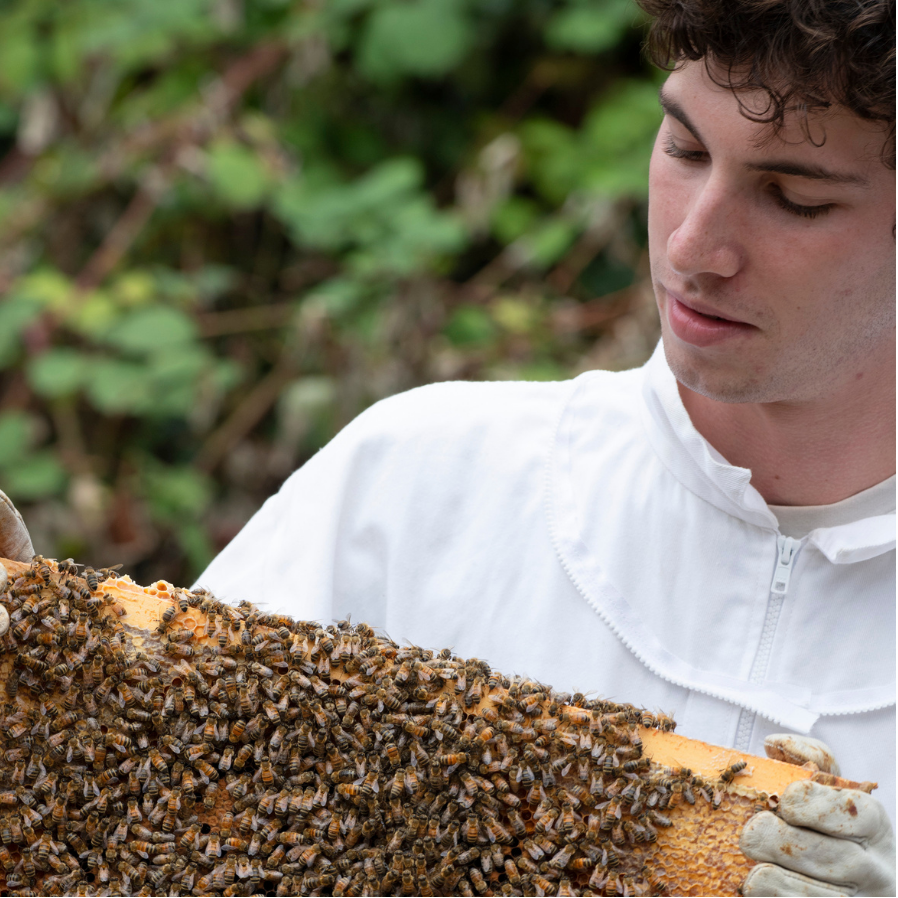
Managing Director, Swarmed
Mateo Kaiser is a 5th-generation beekeeper, Master Beekeeper, and the Managing Director of Swarmed. Swarmed sends swarm alerts to over 10k beekeepers across North America and Australia, connecting them with the public to safely relocate wild swarms, while building one of the world's largest community-sourced pollinator datasets.