Apple Podcasts
 Spotify
 YouTube
 Goodpods
 Amazon Music
 Overcast
 Castro
 PocketCasts
 Podchaser
 RadioPublic
 RSS Feed
 Spotted Lanternfly Honey: Beekeeper Opportunity? (377)
Spotted lanternfly honey is gaining attention across the beekeeping world. In this episode, Jeff and Becky talk with Dr. Robyn Underwood and Dr. Ferhat Ozturk about what this honey really is, how it’s produced, and what it means for beekeepers navigating invasive species.
In this episode of Beekeeping Today Podcast, Jeff Ott and Becky Masterman explore a topic that can divide beekeepers, almost immediately: spotted lanternfly honey.
Today's conversation centers on spotted lanternflies, an invasive pest spreading across the eastern United States. Guests Dr. Robyn Underwood (Penn State Extension) and Dr. Ferhat Ozturk bring both field experience and research insight to the discussion. Robyn shares firsthand observations from Pennsylvania, where the insect first established, while Ferhat connects the honey produced from lanternfly honeydew to broader research on honey composition and bioactive properties.
Together, they unpack what spotted lanternfly honey actually is, how bees collect it, how it tastes, and why it has generated both excitement and skepticism. The discussion remains grounded—this is not a silver bullet product—but rather a unique honey source emerging from an ecological challenge.
For beekeepers, the key takeaway is perspective. Even in the presence of invasive species, honey bees adapt, forage, and sometimes create new opportunities. Understanding those dynamics helps beekeepers make informed decisions rather than react to headlines.
This episode offers a balanced look at a rapidly evolving topic, blending science, field observations, and practical beekeeping considerations.
Websites from the episode and others we recommend:
- Spotted Lanternfly Distribution Map: https://cals.cornell.edu/integrated-pest-management/outreach-education/whats-bugging-you/spotted-lanternfly/spotted-lanternfly-reported-distribution-map
- Project Apis m. (PAm): https://www.projectapism.org
- Honey Bee Health Coalition: https://honeybeehealthcoalition.org
- The National Honey Board: https://honey.com
- Honey Bee Obscura Podcast: https://honeybeeobscura.com
Copyright © 2026 by Growing Planet Media, LLC

______________

Betterbee is the presenting sponsor of Beekeeping Today Podcast. Betterbee’s mission is to support every beekeeper with excellent customer service, continued education and quality equipment. From their colorful and informative catalog to their support of beekeeper educational activities, including this podcast series, Betterbee truly is Beekeepers Serving Beekeepers. See for yourself at www.betterbee.com

This episode is brought to you by Global Patties! Global offers a variety of standard and custom patties. Visit them today at http://globalpatties.com and let them know you appreciate them sponsoring this episode!
As a beekeeper, you want products that benefit you and your bees. When you choose Premier Bee Products, you choose hive components that are healthier for bees and more productive for you. Because we believe that in beekeeping, details make all the difference. Premier Bee Products: Better for bees. Better for beekeepers. Use promo code PODCAST for 10% off your next online order.

APIS Tactical is a beekeeping brand focused on innovation. We create a wide range of gear for beekeepers of all types—whether you’re managing a few hives or working bees every day. We combine science and artistry to create purposeful, hardworking gear. We’re here to help you care for your bees with confidence, so you can focus on what matters most—your hive.

Thanks to Strong Microbials for their support of Beekeeping Today Podcast. Find out more about their line of probiotics in our Season 3, Episode 12 episode and from their website: https://www.strongmicrobials.com

HiveIQ is revolutionizing the way beekeepers manage their colonies with innovative, insulated hive systems designed for maximum colony health and efficiency. Their hives maintain stable temperatures year-round, reduce stress on the bees, and are built to last using durable, lightweight materials. Whether you’re managing two hives or two hundred, HiveIQ’s smart design helps your bees thrive while saving you time and effort. Learn more at HiveIQ.com.

We’d like to thank Vita Bee Health for supporting the podcast. Vita provides proven tools for controlling Varroa—from Apistan and Apiguard to the new VarroxSan extended-release oxalic acid strips—helping beekeepers keep stronger, healthier colonies.

Thanks for Northern Bee Books for their support. Northern Bee Books is the publisher of bee books available worldwide from their website or from Amazon and bookstores everywhere. They are also the publishers of The Beekeepers Quarterly and Natural Bee Husbandry.
_______________
We hope you enjoy this podcast and welcome your questions and comments in the show notes of this episode or: questions@beekeepingtodaypodcast.com
Thank you for listening!
Podcast music: Be Strong by Young Presidents; Epilogue by Musicalman; Faraday by BeGun; Walking in Paris by Studio Le Bus; A Fresh New Start by Pete Morse; Wedding Day by Boomer; Christmas Avenue by Immersive Music; Red Jack Blues by Daniel Hart; Bolero de la Fontero by Rimsky Music; Perfect Sky by Graceful Movement; I'm Not Running Away This Time by Max Brodie; Original guitar background instrumental by Jeff Ott.
Beekeeping Today Podcast is an audio production of Growing Planet Media, LLC
** As an Amazon Associate, we may earn a commission from qualifying purchases
Copyright © 2026 by Growing Planet Media, LLC

Spotted Lanternfly Honey: Beekeeper Opportunity? (377)
Dave Joneson
Hi, this is Dave Joneson from Wisconsin, and I'm at the Midwest Honey Bee Expo 2026. Enjoy the Beekeeping Today podcast episode.
Jeff Ott
Welcome to Beekeeping Today Podcast presented by Betterbee. Your source for beekeeping news, information, and entertainment. I'm Jeff Ott.
Becky Masterman
And I'm Becky Masterman.
Global Patties
Today's episode is brought to you by the Bee Nutrition Superheroes at Global Patties. Family operated and buzzing with passion, Global Patties Crafts protein-packed patties that'll turn your hives into powerhouse production. Picture this: strong colonies, booming brood, and honey flowing like a sweet river. It's super protein for your bees and they love it.
Check out their buffet of patties. Tailor made for your bees in your specific area. Head over to globalpatties.com and give your bees the nutrition they deserve.
Jeff Ott
Hey, a quick shout out to Betterbee and all of our sponsors who support. Port allows us to bring you this podcast each week without resorting to a fee-based subscription. We don't want that, and we know you don't either. Be sure to check out All of our content on the website.
There, you can read up on all of our guests, read our blog on the various aspects and observations about beekeeping, search for, download, and listen to over 300 past episodes, read episode transcripts, leave comments, Comments and feedback on each episode and check on podcast specials from our sponsors. You can find it all at beekeepingtoday.com. Thank you, Dave Johnson from Wisconsin for that opening.
Becky Masterman
The Midwest is really taking care of these listener openers, so fantastic.
Jeff Ott
We have so many from the Midwest Honey Bee Expo and many more yet to be heard from the North American Honey Bee Expo. I think we're pretty good on on openers and one area we're kind of short on. We need some new questions.
Becky Masterman
Ooh. Interesting.
Jeff Ott
Listeners who are looking for the hive tool. Today's question comes to us from an email from Rich Colvin. I'm not going to read the entire question because he's pretty detailed in this question, but he really comes down to asking if there's a preference for his Langstroth Hives, whether he should be using like a single deep, a double deep or up to three mediums or using all mediums. He prefers all mediums.
It kind of simplifies his frames, simplifies his boxes, just simplifies his operation, just to have one size. Is he missing anything? He would like to know if there's a preference or a better way of using these.
Becky Masterman
Interesting. So he's looking at hive configuration and Honestly, hive configuration depends upon the bees, the beekeeper, and what you want to do to get them through winter. But all three of those in most climates you're going to have to feed your bees to get them into winter, which is fine. That's not a big problem.
But if he does winter in a single deep, that's a little bit more intense. because you want to make sure that that single deep has enough both feed and bees. And he didn't mention, but I wouldn't try to winter an Italian queen in a single deep. All of those work really well.
The Italians will be fine in two deeps, but when you're going with a smaller configuration I would want something like a Carniolan or a Caucasian be so that they're good with small spaces and can use their reserves cautiously.
Jeff Ott
He does not mention what bee he's using. He does mention he's in central Ohio. Yeah, yeah. It'd be hard to push an a Italian colony down into one deep or keep him in one deep.
through the season.
Becky Masterman
Well the that's the other thing too. If if you're managing a single deep during swarm season, that you have to really, really work hard and make sure that depending upon the kind of bee you kind of honey bee you have, they're not going to swarm on you. So it takes a little bit more intense management. But I do I like that single brood nest.
It's nice because then when you go to control mites you've got one brood nest instead of its spread across. And he mentioned another thing that I like is using one size frame for everything. So he said, you know, three mediums and then your supers, medium supers would match your brood nest. And although you keep those frames separate from each other for contamination purposes, you still have that ease of mixing and matching your equipment.
And that's that's always nice
Jeff Ott
What you've talked about doing in the past is that when you've perhaps you've used a honey uh frame enough, you can move it down quickly to the brood and just leave it down there in the brood chamber just to keep your wax fresh down in the brood chamber.
Becky Masterman
But I haven't wintered much at all in mediums. Is that something you've done, Jeff?
Jeff Ott
No, I've not. I've grew up in the Midwest and everything was too deep and to this day I kind of maintain a too deep box. I know Kim switched to all mediums. and was using all mediums all along and he talked about he preferred that all the time.
You know, just easier to maintain. It's lighter. One piece one type of equipment he could use as boxers no matter where he needed to. And the frames were interchangeable as long as he kept his wax separated, which he was really particular about.
Becky Masterman
Okay, okay. Yeah. But but I don't see a problem as far as what to do. I think that what gets confusing is when you start to do like I do some, like I'll do a deep and a medium for some of my winter configurations.
And once you get through to spring, if you want to move frames around, you've got two different size frames. You have to make sure you are aware of all where all your resources are. So I like the fact that he's thinking about it. But honestly, it's whatever you like best.
And the other advantage that we didn't say out loud, but those medium supers are going to weigh less. And so it's a little bit easier to move them around. So yeah, I think I think it's a good question. And did we just he gets a hive tool, right?
Even though we just said a bunch of stuff and didn't give him a firm answer.
Jeff Ott
Rich. Rich will receive a HiveIQ hive tool.
Becky Masterman
We gave him some things to think about.
Jeff Ott
You can't go wrong, Rich. There's no right or wrong way. It's what you're used to and you manage your bees for that box appropriately.
Becky Masterman
You can go wrong if you put an Italian in a single deep. I mean, for wintering, I wouldn't that wouldn't be my first choice. But other that other than that he can't go wrong.
Jeff Ott
Well folks coming up today, we have two guests talking about a very topical topic. Boy, am I redundant today.
Becky Masterman
It's okay. It's okay.
Jeff Ott
So uh today's topic, it's in the news today. the spotted lantern fly and we're talking two experts on spotted lantern fly at spotted lanternfly honey and they will be able to tell us the ups and downs about it.
Becky Masterman
I am really looking forward to this discussion because It's it's really a special honey and I bet beekeepers can do some great things with it. I'm excited to learn more about it.
Jeff Ott
Very good. Well coming up, we will be talking with Dr. Robyn Underwood and Dr. Ferhat Ozturk.
I'll have to ask him how he says his name, and we'll be talking to them right after these Messages from our sponsors.
Betterbee
For more than 45 years, Betterbee has proudly supported beekeepers by offering high-quality, innovative products, providing outstanding customer service, many of our Staff are beekeepers themselves, and sharing education to help beekeepers succeed. Based in Greenwich, New York, Betterbee serves beekeepers all across the United States. Whether you're just getting started or a seasoned pro, Betterbee has the products and experience to help you and your bees succeed. Visit betterbee.com or call 1-800-632-3379.
Betterbee, your partners in better beekeeping
Apis Tactical
This episode of Beekeeping Today podcast is brought to you in part by Apis Tactical, a beekeeping brand focused on innovation. They use new designs, new materials, and new ideas to bring more joy to beekeeping. Apis Tactical creates a wide range of gear for beekeepers of all types. They use new designs, new materials, and new ideas to bring more joy to beekeepers.
Beekeeping. Their products are built with purpose and they're already getting attention well beyond the US, with beekeepers in Europe discovering them through this podcast. If you're looking for well-made beekeeping gear from a company that understands the work, Take a look at Apis Tactical. You can learn more at apis-tactical.com.
Jeff Ott
Hey everybody, welcome back, sitting around the great big virtual beekeeping today podcast interview table. We have Dr. Robyn. Underwood and Dr.
Ferhat Ozturk. Thank you for joining us this afternoon.
Becky Masterman
We're so glad you both joined us. We're very excited to talk about some spotted lantern fly. all the stories you have and the research. So thank you.
Jeff Ott
Please introduce yourselves to our listeners. Give us a little bit of background about yourself. And your history with bees and this entire topic.
Dr. Robyn Underwood
Hi, I'm Robyn Underwood. I work for Penn State Extension. And I happen to live in Berks County, Pennsylvania, where spotted lanternflies were first introduced to our country. So that's how I came upon this research.
And it happened because I've been studying honeybees since, you know, before the turn of the century.
Jeff Ott
Boy, that sounds that sounds That sounds impressive.
Dr. Robyn Underwood
Uh old, yeah. So I got a bachelor's degree in entomology where I was lucky enough to take an entomology course with Dewey Caron who we all know and love, ended up doing a PhD in Winnipeg, Manitoba, with Rob Currie and on Honeybees and you know, have been in love with them ever since. I'm currently as Penn State Extensions educator, also a sideliner. So I keep about 135 colonies here in Pennsylvania for honey production and also for research
Jeff Ott
Is that Eastern Pennsylvania? Western Pennsylvania? I'm not familiar.
Dr. Robyn Underwood
Yeah, it is Eastern Pennsylvania.
Dr. Ferhat Ozturk
And Ferhat? My name is Dr. Ferhat Ozturk. I work at Sul Ross State University International in Eagle Pass, Texas.
I'm an associate professor of biology and program director of the biomedical sciences. I have been studying about medicinal honey for about 14 years. So I fell in love with honey in back in 2012 when I was studying about wound healing. I found out honey is the ultimate wound healer used by every civilization on earth for thousands of years.
And I was studying about cleft palate, how the pellet development occurs in our mouth during the embryogenesis and the mechanism of palatogenesis and wound healing is the same and then when I was studying about you know how I can improve this mechanism and I found out honey It just came out from there. Uh got my PhD in cellular and molecular biology from University of Nevada Reno back in 2003. Sorry, 2007. And then with Dr.
Christopher Proda. And then I got my postdoc at Creighton University and uh Nebraska Medical Center and worked on cell signaling, bioinformatics, and cleft palate. And then I returned to my home country, Turkey, in 2013 as the director of Honey Research Center there, and then as well as Chair of Molecular Biology and Genetics at the newly established university It was called Janik Bashela University. It was in my hometown and it was also like I returned to be you know to serve as an ST professor.
But then I found that they also have the Honey Research Center just being established there by a well-known professor, Kamritin Mohammed Yusuf from Malaysia. So he was the initial people, one of the pioneers that used honey for clinical trials in Malaysia and they treated thousands of patients by using just local Tualang honey. It was impressive and after that I kind of devoted my life to introduce honey as the a healing for humankind. So not only for wound healing, but also for gastrointestinal disease, respiratory infections, skin disorders, you know, even acne.
So honey can be used for various diseases and I'm trying what I am studying is which honey has more medicinal potential and how they can be applied for therapeutic purposes. And for I was uh I'm also there director of Honey Pathway, which is a USDA next-gen funded program and basically we are teaching our students about medicinal properties of honey through research and as well as BKME apprenticeship and like the internships and research about use of honey and bees for various purposes in the research.
Becky Masterman
Wow I did not know all of that was going on. That is very exciting.
Jeff Ott
This is gonna be a fun show. I am really interested in what you have to say. I was a paramedic for quite a few years. And during that time I also looked into the medicinal properties of honey and was always excited about what I was reading.
So we'll have to have more discussion on that. But that's not totally reason why we're here today. We're we're gonna talk about The spotted lanternfly? Robyn, why don't you give us some background on the spotted lanternfly?
Dr. Robyn Underwood
Okay. Spotted lanternfly is a type of insect Kind of like an aphid, but only much larger. It is a leaf hopper. Their mouth is a big hard straw that they poke into plants and suck out the plant phloem, which is the sugar water blood system of the plant.
And while they're doing that, you know, they're drinking all day long and Filtering out the nutrients that they need, but then excreting basically sugar water as well. So they tap into plants as adults, they're tapping right into trees, right through the bark. and excreting this honeydew, which is their excrement, on whatever is below them. So it could it's on the trunks of trees, leaves, other insects below them, or meat.
Are you there? Yep. Did you say you, Robyn? Yeah.
Mm-hmm. Because I go toward these insects.
Becky Masterman
So so you regularly are dripping with honey too? Well, it's all for science. I love that. That is that is such dedication.
That is fantastic. And then I this is kind of like a Disney movie because if honeydew drips on you then Do butterflies land on you and then drink it up? Is it I mean, are you like a flower then?
Dr. Robyn Underwood
I suppose I could be if I ever stood still. So yeah, what happened is when lantern flies were introduced, like I said, into Berks County, Pennsylvania, of course, you know Everyone freaks out about a new invasive species and they tried to eradicate them. So they were doing all kinds of things to try to control them which included, of course, learning what plants they like. And one thing they like as ad as adults is to gather on Tree of Heaven Lots of them, that's kind of where the mating occurs, and then they go off and lay eggs late in the season.
And so they were cutting down most of the tree of heaven, which by the way is also an invasive species. So it's not a big deal to be eliminating most of them. And then they would spray the bark of these trees with a systemic pesticide And the workers were noticing that some beneficial insects were visiting those trees and they got concerned about them getting harmed by the pesticides. So I came in and put up some Sentinel beehives to see if I they were bringing it back to the hive.
And at the time, it was quite early on. The paper was published in 2017. I did not see any impacts at all of the treatments and the bees were making their normal honey. It wasn't until twenty nineteen that beekeepers started to notice their honey was different.
So they suddenly were getting supers full of dark honey at times that is normally a dearth here in Pennsylvania, so August, September, and the flavor and odor were just something that was not familiar at all. And so the by that time I was working for Penn State and they were calling extension, they were calling the entomology department saying, What is this strange honey? And so I was brought back to the research at that time and again, you know, looking for pesticides again. So I found a collaborator in a research labee that was able to look for those specific pesticides.
And I'm naughty, I have not published that work, but um it's clear that spotted lanternflies are involved, that this honey is a result of honeybees collecting the lanternfly honeydew Pesticides are not a problem. Whatever they're doing, by the time it gets into honey, it's we can't really find it. And when we do it at exceedingly low levels, that would be safe. for bees.
But I have been ever fascinated by the this honey and its flavor and every new location that gets lantern flies that has beekeepers, it's a new fascination again So this story will never end until the lantern flies have finished occupying the entire country.
Becky Masterman
I have so many questions.
Jeff Ott
Yeah. Go ahead. You might have said this in your introduction. When was the spotted lantern fly initially found?
in Berks County.
Dr. Robyn Underwood
They found it in twenty fourteen. They think it probably arrived in twenty twelve. And interestingly it took about five years for the The I think it's because the population has to increase enough so that the honey bees have, you know, large quantities of honeydew to collect. And that's exactly what I've seen also now in other places.
So it's like five years after you first see them, that's when the beekeepers notice the honey.
Becky Masterman
In how many states is the spotted lanternfly found now? Seventeen or eighteen. So a lot of beekeepers are kind of in the path of finding this unusual honey. that they've never seen before and it possibly being the spotted lantern fly honey then.
That's correct. Mm-hmm.
Jeff Ott
Let's ask the obvious question right away because I'm sure all of our listeners are wondering the same thing. Is the spotted lanternfly honey safe to eat?
Dr. Robyn Underwood
It is safe to eat.
Jeff Ott
Can you call it honey at that point? From a legal labeling standpoint, is there an issue?
Dr. Robyn Underwood
It depends who you ask, but in my opinion, and we'll ask for hot this as well, the definition is, you know This sweet product that comes from honeybee colonies who collected either floral nectar or other exudates of a plant, right? So it's all phloem. It's just did it go into a flower? Did it pass through an insect?
or even they can directly collect the sap when the lantern fly removes their mouth parts and it starts directly leaking out of the plant through the wound. And there are other plants with these extra floral nectaries, right? So they all fr are from the same source and to me When it's then processed by honey bees, it becomes honey. Do you have a good definition for what honey is?
Dr. Ferhat Ozturk
Yeah, I mean you define it pretty well. So honey is basically the nectar that has been collected from plant secretion or animal excretions and as well as other from the blossoms of the trees and that has been enzymatically processed by the honeybees, like through the invertase enzyme that it's converted from sucrose to glucose and fructose, and then it has been placed and dried by the honeybees, I mean cured by the honeybees. So that's kind of the overall definition of the honey. So in this c according to this definition, which is International Honey Commission's definition, is this this way.
And I think USCA does the same. So it's a honey-dew honey, but yes
Jeff Ott
So two types honeydew honey or blossom honey, but they are both honeys. So in essence, instead of talking about sourwood honey, we're talking about lanternfly honey.
Dr. Ferhat Ozturk
Right? Yeah, there are other honeydew honeys I would say like there are for example there is a pine honey, it's a honeydew honey, oak honey, it's another honeydew honey Suprece, fur, these are different type of honeydew honeys available in the market or people can buy those.
Becky Masterman
Are honeydew honeys often very dark or is there a variety of shades of honey if it's from honeydew? They do seem to be dark honeys, yes. That's kind of exciting for maybe the beekeeper and the consumer. And are are we gonna get there about these the amazing properties of the spotted lanternfly honeydew as far as as what makes it maybe different than some of your other kinds of honey.
Dr. Robyn Underwood
Well were you maybe interested in tasting it first? Well I'm a little bit more than a lot of people.
Becky Masterman
So I can open the jar and start there. I have had this it actually s it's actually so I'm more of an IPA person than a honey person. So the smell is a good start because it's very robust. So that's a good start.
I'm gonna go ahead and taste it.
Jeff Ott
Go ahead.
Becky Masterman
I'm not afraid. I'm not afraid. I'm losing my finger, but That's a honey. That is lovely It's not super sweet.
I found okay, I like very few honeys. I found another one that's this is a good one. Okay.
Jeff Ott
I'll try it.
Becky Masterman
I'm giving it thumbs up This is the opposite of clover honey.
Jeff Ott
So Robyn gave us these samples of honey or the spotted landerfly honey or the honeydew honey at the North American Honey Bee Expo in January. And she was kind enough to give me this little tiny plastic bear because I was flying home and um I didn't want TSA to enjoy my honey. So here we go. There we go.
Becky Masterman
This is lovely. It's bold. It's complex.
Jeff Ott
Wow. I will I will tell you my my daughter who was helping us in the booth and at the North American Honey Bee Expo really likes this honey. Then when I explained to her what it was, she did she take a step back? She took a step back.
She literally I thought I was joking with her as a dad, but no, it's but it's good. So wow that's that's really fascinating. So let's take this opportunity right now, since this is a great place to break And we'll come back and we'll discuss the honeydewo honey in a little bit more detail. We'll be right back after these words from our sponsors.
Premier Bee Products
Beekeeping is demanding work. The last thing you need is equipment that can't keep up. That's why Premiere Bee Products builds every frame and hive body in our South Dakota factories with one goal in mind, reliability when it matters most. From our beefy pura frames to our natural Propola hive bodies with rough interiors, We designed for long life in the field and in the colony because we believe that in beekeeping, details make all the difference.
Premier bee products, better for bees, better for beekeepers. Visit online at premierbeeproducts.com or call us today. Use promo code Podcast for 10% off your next online order.
StrongMicrobials
Beekeepers, if you're looking for a smarter way to support colony health, take a look at bee bites from strong microbials. Bee bites are a new protein patty made with spirulina, chlorella, and targeted probiotics. To support nutrition without creating new problems in the hive. With 15% protein, bee bites are unique because they do not attract small hive beetles, a big deal if you've ever battled infestations during feeding.
Strong microbials has been supporting. Beekeepers and farmers since 2012, developing high-quality commercial probiotics and nutritional supplements you can trust. Learn more about Bee Bites and their full line of bee nutrition at strongmicrobials.com.
Vita Bee Health
We'd like to thank Vita Bee Health for supporting this podcast. Vita provides proven tools for controlling Varroa, APIStan, from Apiguard to the new Varroxan extended release oxalic acid strips, helping beekeepers keep stronger, healthier colonies.
Becky Masterman
Welcome back, everybody. Oh goodness. Okay. So so if you've listened to the show, you know that I'm I'm just not a huge fan of honey.
And I'm super excited that I've actually found one another one that I really like. I have to ask Robyn Ferhat, how do you feel about the taste of this honey?
Dr. Ferhat Ozturk
I mean I personally like it and um I have several samples of those and I tasted most of them, uh almost all of them, and I really enjoy them. I like the darker color honeys because they're not like they look more robust and not regular honeys, not everybody tastes as, you know. It's a kind of a different taste and I enjoy it.
Dr. Robyn Underwood
I am not a fan. I much prefer the very sweet light honeys from Blossoms. And it's interesting because part of how we identify the sunny is by the taste, so I'm forced to put that in my mouth. Regular food.
Becky Masterman
Right. I'll be over Well okay, now you know how I feel about having to taste my clover honey.
Jeff Ott
So Robyn, you impressed me with everything you do for science
Becky Masterman
Rob, this is fantastic. Because Robyn, you shared you've got a hund over a hundred colonies, a hundred and thirty-five colonies, so come late summer, you are producing a lot of this honey, correct?
Dr. Robyn Underwood
Well it's interesting, I'm not producing that much. It seems that when the lantern flies come, they're abundant, you make the honey, and then they kind of move off and go somewhere else, and then I can't make it anymore. And so I made it in 2020 in abundance almost by accident. And then I made some more this year.
But in between I didn't.
Becky Masterman
Oh interesting. So it might just be it might even be like a preference from the bees, possibly, or do you think it's the actual population of the lantern fly?
Dr. Robyn Underwood
I think it's the population of the lantern fly. They really like to feed on high trigger pressure phloem and I think they literally like suck the plants dry and they have to go somewhere else with healthier plants.
Jeff Ott
What I'm sorry, Robyn, that that term you used, high what?
Dr. Robyn Underwood
Turger pressure, like you know, like it flows into their mouth practically from the plant. Yeah.
Becky Masterman
And have you been tracking it for well it hasn't been around, I guess, long enough to have a really good understanding of of what it looks like in everybody's location In other locations has it come and gone also?
Dr. Robyn Underwood
It has. And it's very, very you know how beekeeping is lo you know, very location specific, even within a county, you know, it they're making it here, they're not making it there. So it's not reliable, which is unfortunate. Because if we do show that this is medicinal and we want to produce it on purpose for those purposes, it may prove to be difficult.
Becky Masterman
That's so interesting. Let's get to the fair hat. Tell us the good properties of this of this spotted lantern fly, honeydew honey. What's so good about it?
What have you found?
Dr. Ferhat Ozturk
In our lab we analyzed more than 500 honey samples until now, since twenty three twenty-two I would say. And then among those honey samples we analyzed, Spotted Lanternfly is a very bright one with medicinal properties. I would even say it can it is a one of the greatest candidates to become the medicinal honey of the United States. Like the manuka honey from New Zealand.
So spotted lanternfly honey has the same or similar potential. In order to identify southern Lanthanfly honey, thanks to Robyn and Penn State, you know, the pollen analysis lab, or they so sorry, Robyn's colleagues they were able to identify the qPCR To find out the DNA from the spotted lanternfly insect so that we are sure that these are spotted lanternfly honeydew honeys. So that is the way how we confirm it's coming from the source. And as you know, bees are not do not like monoculture.
So they go different varieties to collect their nectar and make honey out of this. So that's why not every SLF honey or spotted lanternfly honeydew honey is the same amount or is the same quality or the same medicinal value. So that's why we measure them by using quantitative PCR, like which is a DNA technique that we checked for the presence of the SLF DNA in it. And then after that, we analyze their antimicrobial, antioxidant, and physical chemical characteristics.
So to find out like how many how how large the zone of inhibition of How efficient they can kill the bacteria that cause disease in hospital infections. And our bacteria cephylococcus aureus So we grow uh the bacteria on a loan, I mean on a agar as a loan, and then we open up wells on it and we put the honey into those wells and we measure the zone of inhibition next morning. So which is like the larger the size of zone of inhibition, the higher antibacterial activity. And when we analyzed these had we had to head comparison with some manuco honey is which are purchased from different commercial sources.
So we found that Spotter Lanton Fly honeys, the average of them is higher than the average of the Manuka honeys So, I mean which is a great surprise and at the same time it's a kind of excitement for us because we were able to identify something very unique but also very high potential On the other hand, we also look for antioxidant properties. So basically, most of the diseases in our body are caused because of the oxidative stress, including Alzheimer and multiple cycloresis, or Cardiovascular diseases, as well as some even fetal imperfections, you know, lung diseases, they are all kind of related with oxidative stress. And when we can manage the oxidative stress in our body, So we will have a healthier life. So in order to combat the oxidative stress, we need to get antioxidants into our diet.
And we get these antioxidants from different fruits, but at the same time, honey is one of the major foods that is rich in antioxidants. And again, out of those 500 honey samples we found, there is almost always a uh great correlation between the color of the honey and the antioxidant activity. So basically we put a free radical into the into the solution and then we add honey into it and we see how quickly or at which percentage Honey can scavenge the free radicals which is showing its antioxidant activity or potential. So when we analyze spotted antifly honeys, Which are usually darker than manuka honeys or other honeys, so they have high antioxidant potential.
So overall, high antimicrobial activity, high antioxidant potential, it's kind of a golden bullet So to be graded as medical grade honey. And as Father Lands and Fly honeys, a good number of them are in this category.
Jeff Ott
Manuka honey has a a scale, what do they call it the UMF? UMF, yes, unique manical factors. Yeah, an MGO. So how does the lantern fly honey run at scale?
Because when you look at a jar of manuka honey and you've paid an absorbent amount of money for the manuka honey it always has that scale and says it above I can't remember the number on the UMF scale.
Dr. Ferhat Ozturk
The monocot tree, which is the spermum, it has a sp uh it has a chemical uh which is known as DHA and then when it is converted into honey by the honeybees in New Zealand mostly, it will produce MgO, metylglyoxal So methylglyoxal is an antiseptic agent, so it kills the bacteria as a chemical. But on the other hand, I mean the higher the amount of MGO the higher antibacterial potential of the manuka honeys and mgo used to be i mean still some of the manuka companies it use this scaling But the New Zealand government has made a new method of classification, they use unique manuka factor or UMF And UMF has 5 plus, 10 plus, 15 plus, 20, 25 plus, and above. So anything like uh most of the honeys, monocanies that are available on the market are 10 plus or 15 plus or even 5 plus or less. So these are the manuka honeys that are that are still medical grade but not very high and can be used for daily purposes.
But When the UMF value goes 20 or 25 plus, then these are the honeys that are used for that are used for wound gels or for wound dressings or hydrogels. So these are the ones that are used for Medical applications for burn wounds or other different types of wounds for treatment. What we found out is some of the SLF honeys are equivalent or even surpassing the 20 and 25 UMF values We are not putting them UMF because it is only for manuka. The method that we developed in our lab is uh bioactivity level, which is BAL So the bowel value is the way that we analyze or classify the honeys for for their medicinal potential.
Becky Masterman
Is the spotted lanternfly honeydew honey going to be standardized or how do beekeepers know that they have it
Dr. Ferhat Ozturk
Currently we are working on standardization of those because we would like to see if there is a s a particular active ingredient coming from the SLF honeys. But as Robyn mentioned, the SLF, I mean those insects, they will visit more than like hundred and seventy different plants. So the majority they go for Tree of Heaven or Black Walnut or uh even the vineyards, I mean the grapes and They go and collect them, but also they are as they collect the phloem, they are also collecting those phytochemicals in them like phylloonates and phenolic acids. So this is also inserted or embedded into the honey when the honey bees collect the honeydew and make uh honey out of it.
So in terms of standardization, the pollen uh analysis is helpful but it's not the only standard right now. So we are focusing on on the qPCR. The identifying the DNA source and then trying to classify them based on those. But overall, uh my approach as a honey uh expert for you know about 14 years of experience, I usually go with the bioactivity level, so this will encompass any honey in the world as long as it is real honey.
Any honey in the world will have a bioactivity level And then a spotted lantern fly will be on the classification of high bioactivity level honeys.
Becky Masterman
What's the moisture content or does that vary also?
Dr. Ferhat Ozturk
It does, depending on how quickly, yeah. I mean, you know, moisture content is mostly dependent on, you know, the m the environment, the climate, but as well as how quickly or how early. the beekeepers are collecting the honey. So it is as low as I think 13.
5 and goes all the way to 19. 8 or something like that among the samples that we analyzed So which is kind of dangerous because anything above 18 is considered, you know, uh prone to fermentation.
Dr. Robyn Underwood
You asked how a beekeeper will know they got this without a lab test. So of course it's based on several things. So first of all, the color, odor, and flavor that you experienced in the jar, and also the time of year that it was collected. and the location.
So whether there were lantern flies present and in abundance at the time. The test that Farhat is referring to with the qPCR is quantitative. So you can kind of find out how much lanternfly DNA is in there. And it does seem to matter.
There's some other tests that we've done that show that, you know, there's like high, medium, and low Because it's not pure honeydew honey. There are other things for them to forage on. There could be goldenrod and knotweed and things like that around. So it's like Partial lantern fly, partial nectar, and again it's going to be very location specific.
So this honey does vary But it's very obvious when lantern fly honeydew is in there. Like there's classic, like what you have, the odor, flavor, and color are the aftertaste. The aftertaste is like It lingers. Do you still like it?
I still like it, yeah.
Becky Masterman
I like I said, give me an IPA, I'm very happy. So this is my kind of honey.
Jeff Ott
I like I liked Robyn's uh skepticism. And you still like it?
Becky Masterman
I still like this honey. No, I love this honey. I love this honey. But let's let's talk about it.
So this is It's kind of it's so exciting to have a medicinal honey. I've got two questions. One, let's just start here. What does this do for the bees?
Do we know that this honey is great for the bees to winter? on because they're collecting it late season. Does do they get benefits from this honey?
Dr. Robyn Underwood
That is a great question. I'm glad you're asking me that because I've changed my tune on that. Certainly, it's a great savings to the beekeepers. If the bees can just feed themselves, right, they will fill up their hive and then some with this honey.
Lots of winters. We've had great success. However, this year we had in Pennsylvania a very long cold spell where they couldn't fly for a very long time. and I'm s hearing and seeing in my own hives some dysentery.
So honeydew honey is quite well known to have too high of an ash content. I don't have the data yet on that, but that's like my next sort of area of research is to go and collect honey from colonies with dysentery and without dysentery and measure the, you know, electrical conductivity and see because I think the honey's okay as long as the bees can have cleansing flights regularly, but I'm fearing now that perhaps if we have a winter like this year it it could cause some harm. I don't know what to tell beekeepers about how to predict what the Winters gonna be like or w how they should respond. I haven't had a chance.
Becky Masterman
Right. Right. No that's and that's even it's I mean it's even tricky to navigate that. How do you how do you keep them from storing that in their ne in the brood nest?
Jeff Ott
You'd have to move the hive.
Dr. Robyn Underwood
Or or in Europe they have to like strip it out and then feed them back sugar water, which I don't want to have
Becky Masterman
I remember I remember I was looking up some really, really old over a I think hundred year data uh reports on molasses and ash content and And I I caught that there's that honeydew reference as far as the early on beekeepers knew that or they they were saying that wintering and on honeydew led to dysentery And they were they were looking at that and the ash content and the and the honeydew. So that's so interesting.
Dr. Robyn Underwood
So again, I'm gonna go toward the hives with poop on them for science. I you are just a giver, Robyn.
Becky Masterman
I have to ask You mentioned knotweed. Did you mean Japanese knotweed? Because I found that for the first time in my bees and I collected a bunch of it. It took a little while to figure out what it was.
But That is dark too, but just not as dark as the lantern fly.
Dr. Robyn Underwood
Yeah, it looks blood red in the hive. It's really cool.
Becky Masterman
And it it also doesn't taste as bad as clover honey.
Jeff Ott
So the so the lantern fly, if I recall right, is spreading pretty quickly across the United States and they're worried about it being in the You mentioned they feed on the grapes as well. I know that there is some concern about the lantern fly in Oregon and Washington State here too. Like all invasive species, there's really not much Anyone or the beekeepers can do about the spotted lantern fly is there.
Dr. Robyn Underwood
Cut down all the tree of heaven. Good luck with that Yeah, it is a major problem for grapes, for vineyards. You know, that is the main commodity that suffers. And so there are lots of extension materials for them, specifically about lanternflies.
Becky Masterman
Spider and Lanternfly, they're invasive, not good, but there are definitely beekeepers who are now benefiting from this. They're kind of making the best out of a bad situation as far as able to collect and sell the honey and report on the properties. So is that happening across these seventeen or so states? Where people are beekeepers are specializing in lantern fly honey?
Dr. Robyn Underwood
Well, I see both ends. I see beekeepers that are like, this is gross, I don't like it, I don't want to sell it, I don't know what to do with it. And they just kind of put it in a pail and in the corner. And then there's others that are absolute brilliant marketers who are like, I'm gonna make this a thing and I'm gonna you know, charge extra and make it look appealing and they're doing very well.
So it's, you know, everyone has their own op opinion of the flavor and It's usefulness, but my advice is at least let the consumer know what they're buying.
Becky Masterman
That makes sense. That makes sense Taste it first.
Dr. Ferhat Ozturk
So And maybe I would uh just uh step in here for the selling this other lanternfly honey as you know it's a high medicinal value or it is a great honey. In order for the honey to be in the medical uh medicinal market or to be as medical grade, so there are some additional steps that needs to be taken, like the storage conditions, but as well as you know harvesting time you know less moisture. But there's also a gamma sterilization, uh s uh especially for manuka honey they always do this because there might be some endospores that uh inside the honey that may cause you know maybe design to any bees or other uh you know other organisms as well. So do not I mean try not to buy any medicinal honey from a corner store or you know something like that because I mean, yes, honey is medicine and has been used for thousands of years, but according to the regulations in the you know, medicine market today or medicinal, you know, value or FTA, so the medical grade honeys, they have to go through the process of gamma sterilization to be considered or to be consumed as uh medical grade honey.
Becky Masterman
I was at my local farmer market and I picked up a jar of honey and it listed every single possible benefit that that honey could give you and I was like, oh, we should be more careful than that when we're putting things on the label because It was it was curing, diabetes, it was it was doing all of these things. So really be careful everybody as far as sort of what you're claiming your honey can do. I mean it's exciting to be able to talk about it and to talk about what the research has shown. But be really careful about not practicing medicine with your with your honey.
Jeff Ott
The honey, dew honey from the spotted lantern fly has some qualities to it that people either like or don't like. Robyn doesn't like, Becky does.
Becky Masterman
No, I love it.
Jeff Ott
We're we're looking at the potential medicinal properties of the honey And I think that's really, really exciting. I know it's honey is very important in wound care and from ulcers and uh non-healing wounds. and to have another source of honey for this from an invasive species that's making good out of bad, basically, you know, so that's I like looking at the positive side of that and I'm hopeful that we can find that use for it.
Becky Masterman
That was well said.
Jeff Ott
Thank you, it was roughly said.
Dr. Ferhat Ozturk
But yeah, it it is it the effect of a sell of honey that you just tried? I mean it's kind of slow you down or not.
Jeff Ott
See unicorns. What is it? What is good in this honey What else should we know about the spotted lanternfly and or the honeydew honey?
Becky Masterman
I'll I'll say that the spotted lanternflies is making it more difficult for beekeepers to move their bees from state to state. So if you are in a state that has spotted lanternfly and you do move your bees to pollination, that requires extra certification.
Jeff Ott
And that's not because of the honey, it's because of the egg cases and the spotted lantern fly itself.
Dr. Robyn Underwood
It's just like anything, you need to get to know your pest, right? Like we all very well know the Varroa mite life cycle because we need to understand the enemy. Same thing with spotted lander flies. You need to know their life cycle.
You need to recognize the egg cases and what they look like as nymphs and what they look like as an adult so that you don't carry them to new places. Because they will lay their eggs on anything. practically any flat surface. They like your wood pallets, you know, they like rusty metal.
Could be anything.
Becky Masterman
Is there an estimated distribution of this pest? Is do they think that it's going to Travel all the way west?
Dr. Robyn Underwood
Well, first of all, if anybody wants to track where they are currently, you go to the Cornell webpage and look for the spotted lanternfly map. They are the ones that maintain the map regularly, every time there's a new sighting, new spot, they add it to the map. There also was a paper that tried to predict the distribution that will be And if I remember correctly, it was based on pretty much everywhere where there's tree of heaven was a you know, where they're probably going to be.
Becky Masterman
Do you know what zone that is? I'm sorry, I'm I'm asking you all the tough questions. I just I don't think we have tree of heaven in my part of Minnesota.
Dr. Robyn Underwood
Great, then you might be safe because they've shown that Technically, lantern flies can reproduce without it, but they do very poorly. So they would much prefer to have it and uh do very well when they have. Tree of heaven.
Dr. Ferhat Ozturk
And I think another thing is that the climate. I think I don't know if they will be ever come to very south like Florida or Texas or those areas. because of the like very hot uh summers.
Becky Masterman
It's hardy to zone four. Zone four to eight.
Jeff Ott
Well, Robyn for hot, we really appreciate you coming this afternoon and talking to us about the spotted lantern fly and SLH Honeydew Honey and giving us an opportunity to taste it live on the podcast. Well, it's recorded live on the podcast. And get our reaction. It's really quite fun.
And look forward to learning more as we learn more about the uses of the honey and also of the spotted lantern fly as it makes its way across the country.
Becky Masterman
Yeah, thank you both. What a resource both of you are as far as taking the lead on getting down to what this honey means for beekeepers, for bees, and for wound healing and mid medicine. So thank you both.
Dr. Ferhat Ozturk
Thanks for having me.
Jeff Ott
It's my pleasure.
Becky Masterman
Thanks for helping us spread the word.
Jeff Ott
It's gonna be hard for anybody to take that jar. of honeydew honey out of your hands.
Becky Masterman
I'm actually considering I need to start looking for a new source of this honey. This is the best honey. So good. It like it it just It's just such a cool honey.
I it's so impressive. It's so different. And it's I mean it's different than buckwheat honey. It's differ different than the Japanese knotwood.
It's different than any honey I've ever had. It doesn't taste like manuka honey, but you can kind of taste some of those undertones.
Jeff Ott
Those qualities. Yeah. I find anything with a hydrogen peroxide or the high values like that has a medicinal type kind of aftertaste or taste to it. And I was looking at the on the Cornell website and it doesn't look like the spotted lantern fly is supposed to be very big in Minnesota.
Becky Masterman
Ever.
Jeff Ott
Yeah, mill maybe a little bit down in the southeast corner.
Becky Masterman
Yeah. That's interesting because the whole like that association with the Tree of Heaven and I even though we are in that zone now, I haven't I just haven't heard of it being planted or spreading I could be wrong.
Jeff Ott
I could definitely be corrected, but I don't see where this is the map I'm looking at is connected with the tree of heaven, but it's kind of like the known risk regions. And so it's Central California, very big, of course through the all the valley there, Central Valley, and eastern uh Washington and Oregon where all the orchards and vineyards are And up cross a big swath of the Midwest. So I hope.
Becky Masterman
I mean and it would not be good for my bees to feed on and store that kind of honey for the winter with that ash content. So even though I really like this honey and and I of course I never wish for an invasive species to come. to spread. So even though some of them the bees really, really like.
But I will say, I will say though, it it it would be easier for beekeepers if it stays in a little bit warmer climates so that uh the bees are able to take their cleansing flights and um it's not a concern. Because that's I know I look at the calendar, there are i it's weeks between the bees being able to get out and when they do it's still it's like thirty-two degrees and a sunny day, which is, you know, not a great day for a bunch of bees to leave the colony and fly. So No.
Jeff Ott
Yeah, it makes a mess also. Like I mentioned before, I do like the fact that there is some good that could potentially be found in this honey, and I I'll just focus on that. I'll be probably annish about it.
Becky Masterman
I no, I I really it it's exciting and Robyn was just mentioning to us about how the story of the spotted lantern fly honey is is interesting and people enjoy it and honestly people are really sophisticated when it comes to tastes and flavors and I think they're really embracing just the variety of of honey. that beekeepers can provide. So I agree with you. We can we can be positive about this.
Negative about the impact to beekeepers moving bees or to the vegetation. But let's be positive about the honey.
Jeff Ott
And that about wraps it up for this episode of Beekeeping Today. Before we go, be sure to follow us and leave us a five-star rating on Apple Podcasts. or wherever you stream the show. Even better, write a quick review to help other beekeepers discover what you enjoy.
You can get there directly from our website by clicking on the reviews tab on the top of any page. We want to thank Better Our presenting sponsor for their ongoing support of the podcast. We also appreciate our longtime sponsors, Global Patties, Strong Microbials, and Northern Bee Books for their support in bringing you each week's episode. And most importantly, thank you for the next video.
for listening and spending time with us. If you have any questions or feedback, just head over to our website and drop us a note. We'd love to hear from you. Thanks again everybody

PhD, Extension Educator - Apiculture
Robyn received her BSc in Entomology and Applied Ecology from the University of Delaware and her PhD in Entomology from the University of Manitoba. She joined Penn State in 2017 and became a Penn State Extension Educator in 2022. She creates educational materials, webinars, and workshops including beekeeping content for all levels. Her research program focuses on applied honey bee questions. In particular, she has been studying organic colony management and its impacts on honey bee health and beekeeping economics. She is also studying spotted lanternfly honeydew honey and its use as a medical grade honey.
Robyn's research and extension aspirations work hand in hand. Conducting scientifically sound research projects to study beekeeper-applied questions is critically important. Bringing the results of the projects to the beekeepers through extension products then improves the industry while making beekeeping a more successful venture.
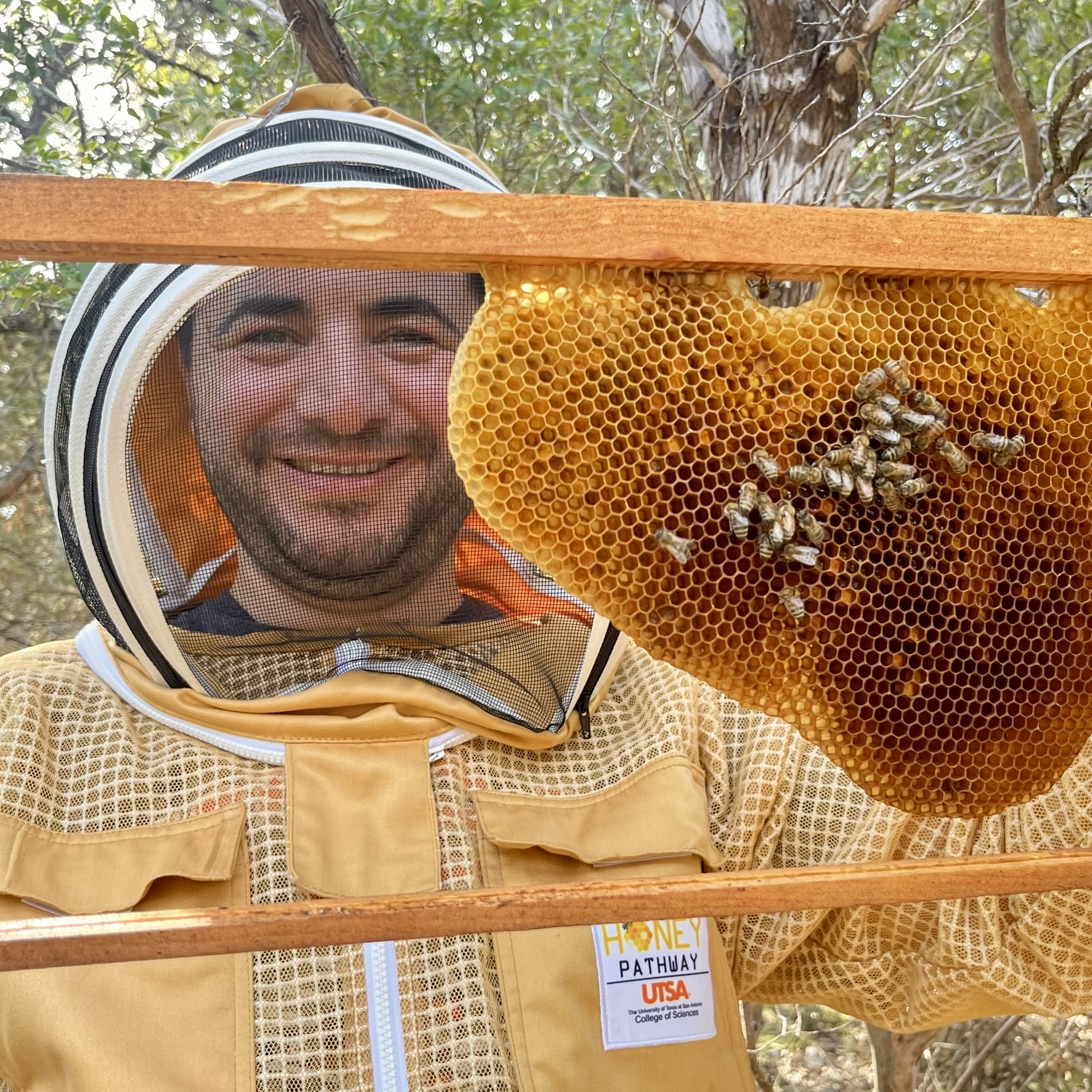
Medicinal Honey Expert
Dr. Ferhat Ozturk is the Project Director of the HONEY Pathway, Co-PI at the University of Texas at San Antonio (UTSA), and Associate Professor of Biology at Sul Ross State University International in Eagle Pass, TX. He also serves as the Chief Scientific Officer of MDM Wound Ventures designing EZHoney. Dr. Ozturk earned his Ph.D. in Molecular and Cellular Biology from the University of Nevada, Reno, with expertise in gene therapy, viral vector development, and biochemistry.
Recognized by the American Beekeeping Federation as a medicinal honey expert, Dr. Ozturk combines a strong biomedical background with a passion for exploring honey's therapeutic potential. His research investigates the biological and chemical profiles of mono-floral honeys from around the world, aiming to identify high-bioactivity U.S. honeys that rival or surpass current medical-grade options.
Dr. Ozturk leads a $2.9 million USDA-NextGen grant to support the HONEY Pathway, a national initiative to advance medicinal honey research while engaging students in hands-on education focused on local honeys. His work has been featured by Newsweek, Fortune, Science, and numerous local news channels and newspapers.
Outside of research and teaching, he enjoys spending time in nature, traveling, and participating in social responsibility projects with his wife and two children.