Apple Podcasts
 Spotify
 YouTube
 Goodpods
 Amazon Music
 Overcast
 Castro
 PocketCasts
 Podchaser
 RadioPublic
 RSS Feed
 Jamie Ellis: Improving Honey Bee Health (376)
Dr. Jamie Ellis discusses honey bee health research, practical beekeeping insights, and how current science helps beekeepers make better management decisions in the apiary.
Dr. Jamie Ellis joins the Beekeeping Today Podcast to discuss current honey bee research and what it means for everyday beekeeping management.
Jamie directs the University of Florida Honey Bee Research and Extension Laboratory and has spent decades studying honey bee biology, pests, and colony health. In this conversation, he shares insights from his work with beekeepers across the United States and explains how research findings translate into practical decisions in the apiary.
The discussion explores how modern beekeeping continues to evolve as researchers and beekeepers work together to better understand colony stress, pests, and environmental pressures. Jamie explains how scientists evaluate colony health and how different management approaches can influence outcomes in both hobbyist and commercial operations.
Varroa mites inevitably enter the conversation, but the focus remains on the broader question of how beekeepers can maintain strong colonies through informed management practices. Jamie discusses the importance of monitoring colonies, staying aware of emerging research, and adapting management strategies as new information becomes available.
Throughout the episode, Jamie emphasizes the role of communication between researchers and beekeepers. Scientific research is most valuable when it is translated into practical tools that help beekeepers keep colonies healthy and productive.
This conversation offers listeners a thoughtful look at how honey bee science continues to shape the future of beekeeping and how research institutions and beekeepers work together to improve honey bee health.
Websites from the episode and others we recommend:
- University of Florida Honey Bee Research and Extension Lab: https://entnemdept.ufl.edu/honey-bee/
- Project Apis m. (PAm): https://www.projectapism.org
- Honey Bee Health Coalition: https://honeybeehealthcoalition.org
- The National Honey Board: https://honey.com
- Honey Bee Obscura Podcast: https://honeybeeobscura.com
Copyright © 2026 by Growing Planet Media, LLC

______________

Betterbee is the presenting sponsor of Beekeeping Today Podcast. Betterbee’s mission is to support every beekeeper with excellent customer service, continued education and quality equipment. From their colorful and informative catalog to their support of beekeeper educational activities, including this podcast series, Betterbee truly is Beekeepers Serving Beekeepers. See for yourself at www.betterbee.com

This episode is brought to you by Global Patties! Global offers a variety of standard and custom patties. Visit them today at http://globalpatties.com and let them know you appreciate them sponsoring this episode!
As a beekeeper, you want products that benefit you and your bees. When you choose Premier Bee Products, you choose hive components that are healthier for bees and more productive for you. Because we believe that in beekeeping, details make all the difference. Premier Bee Products: Better for bees. Better for beekeepers. Use promo code PODCAST for 10% off your next online order.
APIS Tactical is a beekeeping brand focused on innovation. We create a wide range of gear for beekeepers of all types—whether you’re managing a few hives or working bees every day. We combine science and artistry to create purposeful, hardworking gear. We’re here to help you care for your bees with confidence, so you can focus on what matters most—your hive.

Thanks to Strong Microbials for their support of Beekeeping Today Podcast. Find out more about their line of probiotics in our Season 3, Episode 12 episode and from their website: https://www.strongmicrobials.com

HiveIQ is revolutionizing the way beekeepers manage their colonies with innovative, insulated hive systems designed for maximum colony health and efficiency. Their hives maintain stable temperatures year-round, reduce stress on the bees, and are built to last using durable, lightweight materials. Whether you’re managing two hives or two hundred, HiveIQ’s smart design helps your bees thrive while saving you time and effort. Learn more at HiveIQ.com.

Thanks for Northern Bee Books for their support. Northern Bee Books is the publisher of bee books available worldwide from their website or from Amazon and bookstores everywhere. They are also the publishers of The Beekeepers Quarterly and Natural Bee Husbandry.
_______________
We hope you enjoy this podcast and welcome your questions and comments in the show notes of this episode or: questions@beekeepingtodaypodcast.com
Thank you for listening!
Podcast music: Be Strong by Young Presidents; Epilogue by Musicalman; Faraday by BeGun; Walking in Paris by Studio Le Bus; A Fresh New Start by Pete Morse; Wedding Day by Boomer; Christmas Avenue by Immersive Music; Red Jack Blues by Daniel Hart; Bolero de la Fontero by Rimsky Music; Perfect Sky by Graceful Movement; Original guitar background instrumental by Jeff Ott.
Beekeeping Today Podcast is an audio production of Growing Planet Media, LLC
** As an Amazon Associate, we may earn a commission from qualifying purchases
Copyright © 2026 by Growing Planet Media, LLC

Jamie Ellis: Improving Honey Bee Health (376)
Susan
Hi, I'm Susan from Fayeville, Arkansas, and I'm at the North American Honey Bee Expo. Welcome to Beekeeping today.
Jeff Ott
Welcome to Beekeeping Today Podcast presented by Better Bee, your source for beekeeping news, information, and entertainment. I'm Jeff Ott.
Becky Masterman
And I'm Becky Masterman.
Global Patties
Today's episode is brought to you by the Bee Nutrition Superheroes at Global Paddy. Family operated and buzzing with passion, Global Patties crafts protein-packed patties that'll turn your hives into powerhouse production. Picture this: strong colonies, booming brood, and honey flowing like a sweet river. It's super protein for you. Your bees and they love it. Check out their buffet of patties tailor-made for your bees in your specific area. Head over to www. globalpatties. com and give your bees the nutrition they deserve.
Jeff Ott
Quick shout out to BetterBee and all of our sponsors whose support allows us to bring you this podcast each week without resorting to a fee-based subscription. We don't want that and we know you don't either. Be sure to check out All of our content on the website. There you can read up on all of our guests, read our blog on the various aspects and observations about beekeeping, search for, download, and listen to over 300 past episodes, read episode transcripts, leave comments, And feedback on each episode and check on podcast specials from our sponsors. You can find it all at www. beekeepingtoday. com. Thank you, Susan from Fayetteville For that fantastic opening from the North American Honeybee Expo.
Becky Masterman
Arkansas, one of my very favorite beekeeper states ever. How's that? Nice beekeepers in Arkansas though. So fantastic.
Jeff Ott
Thank you, Susan. Thanks for stopping by the booth. Becky, it's middle of March. And we're looking at the bees that survived the year and survived the winter and now they're coming in and we're looking at the empty boxes, or maybe you aren't, but I'm looking at some empty boxes that used to have bees in 'em last September. And you know, that leads to these two questions we've just recently received timely enough for the Hive IQ tool that we have the promotion going with our friends at Hive IQ. Basically, without reading both the these questions, one from Tom and one from Jessica. They're looking for clarification on what we had stated in an episode or two ago about the use of old B equipment.
Becky Masterman
I will say that I recommend to beekeepers that uh and it's based upon I know what University of Minnesota does too, is you start culling your frames in the fall by placing them in the bottom boxes so that in the spring, even if they they survive the the winter, they're not occupying the frames So what I do in my own operation is that if I know if I've got entombed pollen, if I have a frame or frames that are just too old, I put an X on them and then those are the first ones that I can pull out. Either obviously if there's a dead out or even if the bees make it through the winter, they're usually empty if they're in the bottom box. And then when I pull out frames, I'm actually pulling out the foundation and I am scraping and cleaning the frames and attempting to sterilize them. with bleach and reusing them so getting new foundation for them. As Jessica mentioned, woodenware is expensive and if we can make it safe and get use out of it, that's great.
Jeff Ott
So do you reuse the plastic foundation and clean that off and rewax that?
Becky Masterman
That's a level too high for me. And I know some people will have have mentioned to us that they're gonna they power wash it off and then they will go ahead and and paint the foundation on. I don't. And honestly, I I worry about one, all the time that would take me. Two, the brood nest wax has a lot of contaminants in it. It's got pesticides in it. It's got pathogens in it. And so I'm just I'm okay throwing that away and just Making a clean break instead of having to do the power washing and then do sterilization of that foundation and then and then rewax it But if I do have boxes that I'm painting, I'll go ahead and I'll torch them just to to be clean. I'll torch the inside of those boxes. Even if they're my own boxes. it's not a bad protocol to try to sterilize the boxes. And I think it's something that we don't do enough as beekeepers. And beekeepers or scientists like Megan Milbreth who's looking at EFB And other scientists are are I think when they're talking about viruses and how long virus the viruses can stay on comb and equipment, I think the the big answer is that we don't know. And so if we don't know I think right now beekeepers are are really taking it upon themselves to figure out what the protocols are to make sure that their equipment stays as clean as possible.
Jeff Ott
I'm just like 99% of all the other big I probably shouldn't say that many, but no. But I I'll often just blindly, as long as it's my equipment, I'll just reuse it. And I don't really care about it. I mean I think about it, but I say, I'm in a hurry, I'm just gonna reuse this box one more time. The time I do torch the inside with a propane torch would be if I'm taking that box out of rotation And repainting it and sanding it down and cleaning it all up. Then I'll take a torch and just get it good. Not to catch it on fire, but just pass it over the inside of the box. Boil some of that wax and propolis. Even though we want the propolis envelope, that's the time to take care of it and clean it up really nice.
Becky Masterman
It's interesting because I think that there are some pretty interesting data about taking dead out equipment. and putting it on colonies right away versus putting them in storage and then putting them in colonies and they find, I think I don't know if the metric was higher colony survival, sorry to quote part of a paper, but they found that it was actually better for the bees if that dead out equipment went straight back onto the bees instead of into storage and then onto the bees. And as we're going to be able to do that. There you go. So you're doing the right thing, so so keep it up. And honestly, not honestly with my my winter dead outs, I do my best to just put that put it back onto colonies. If I don't see the X's on the comb, I will put it back onto my colonies and I will build up those those populations for spring divides. So So but but I love that beekeepers are thinking about it and asking about it. Of course, I did just see a post of somebody who wanted found a bunch of old equipment and was gonna just get the bees right on the old, old comb, twenty year old comb that they didn't know a lot about. And, you know, the truth is that that could have such a devastating consequence for not just your apiary, but your neighbor's apiary if they're if AFB scales can live that long and you don't know why the colonies died. And so I do recommend pretty strongly that if you are a new beekeeper to go ahead and get brand new comb and and to start fresh there because it's hard enough to keep the bees alive, really hard to start identifying pathogens, and you don't want to have to be that new beekeeper who finds AFB in their colonies, 'cause that's really heartbreaking, right?
Jeff Ott
You probably have in the university, but destroying a colony and torching all the equipment because of American pallet root is very sad and uh it makes for a very long day. And you mentioned the stress of the bees already due to the Vroa associated diseases. Why compound that stress even more by putting them on old equipment that may also have pathogens? may also lead to any problems that if a colony gets a little weakened will just multiply itself. So
Becky Masterman
You might have to do some digging as far as the best way to to clean up boxes, but I get the economics of it and and I know you do too and and it It certainly can be done and so I'm I'm I don't think we're we're passing any judgment on that, cleaning up boxes, but just be really careful with that comb. And there are Pretty good data that show that bees do a little bit better on newer comb and so so that's that's a thing and even though Beekeepers like old comb, but um sometimes the bees maybe prefer the new stuff.
Jeff Ott
Well, and that's why it's a it's a good reason to get yourself into a a mindset of constantly swapping in and out of frames uh so that you're constantly bringing in new fresh foundation f for the bees to draw comb in the spring and Then there's some thought that constantly producing wax is is a healthy thing, healthy exercise for the bees.
Becky Masterman
Yeah, yeah, where we where we see that we know there's a lot of energy and nutrition that goes into it, but like you just said, there's There's some benefit for the bees, definitely. So very good. I that's the biosecurity talk I wanted to have today. So thank you, listeners. I appreciate that. Today's the year of biosecurity.
Jeff Ott
Thank you, Jessica and Tom. Stand by and I'll be uh sending you a hive tool soon. Everybody, today's guest is a return guest from several years ago, Dr. Jamie Ellis from the University of Florida. We look forward to having him on the show today to give us an update on everything he's been doing.
Becky Masterman
Which is a lot
Jeff Ott
Coming right up after these words from our sponsors.
Betterbee
For more than 45 years, Betterbee has proudly supported beekeepers by offering high-quality, innovative products, providing outstanding customer service, many of our staff are beekeepers themselves, and sharing education to help beekeepers succeed Based in Greenwich, New York, BetterBee serves beekeepers all across the United States. Whether you're just getting started or a seasoned pro, BetterBee has the products and experience to help you and your bees succeed. Visit betterbee. com or call 1-800-632-3379. Betterbee, your partners in Better Beekeeping
Apis Tactical
This episode of Beekeeping Today podcast is brought to you in part by Apis Tactical, a beekeeping brand focused on innovation. They use new design. Designs, new materials, and new ideas to bring more joy to beekeeping. Apis Tactical creates a wide range of gear for beekeepers of all types. They use new designs, new materials, and new ideas to bring more joy to beekeeping. Their products are built with purpose and they're already getting attention well beyond the U.S. , with beekeepers in Europe discovering them through this podcast. If you're looking for well-made beekeeping gear from a company that understands the work, take a look at Apex. You can learn more at apostash tactical. com.
Jeff Ott
Hey everybody, welcome back. Sitting around the great big virtual beekeeping today podcast table. Sitting down in Gainesville, Florida, we have Dr. Jamie Ellis. Jamie, welcome to the Beekeeping Today podcast. Welcome back.
Dr. Jamie Ellis
Hey man, thank you for having me. I obviously love podcasts, so it's really exciting to be able to be on your podcast.
Becky Masterman
I didn't think you'd start plugging your podcast so quickly, Jamie, but go ahead. Go ahead. I I will I'll tell you, Jeff and I have spent a lot of time at the North American Honey Bee Expo and the the Midwest Honey Bee Expo this year and and people come up and they literally say We like your podcast and we like two bees in a podcast. So we hear about you all the time.
Dr. Jamie Ellis
Well good. That's good. Yeah, we do we do have a podcast here like you guys and we we love it. It's a great way to communicate information and it is called two bees in a podcast. And I'm sure You guys know it's a fun thing to do to just talk about bees. And it seems like people benefit, right? Just like what you said, Becky. When we travel, we hear about it. And so I know that people are benefiting having these out there.
Becky Masterman
Well, it also I think just to dive right in it, we're gonna let you introduce yourself because we do have some new beekeepers listening, but I think you've probably noticed just as we have that beekeepers are reading scientific papers right now. They have really great ways to search for information, science based information on the internet. And there's just a new class of beekeepers where They want to hear the scientists talk as well as the the commercial beekeepers and as as well as people who are are coming up with great gear for beekeepers. So so it's It's kind of like a new era of beekeepers, the informed beekeeper era, where they're smart out there, so we have to work hard to keep 'em informed.
Dr. Jamie Ellis
Well the truth is is is information has never been easier to get And and folks can get it, you know, over podcasts verbally, like what we're doing here, but through through videos, through pictures. It's just absolutely everywhere. And so making sure that information is high quality is very important.
Jeff Ott
And very important. Well, yeah, Jamie, please tell us a little bit about yourself and how you got started in bees.
Dr. Jamie Ellis
Yeah, happy to do that. So again, my name is Jamie Ellis. I do work for the University of Florida. I specifically work in the entomology and entomology department, but my interest in bees started well before starting here. I actually got interested when I was very young, around eight or so. And beekeeping’s not in my family, so it took a few years for me to convince my parents that I wanted B. So I finally got they finally got me a colony when I was around twelve years old and that was not yesterday. That was that was oh oh oh you know, three and a half decades ago A little bit more actually. And so I I started keeping bees when I was young and I loved it, just absolutely loved it. And I'm from a rural area and so I participated a lot in 4 H and in high school and middle school I did a lot of science fair projects. And so Since I was a beekeeper, my 4-H and high school science fair projects were all bee themed. And so I did a lot of honey bee-related stuff. And in through that process I just fell in love with science and I went University of Georgia. I did my undergrad there and all four years that I was at the University of Georgia, I worked in the laboratory of Keith Delaplane, who Of course, is a noted B scientist and B extension specialist. And I learned a lot about B research and conducting business in a B laboratory. while I was there and Dr. Delaplane once said to me, He's like, Jamie, it's clear you like science, it's clear you like bees. Why don't you just put the two together? And it's like I just needed someone to tell me that. And I did. So then from there I went overseas to South Africa to uh Rhodes University where I did my PhD. And then I came back to the University of Georgia to do a postdoc. And then in 2006, I was hired by the University of Florida, which is where I've been ever since. Almost 20 years. So it's been a while here
Becky Masterman
And I was I was looking at your website, the University of Florida website, and and I saw the time between you got your your actual undergraduate and PhD degrees That's not enough time to do that, Jamie. So do you Do you want to explain just what happened?
Dr. Jamie Ellis
Oh I'm Yeah, okay. So So I don't have a master's degree, first of all. So so starting there, it was less common at the time to kind of skip your master's degree, but but It's somewhat common now. And and the way that I was able to do that was really a couple fold. So first of all, I had a lot of experience with bees. And a lot of folks who are getting into honey bees or any type of research, they have to learn their organism or their system. And so the master's degree allows them to do that. But I but I knew a lot about honey bees because by the time I rolled around to grad school, I don't know, I'd been keeping bees for ten years. And so I had that experience. Secondly, the master's degree is supposed to introduce you to research. And as an undergraduate, I had done research while in Dr. Delpane's lab. And I also did, of course, a lot of science fear I alluded to earlier while I was in high school and and even middle school So I I had already published a few refereed manuscripts as an undergraduate, you know, two or three at the time, which is about what master's students publish. So when I went overseas, to do my PhD at Rhodes University. I did actually enter as a master's student, but after one year converted to a PhD student. And so I finished all of my research and submitted my dissertation within two years and ten months. I graduated shortly thereafter and that's kind of how I got to uh have such a short time. I'd already come in preloaded with a lot of experience. Now I have had to learn a lot since. I'm not saying I was ready, but but I that's how I was able to do it. That's impressive.
Jeff Ott
That's really good. You've been at the University of Florida since you really started your professional career as an entomologist. What has been your focus? We talked earlier before we start your research interest What have been your main main goals, your main thrust of your program?
Dr. Jamie Ellis
Yeah, it's funny you say, you know, the main goals. One of the things that I always, always, always talk about is that be people kind of are unique in entomology circles. Most of our colleagues are a specialist of a science discipline, and they will use that science discipline on a variety of insects, so they're physiologists, they're microbiologists, they're toxicologists, etc. But honey bee folks, like myself, tend to be organism specialists and use a variety of sciences on our organisms. So You know, today I might be an ecologist, tomorrow I might be a behaviorist, the following day I might be a toxicologist. So lots of things interest me in the honey bee research perspective. If I had to categorize All that we do kind of put it in one or two large umbrellas. I usually put it in two. The first of those would be Honey Bee Husbandry. So that would be all the research that my team and I, my colleagues and I conduct to make bees healthy. So that would be disease and pest control, that would be nutrition, that would be toxicology, all the management-related issues. And kind of the second broad category that my team and I undertake would be wild honey bee ecology. Now that's a growing area in in my lab. It's not like we spend 50-50, 50% on the first area and fifty percent on the second. I would say we probably spend ten or twenty percent of our time on wild honey bee ecology and it's and it's growing. I'm going I'm getting more students, et cetera, interested. So basically managed honey bees and wild honey bees and within within the Both of those things, we've we've done a lot of different things. But that's part of what makes beek research so cool is that we're able to dabble in so many different fields of science and satisfy so many itches, so to speak.
Jeff Ott
Well you mentioned the wild honey bee studies. What would be the number one, number two area that your students are researching or finding interest in
Dr. Jamie Ellis
That's really straightforward and simple. We are trying to understand the importance of honey bees in natural ecosystems. This may surprise you, but it will also not surprise you. Most of what we know about honey bees comes from honey bees kept in white boxes. Right? We know so little about this creature in the areas where it's native. And we all make statements like honey bees are important for agriculture, they're important for ecosystem health. Well, we've got tons of information on honey bees and agriculture. We've got significantly less information on honey bees and ecosystem health. So we are trying to understand what honey bees do in natural ecosystems. And to do that. We've really had to start with some very elementary projects like where do honey bees nest, why do they nest where they nest? What's their nest site selection process going? When it's all kind kind of toward a goal, this kind of big vision of Someday having a better grasp of what they're doing where they are native in their wild ecosystems.
Jeff Ott
So I'll play a devil's advocate just for fun for your students' sake. Someone listening to this show may say, well, honey bees aren't native to North America. How can you study them in their native environment if you're studying them in your backyard. Is that a valid argument?
Dr. Jamie Ellis
Oh, that's an easy thing to to contradict. We don't study them in North America. We go to where they we go to where they are native. So we have active research program in South Africa to look at some of the um wild populations of African honey bees, and we've had some research even in Thailand where other species of apist are native. So we a hundred percent don't do our wild honey bee ecology in areas where they are introduced, but instead do it exclusively in areas where they are native. And so that's how we address it. That's a great answer.
Jeff Ott
I like it.
Becky Masterman
Are you ever tempted to take a queen back home?
Dr. Jamie Ellis
Never. Never. I tell you, I I you know, it's the the managed side of me is so focused on you know protection. Keeping bees safe. So I I it's I'm never tempted. I'm never tempted. I'm I'm totally fine leaving them where they are.
Becky Masterman
Okay, we're gonna talk about this for just a little little bit longer and then we can go to the the husband. husbandry side, but I think I saw a paper that you co-authored. It was maybe a student, but it was about you finding honey bee nesting in the ground. Please tell me all about that in like two minutes. Yeah, I'd be happy to.
Dr. Jamie Ellis
So I've got I've got a wonderful PhD student who's a student right now. She's gonna graduate later this year. Her name is Kaylin Cleckner, and she's one of the individuals who's done a lot of this work in South Africa. In fact, she's a student doing this this work there now. So she's finished her time in South Africa. She's processing data. One of the things that she was looking at was where are honey bees nesting in the research area? And so she would have to Find wild colonies, and she did that by putting out feeding stations and following these bee lines to these nests. And she did this thoroughly in sixteen square kilometers of area and found, you know, over a hundred hundred wild colonies And then she asked questions like, where are they? Are they in trees or in they in the gr are they in the ground? And we just have a paper now in press the where where she talked about one of their nesting preferences in the area where we're studying There's a high density of them in the ground. They're just nesting in holes in the ground. And these would often be burrows that small or medium-sized mammals created in the soil. And then once they stop using the burrows, bees will move in. And and this may be a preference. It also could be just dictated by the lack of trees in some of these areas. So it's a really neat finding because we think we always talk about apus mellifera as a tree nesting species, but Really they're just a cavity nesting species and looking for cavities that are available.
Jeff Ott
That kind of accounts for all the bees that are in the sidings of houses and in flower pots and the w Backyard Weber Grill.
Dr. Jamie Ellis
Well Jeff, let me expand that just a little bit. Here in southern Florida, so so Gainesville where University of Florida is is in northern Florida, but in southern Florida, where African derived honey bees are present, so you know, hybrids of Apis mellifera sculellata. They routinely nest in the ground. In fact, one of the first areas where folks find African bees nesting once they move into an area is water meter boxes Because there are cavities in the ground with a little opening and we see that and it's funny because it's just kind of mimicking or duplicating what we see in their native range in Africa.
Jeff Ott
That opens up a lot of a lot of possibilities then.
Dr. Jamie Ellis
Yeah, I love studying honey bees, so it's you know It's real easy to think about things that people haven't yet really thought heavily about. And especially with wild honey bees, basically everything's on the table right now.
Becky Masterman
if you're nesting underground then that whole propolis envelope is got to be different and I know that differs between subspecies, but they have to be doing something to line the nest.
Dr. Jamie Ellis
So for sure, I mean, we see evidence that they're still using propolis in the ground, but think Think about all the spinoff projects. There's a huge focus right now on nest temperature regulation, and and almost all the models start with tree cavities, right? The walls of the trees are this and that and the other. But if you you know, and and people are making these statements, well, we need to insulate colonies, and this is fascinating science. Well, what about bees nesting in the ground? I mean, if they're three feet into the ground, they're insulated by the entire earth below them, and three feet of earth Above them. And so what does that do to thermoregulation? Are they nesting in the ground? Maybe because it's cooler in these really hot climates. And so, gosh. You start with making the observation, then you ask why, and now you just keep it just keeps going and going and going.
Jeff Ott
There's just limitless questions in this space What does that do to your ventilation?
Dr. Jamie Ellis
Exactly. And and and are they choosing nests that have entrances that are the size of a quarter or much bigger? Well it are a lot of it's dictated by the animal that made the hole. So there's just so much to know in this space So much.
Jeff Ott
I love it. That is fantastic.
Becky Masterman
We could talk about this for a long time, but I'm pretty sure. I'm pretty sure I I hear the listeners say, but he knows so much about beekeeping in the United States. Let's just talk to him about that. So You did say you just mentioned to us how much you like actually working with beekeepers. For beekeepers, what has been the biggest change that you've seen and and what's their biggest need right now for the beekeepers in your area?
Dr. Jamie Ellis
Well, biggest change I think a lot of it has to do with the way that they receive information. I remember when I was brand new to the beekeeping world, we answered emails and we went and spoke at bee meetings and that's what we do. But here you are interviewing me on a podcast, right? Right. And you know uh and I think about uh you know the number of people who will come to a Jamie Ellis talk versus the number of people who will listen to me on a podcast versus the number of people who will watch me on a YouTube series. So you you think about the way Beekeeper's receiving information. And it's really pivoted. In the beekeeping industry, we hear a lot, kind of in in my beekeeping lifetime, the big thing Right when I started keeping bees, the big thing in the US was the introduction of Varroa. I I started keeping bees probably five or six, seven years right after varroa were discovered in the U. S. And so I don't know a time without varroa. So Varroa is not new to me. I think maybe one of the disappointing things to me is here we are 30 something years later and we're still talking about Varroa is the biggest issue. I guess Something that's been most alarming to me in in the beekeeping world is right about the time I got hired at the University of Florida in 2006, it was that winter. That colony loss rates were really high, and that's what produced all these discussions around CCD. And we've been talking about elevated colony loss rates ever since. And I think Prior to that, I just thought about varroa and things like that. Post that we now have more varroa and pesticides and Tropilaelaps that we think about and yellow leg hornet, and it just seems like kind of never ending threats to the industry. But despite all of that, we still have bees in the US and they keep persisting. So, you know, changes Technology, how people receive information but threats, it's still that stupid varroa that I wish we could just kill and get out of our lives
Becky Masterman
Just uh just to follow up. I I remember I used to say these losses are not they're not sustainable. And then I remember I forgot who I who I was talking to, but somebody was like You know, at a certain point we have to stop saying that because we are sustaining these high losses. The industry is sustaining them. But do you see the industry getting to a breaking point or a shift?
Dr. Jamie Ellis
Yeah, as a s as a scientist, I've always been really scared of speculating like at what point does the breaking point happened. When all of this first started happening, we did a lot I did a lot of math based on the loss numbers I would see. And for example, we were averaging roughly 35 to 40% gross loss rates every year in the U. S. But people weren't saying the word gross, they were saying losses. And if you do the math, if you if you start in two thousand and six, and I don't remember what number of colonies we had back then, but it's probably around two and a half million, if you do Forty percent losses every year since 2006. Today we'd have fewer than a thousand colonies left in the United States. And so we know that so we know that It's more complex than having just 40% loss rates. Really, those are gross losses. If you look at the net change, we've actually averaged a net increase in colonies that same period of about a percent of colonies a year. That's changed recently with the most recent years. But the point is is You know, somehow beekeepers are having experiencing these high gross loss rates, you know, 40%, but somehow they're overcoming those to have a net change of actually a 1% increase. And that's because beekeepers right now are really good at making more bees. Buying packages and buying more colonies. So the question is is at what point will we reach gross loss rates that we can't recover from it. I I just don't know. I mean, every year it seemed like the news gets scarier, right? But every year we still have bees and I I just know it's really hard to be a commercial beekeeper and manage 5,000, 10,000, 15,000, 20,000 colleagues. I don't know how they do it. And they're superstars really. They're superheroes about just the volume of work and how they're fighting to overcome these losses that they're experiencing every year. And I just it's hard for me to speculate at what point Will we be at that point that's that w from which we can't recover? It's a scary thought.
Jeff Ott
Well, not to break for our sponsors on such a negative thought, but let's come back and we'll rectify that problem right after these words from our sponsors
Premier Bee Products
Beekeeping is demanding work. The last thing you need is equipment that can't keep up. That's why Premier Bee Products builds every frame and hive body in our South Dakota factories with one goal in mind. Reliability when it matters most. From our beefy pure frames to our natural profile hive bodies with rough interiors, we design for long life in the field and in the colony. Because we believe that in beekeeping, Details make all the difference. Premier Bee Products better for bees, better for beekeepers. Visit online at Premierbeeproducts. com or call us today. Use promo code PODCAST for 10% off. Your next online order.
StrongMicrobials
Beekeepers, if you're looking for a smarter way to support colony health, take a look at bee bites from strong microbials. Beebites are a new Protein patty made with spirulina, chlorella, and targeted probiotics. Designed to support nutrition without creating new problems in the hive. With 15% protein, bee bites are unique because they do not attract small hive beetles. A big deal if you've ever battled infestations during feeding. Strong Microbials has been supporting beekeepers and farmers since 2012, developing high-quality commercial probiotics and nutritional supplements you can trust. Learn more about bee bites and their full line of Be nutrition at strongmicrobials. com.
Becky Masterman
Welcome back, everybody. Okay, Jeff, I got the message. That was I'm gonna ask happy questions from here on out. Actually, but but seriously, JB, that was it that was just a really nice analysis of the industry. So thank you for that. On the flip side, beekeepers have never been as talented as they are today. We already talked about how smart they are, but in order to keep your colonies alive, in order to keep your operations stable. They have to be really good at this. And and one of the things that your you started was the master beekeeping, correct, at University of Florida. What are you seeing as far as the skills of beekeepers and how is that master beekeeping program contributing to the increases?
Dr. Jamie Ellis
So what I what I see with the skills of beekeepers, I I I really agree. And it's kinda like let's scale it, like commercial beekeepers. They they have amazing network. It's funny, they're aware of research manuscripts often faster than I am. I mean they're sharing them, they're discussing the results, and they'll come to me and say, Jamie, have you read this paper, etc. And You know, they're learning about things that people didn't have to deal with years ago. They're learning about RNAI technology and climate impact on bees. Breeding stocks and new knowledge on nutrition that we've never had to consider. They're understanding toxicology beyond simply bees dying when they get exposed to pesticides. So such an informed group. In our case in Florida, we did start a UFIFIS master beekeeper program. Now lots of states have master beekeeper programs or fantastic ways. Um educating beekeepers in our state. We've moved ours entirely online, which which allows us to get the information out to beekeepers not only in Florida but around the U. S. is also around the world. And we we find that Master Beekeeper programs are a really good way to inform beekeepers. They're especially good for hobbyists and new beekeepers. those individuals who are supporting the commercial beekeepers in other ways. Let me let me explain what I mean. You know, oftentimes people is, you know, I go to a lot of meetings and you'll hear people say things like, well, commercial guys get frustrated by the hobbyists and vice versa. But I But bee colonies don't vote. People do. And a hobbyist vote is as important as a commercial beekeeper's vote. And what I find is that in these bee clubs where commercial beekeepers are able to talk about the issues that their colonies are facing, these these hobbyists and sideliners will go to bat at state legislators, etc. , to on behalf of the commercial industry, there's power in numbers. When lots of beekeepers talk about being affected, then it really makes a big, big difference. We we see our responsibility through Master Beekeeper program to educate whoever joins it. We do get a disproportionate of hobbyists and sideliners who go into our Master Beekeeper program and we work really hard to provide cutting-edge information to them so that they Hear about the issues that bee colonies face and that commercial beekeepers encounter so that they're ready to assist. They're ready to address husbandry in their own colonies and ensure that their colonies are healthy and productive, but also that it builds community towards a common goal of keeping bees healthy on a national and international level. So we don't just do that through our master beekeeper program, but that is certainly one way that we do that. And we really value the fact that we've put it online. It's It's it be it's become self-paced. People can do it. They're not relying on us to show up at a at a spot and teach them. We can change the information behind the scenes as we get a lot of new information. We've just found it as a really valuable way to deliver information to beekeepers. We we like it and we we feel like it's been very successful for us.
Jeff Ott
How many master beekeepers have you put through the program?
Dr. Jamie Ellis
I think with the online program we're over two, two and a half thousand beekeepers in it right now.
Jeff Ott
That's respectful. That's really nice.
Dr. Jamie Ellis
Yeah, I'd I'd hesitate to give an exact number because that because my colleague Amy Vu manages it, but the last I saw it's over two thousand. And honestly, we can reach so many more people. with the system the way it currently is and the way we used to do it. And so it's really been good.
Becky Masterman
Does that community also serve to help share information that's vital for the industry and emerging?
Dr. Jamie Ellis
Absolutely. What we do is we build into our Master Beekeeper program, you know, the standard stuff. They have to watch lectures and they have to take quizzes and all those kinds of things. But we also require them to take public we we also require them to accumulate a number of essentially what are public service credits where they have to go out and educate non-beekeeping audiences. They have to doc document that they made those educational events and they have to get people to sign off on it. They upload it into our system. So we have a good understanding of, you know, how many events these uh master beekeepers are speaking on every year, how many people they're reaching and those kinds of things. So we do require participants in our program to provide that education to the masses. And we think that that also really helps because a lot of people who who are peripherally involved in our program, you know, master beekeepers are directly involved in our program, but people who are peripherally involved in our program via Master Beekeepers can benefit from beekeeper knowledge that way. So master beekeepers almost become ambassadors for bees and beekeeping in many ways. And that's something that we we have seen, you know, pay dividends for honey bee health and honey bee research and honey bee education.
Jeff Ott
You had mentioned earlier that you really are passionate about the research. Anything that you're working on that you would like to highlight first off before we start Picking some of our own favorite topics.
Dr. Jamie Ellis
Yeah, I will say the things that my team and I have been involved most with from a honey bee husbandry perspective, because we've talked a little bit about our wild bee ecology, so I'll we'll pivot to honey bee husbandry. is we have a reasonable footprint in the toxicology space. We have a pretty good footprint in the nutrition space. And we have a big footprint in disease and pest control. So, you know, I did my PhD with small high beetles, but we've also Since I've been at UF, done a lot of work with Farroa, we've done work with Nozema, you know, those types of things. So disease and pest control, toxicology, and nutrition are all kind of big areas. that members of our team have focused on over the years.
Becky Masterman
Do I get to ask a bunch of questions now just? Oh Jamie, I'm not asking you permission.
Dr. Jamie Ellis
You're our guest.
Becky Masterman
I'm kidding. I'm kidding. Really quickly on the nosema front, we're lacking really good control. Is is there any promise that you're finding in in propolis?
Dr. Jamie Ellis
Yeah, we've done some work with propolis where feeding bees various concentrations of propolis extract can impact nosema loads, increase their longevity, et cetera, in cage trials in the laboratory. So a propolis extract is you take propolis and you freeze it, and then you Take it out of the freezer and you grind it up and then you let it soak in ethanol for a period of time and then you take that extract and use it in your experiments. And we've seen nosema loads go down. We've seen, like I said, longevity extended for bees that are treated this way with nosema. Now we've stopped short of recommending Probus, we haven't really taken it to the field, but there's certainly a lot of cage trials that we have done with colleagues to see that there's certainly some promise there. We you know my colleague Dr. Cameron Jack who works here at University of Florida did his master's research on nosema. Usually when I have nosema questions, I kick them his way. But we did do some of that propolis work and I and I say it looks promising enough that we'll probably continue to explore it in the future.
Jeff Ott
I'm intrigued by the propolis extraction and feeding that to the bees. Do you foresee that as ever possibly being a direction, or is it more of a the propolis envelope is really there? There's something to it that is valuable?
Dr. Jamie Ellis
So I would say possibly both. I'm going to start on the second comment first. So we've we've not specifically done work with the propose envelope, but But for sure I've I'm aware of all that research. It is very important to be. So I know that in South Africa where I did my own PhD and where, like I said, I've got students studying. propolis use of those bees is is really through the roof. Some of some of my favorite things to think about is I've had a student who years ago went and saw some colonies nesting in cliffs. And so since we're on a podcast I'll have to describe this well because it's Nobody can visualize it, but but think about an opening in a cliff, right? A cavity kind of pushed back into the rock. Well the face of that's open, right? There's just this big opening. And so, you know, uh think almost like a a small cave that only goes back a foot or two into this cliff wall. Well, that means one side of that is open. It's open on the face. Well, we've we've got pictures of honey bees going into those cavities and nesting. And they will build a sheet, a wall of propolis down the opening of that cavity. and only leave space at the bottom of that sheet for just a few bees to pass. And so they're building, I don't know what it is, a a a foot tall wall of propolis that's, you know, a foot wide. And that's pretty significant propolis use. And I know that in the colonies there you see or in the in the manish hives there you see that as well. So clearly the propolis envelope is very important. Your your first comment was, do I ever foresee a day maybe that we we actually start feeding propolis to bees. I would say, you know, you uh when you hear me talk, you'll probably hear the trained skeptical research. We see evidence that it can impact nosema in bees, but I'll stop short of saying that that everybody should go out and feed it to bees. I feel like we need to know more before we get there. But people have looked at propolis impact on viruses and other things. So it it it's gaining steam both from uh how important is it in the nest of bees to is there a way we can use it as an additive to control some of these other other diseases.
Jeff Ott
And we won't even go down the road of people using the propolis tinctures in Oh yeah. And supplements or whatever.
Dr. Jamie Ellis
And that's that's easy for me to discuss because I'm not a medical doctor, so all I can say is I'd have to defer to my my medical colleagues when we talk about human health related issues.
Jeff Ott
Fair enough.
Becky Masterman
Can we talk about nutrition for a little bit? Sure, absolutely. Okay. So I think that being a beekeeper in Minnesota and I winter in Minnesota, it's so much easier because we've got great nutrition in the summer and then pollen, you know, all the way till Octoberish and then everything shuts down and the bees aren't stimulated. They just get kind of a a nice dearth period and are are without brood. You're in Florida And although food might be abundant, isn't that stressful and difficult for the bees potentially
Dr. Jamie Ellis
I'll I'll be a good scientist and say we don't know for sure, but it's certainly easy to hypothesize. So let me let me elaborate on that a little bit We we do not grow go broodless here. Our our colonies do not go broodless in Gainesville, which is kind of north central Florida. Now, maybe some of our colonies do, but by and large, all of our colonies have brood through winter. And We also have put pollen traps on colonies, off and on every month throughout the year. And we get pollen every month throughout the year. So we we do the pollen traps to see if there's incoming pollen. We do. So there is this big question: can you overwork colonies? Can colonies overwork and be too active through a season because they never get that opportunity to shut down? Well, you know, mellifera is a remarkable species because it nests from middle to northern Europe all the way to the southern tip of Africa. And as a result, you get subspecies of mellifera. that are accustomed to being brood, you know, having brood year-round. But you also get subspecies of mellifera that are accustomed to shutting down brood in winter because they're in cold climates. And it is easy to speculate that colonies that keep going and keep going and keep going and keep going may be stressed. And I think that that's a topic that's certainly waiting to be investigated.
Becky Masterman
I'll say I should have said also with the pressure of Varroa. I think that's the caveat.
Dr. Jamie Ellis
Yeah, so when I think then about colonies being pushed and pushed and pushed and pushed maybe like we see in in some warmer climates, there's there's really two big issues at play. The first of those is nutrition, which I'll deal with second. And the second of those is new is varroa, which I'll deal with first. If if you've got If you've got this kind of perpetual brood cycle in colonies, then then varroa are capable of reproducing throughout the year. As a result Varroa populations can get back up and going pretty quickly coming out of winter going into early spring here in Florida. We've seen that. Plenty of times in our research projects. So varroa is a big deal, especially in areas where you've got just this never ending brood. Now the nutrition side of things is also tricky. But just because pollen's coming in doesn't mean that the pollen is good for them. And and we know that that beekeepers try to combat Maybe not combat. Beekeepers try to address honey bee nutrition from two different perspectives. The carbohydrate deficiency And the pollen deficiency. And of the two of those, the carbohydrate deficiency is the easier of the two to address, because when bees don't have enough nectar or honey, you just feed them a sugar source, right? We're all accustomed to feeding sugar syrup. It's it's easy, it's unquestionable, it's very direct, we know. Now, some people will say, well Jamie, it's equally easy to address pollen deficiencies. You just feed pollen substitutes.
Well I would argue through our research and then through a critical review of the literature that we've done on pollen subs is that it's not that intuitive. There's as much research there there are as many research papers showing that a pollen sub did nothing to a colony as there are papers that show that they did something. And and and I think The reason we hover on nutrition is because I think that nutrition represents one of the greatest opportunities for improvement of bee health. We know Whether we love it or not, we know what we have to do with varroa. We need more control strategies. But with nutrition, we we need to know better what bees need. We need to know better about how to deliver it to them. And and we need to know that just because you we put a pollen sub in there and it disappears doesn't mean that bees are using it. Bees will throw stuff out of the colony that they don't use all the time. And and that's kind of where our nutrition research is hovered, is is their utilization of pollen. pollen subs and and we've had some pretty pr uh uh surprising results in that space.
Becky Masterman
You're using some, I don't want to say new well, newer technology, aren't you, in order to evaluate how it impacts the bees?
Dr. Jamie Ellis
Well we've we've used I think some pretty easy ways to determine pollen sub utilization and and what we did is is I had a student, Emily Nordike, who did a really great job. We just simply ask when you put a pollen sub in a colony where does it go? Right? If if bees use how how do bees use pollen? They the adults eat it, you know, in in part to develop their food producing lands. They mix it a little bit of it potentially into the food for the young larva for the older larvae. And number three, they store it as bee bread. So if they use pollen subs, like they use pollen, we'd expect to find it in adults. We'd expect to find it in brood. We'd expect to find it in bee bred. So my student just simply dyed pollen subs to see where it went. And the only place we could find it was in adult bees. And so from there she did other projects to see where it might be going and how it might be used. But it was actually just based on dyeing it. Dye the stuff, color color the pollen, see where it goes, and start there. But I've got colleagues around the US who are looking at lipid to protein ratios, right? They're doing that with Juliana Rangel out of Texas AM University Very important stuff. Colleagues at the USDA lab and Baton Rouge who are looking at delivery methods and and new things like I believe it's modifying algae, I believe, some some or s or some sort of thing that they're doing. in order to to make more nutritious foodstuffs for bees. So we we live at a great time of nutrition exploration and and my team and I are just trying to make our small, hopefully impactful contribution in in that in that space. Despite the hive beetles.
Jeff Ott
Yeah, despite small hive beetles. Any leeway on research on small high beetle that's promising?
Dr. Jamie Ellis
Yeah, we did some work a couple years ago that we published recently. Well, I say recently, it's been within the last few years, where we were looking at some new control options for small high beetles and sound some found some promising things, but but I I just want to make the point that, you know, Dr. Cameron Jack has continued to look for strategies to control small high beetles. There's some promising stuff coming out of Dr. Lewis Bartlett at the University of Georgia. So there's lots of folks currently who are trying to knock out that little beetle and I tell ya I I'll say this and I haven't said it yet, but the the young crop of scientists that are coming up today are so smart. And when they're given tasks like controlling small high beetles or developing new nutrition substitutes, I think I think we're just on the cusp of really great progress in the bee world.
Becky Masterman
Okay, I have one more question. This is an easy one. In the research colonies that you have, what kind of um subspecies or lines are you working with?
Dr. Jamie Ellis
It's interesting that you asked that question. We we have no affiliation or affinity as it were for any one subspecies. We just buy the queens that are available in our area. In my postdoc years At the University of Georgia, you know, 20 plus years ago, we were I had looked at uh Russian honey bees as part of some Barolla IPM research that we were doing. But here at the University of Florida, Most of our research is what we just call um with mutt bees. Now my colleague Cameron Jack and I have done some work. It's principally him doing it where he's put some of these stocks to test. here at UF. Those include the Russian bees and I believe he's tried new world cardiolons in the pole line out of the USDA lab. But though a lot of that's just pilot work to set himself up to do much bigger projects. So most of what we do in our standard run of the mill research It's just it's they're just the mutt bees that we can find and that are available at any given time.
Jeff Ott
You had mentioned earlier that you're doing some work on uh toxicology and is that in regards to pesticides and herbicides and the effects on the colony?
Dr. Jamie Ellis
Absolutely. When when I first got to UF, the University of Florida, you know, 2006 again, those were the years of coding losses, right? 2006, 2050. We still have it, but It was just the major news story, the my first ten years at UF. And pesticides got thrown around a lot as potential contributors to collagen losses. And I started dabbling in that space. Now I've learned so much about toxicology that I did not know. We all can say that than uh than I than when I first started. So we have done a lot of work to try to understand potential pesticide impacts on bees, and that's been from treating adult bees. to treating immature bees. We've done a lot of work with immature bees, to looking at mosquito control impact. That's been some of our more recent research. And and I have a new graduate student, for example, who's going to look at synergisms, mixing pesticides with multiple other stressors to see how that might impact beats. So I continue to work in that space and we have a reasonable footprint on uh in that toxicology research here at our lab at UF.
Jeff Ott
Anything stands out as surprising at this point?
Dr. Jamie Ellis
I think the thing that I have learned most in the toxicology space Is that it's often not as simple as the way it's portrayed in discussions. Let me let me give the most basic example of that You know, with with with regard to toxicology, almost anything's toxic, right? You can drink too much water. and and suffer uh a toxicological impact from that. And the toxicologists often have this adage, the dose makes the poison. So, you know, this idea that you take anything, enough of anything, it can be a problem. We see that in human health. You know, a little bit of something and it makes our headaches go away. A lot of that same thing and it could put us in the hospital. Well, with honey bees, it's similar, but a lot of what drives the discussion in honey bees is this toxicology. If something is toxic to bees, it must be bad in all circumstances, and we should never use it again But it's more nuanced than that. And what I've learned in toxicology research is you can find a lot of toxicological impacts of any pesticide that you study on bees. The question is, is does that stuff pose a risk just because it's toxic. And and risk assessments is where we really get a lot risk assessments are really where we get a lot more information. than just saying pesticide A is good or bad. And what do I mean by that? Well risk takes into account not just toxicity, but also exposure. So knowing how toxic a compound is And the routes of exposure together allow us to calculate risk. And it's really risk that drives the impact of these things on bees. And so what my team and I have been very careful to do in our more recent toxicology work is we don't just generate toxicity data, how much of product X does it take to kill bees, we also couple that with exposure data so that we can make statements about Risk. While this might have high or low toxicity, here is the risk that it poses to bees based on what we know about how frequently they encounter it in the environment.
Jeff Ott
Does that risk model also include long-term exposure, repeated long-term exposure?
Dr. Jamie Ellis
So there are risk models that take into effect to it take into account chronic exposure. So so uh acute exposure is usually where you get a high enough concentration or dose to create a noticeable effect, I will say rather quickly. A chronic is where you get lower doses over time where it might manifest later. Now this is not a perfect science, but but there are risk assessment models that look both at acute and a chronic and the EPA a chronic exposure scenarios and the EPA wants both sets of data as they're making their decisions. Now it's Again, very tricky because a lot of this work starts in the laboratory, then it moves to cage studies in the field, then it meets to full field studies. But I just I've just learned so much more in my last 20 years than just you put a pesticide on a bee's back and it dies. And I think the nuance of toxicology in the bee world is what I've what I've become most appreciative of and trying to figure out these true impacts. And now we're going to be moving in the direction of how does how do these stressors interact with other stressors that we know. I mean, let's just pause for a second and say What does the average colony have in it at any given time? Well, we are almost certainly going to find a virus. If you look, you're almost certainly going to find nosema if you look. Here in Florida, you're almost certainly going to find a small high beetle a wax moth, and a varroa. If you do a residue analysis, you're almost certainly going to find at least one, if not more, pesticides So just, you know, again, just I know this is verbal, but I've got six fingers up at the moment, and I haven't thought about nutrition stress and these other things. So the average colony is starting with five, six, seven stressors. And so it's never just one thing that bees are encountering. They're always encountering multiple things. And how do they work together? to impact long-term survival and productivity. And this is where we're all headed in in in the near future.
Jeff Ott
Well it sounds depressing, but it actually is pretty exciting that we're looking at that now. And Looking for answers and and looking at the effects of it all. I think that's really good.
Dr. Jamie Ellis
Yeah, Jeff, I wanna I wanna piggyback on something. This idea of depressing and I remember right before we took the the break, we were talking about how intense the conversation. You know, people people often bring me on to talk about stress. And how we're going to do research to address it. But fundamentally, honey bees are still here, and beekeeping is still fun I still like it and people still keep bees alive. So it is possible. And while we are working on stressors, I don't think we should lose sight. Of how amazing it is that we get to work with this honey bee. And despite all of these other things, they have persisted They're still here. So you're right, it is depressing and can be discouraging, but but at the end of the day, they're still here. They're still available for us to work with. We we almost have this responsibility to shepherd them through these issues that they're facing. But I'm optimistic that we are doing that as beekeepers, as bee scientists, as the industry. I I
Jeff Ott
I really am optimistic that despite the dark days we've been through, that the good days are ahead. Great way to leave that discussion because we're coming up on the end of our time, but I do want to leave with some other news. Can you share that with our listeners now?
Dr. Jamie Ellis
Yeah, so I've had an amazing job at the University of Florida for for almost 20 years, amazing beekeepers, amazing support by the University of Florida, Florida. Just FART has been a great place to work. But recently I I was offered a position at the University of Georgia. I don't know what time this is going to be broadcast, so we're recording this late February 2026. And in summer of 2026, I'll be transitioning from the University of Florida to the University of Georgia, where I will have the opportunity to, you know, continue the type of research and extension and instructional efforts that that I've been very fortunate to do here at UF. So I'm looking forward to that opportunity. It's very bittersweet for me. I I've loved Florida and all that Florida's been able to do the university, the beekeepers, etc. But my wife and I are both from Georgia and we are excited about the opportunity to quote unquote return home and be able to make maybe amplify our impact at the University of Georgia that's that's really keen to invest even more than they already have in in their Amazing bee program.. So I've been fortunate to be part of a good program at UF, going to a good program at University of Georgia, and and I just I'm so excited excited about all that's happening in the bee world.. Twenty years ago, the universities were losing bee programs. Now universities are gaining bee programs and building bee programs and adding faculty to bee programs and universities that never had bee programs due now. And in in in I an ironic twist, it's all because B started dying. So that produced really this huge influx of money and resources, and and I just have an opportunity to to continue that. excitement at a new university. And it's going it's going to be a great opportunity for us with all of my love and appreciation for all that I've been able to do here at UF.
Becky Masterman
Before anybody panics, two bees in a podcast will continue, correct, Amy?
Dr. Jamie Ellis
That is correct. Well it'll just be co-branded by the University of Florida, University of Georgia. That's mine and Amy's plan. Well Amy and I love working together. She's fantastic and I I just see it being amplified and not reduced in in my new capacity at UGA.
Becky Masterman
I didn't want to set off a frenzy of people.
Dr. Jamie Ellis
People have been asking us, but we hope that it will be maybe Not business as usual, but even better business maybe.
Jeff Ott
forward to talking to you again in not so far future, not as long as it took us to get you back this time to find out how things are going in Georgia and uh look forward to talking to you again.
Dr. Jamie Ellis
Hey it's been my pleasure. I love honey bees and beekeeping so to all of your listeners I just Wish you happy beekeeping.
Jeff Ott
Thank you so much. Honey bees in the ground? Boy oh boy. That That is gonna be fun. How are you gonna design hives that mimic the ground? What kind of top is it a top bar hive? Is it is it Langstroth approved?
Becky Masterman
It is uh you appreciate the natural colony and don't mess with it hive.
Jeff Ott
Had you heard that before? The honey bees nesting in the ground?
Becky Masterman
I'd heard that it could happen. I d I did not know it was that prevalent and it wasn't until I looked at the paper and it wasn't a small number. It was a a a smaller it wasn't the majority of nests, but it was it wasn't it wasn't like a oops this happened. It was it was pretty pretty frequent. But I love I love how Dr. Ellis was able to put everything into you know, perspective and he immediately said, Maybe it's because we saw so many because there weren't a lot of trees available, you know, so pretty interesting to One, hear about the prevalence, and then two, the hypothesis of of maybe why that number is higher, but the the truth is I think they don't know yet. So That's exciting.
Jeff Ott
Maybe just like they are in their flower selection, they are the same in their home selection as that they're opportunists.
Becky Masterman
They will go to corn if they have to for some pollen, but it's not maybe a great choice. But Who knows? Who knows? You have to be careful because in Minnesota when everybody tells you that they have bees on the ground, you know, we o automatically are like, Yeah, those are wasps. So But I think we're still safe in Minnesota, just not in in in other parts of the world.
Jeff Ott
So I shouldn't be building swarm traps by digging a hole in the ground?
Becky Masterman
I wouldn't go there, especially where you live quite yet. It sounds a little wet and uncomfortable.
Jeff Ott
Alright, let me write that down.
Becky Masterman
Write that down. There you go. But you know, wasn't that fun though? I feel like I'm a little smarter because we got to ask some great questions and get some even better answers. So that was a great hour.
Jeff Ott
And that about wraps it up for this episode of Beekeeping Today. Before we go, be sure to follow us and leave us a five-star rating on Apple Podcasts. or wherever you stream the show. Even better, write a quick review to help other beekeepers discover what you enjoy. You can get there directly from our website by clicking on the reviews tab on the top of any page. We want to thank Better B, our presenting sponsor, for their ongoing support of the podcast. We also appreciate our longtime sponsors, Global Patties, Strong Microbials, and Northern Bee Books for their support in bringing you each week's episode. And most importantly, thank you for the next one. for listening and spending time with us. If you have any questions or feedback, just head over to our website and drop us a note. We'd love to hear from you. Thanks again everybody Then we're allowed to see it.
Professor
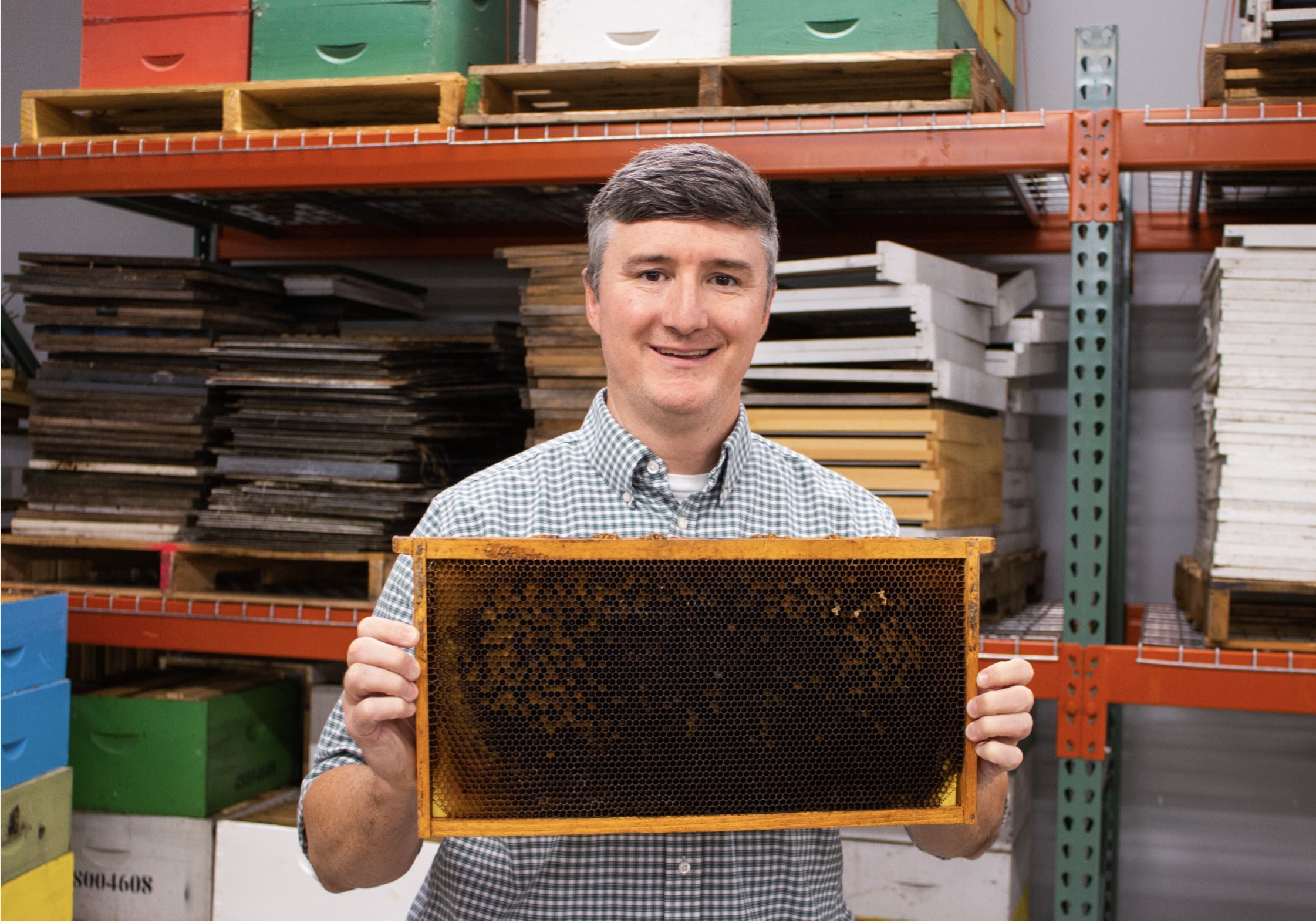
Dr. Jamie Ellis is the Gahan Endowed Professor of Entomology in the Entomology and Nematology Department at the University of Florida. He has a BS degree in Biology from the University of Georgia (USA) and a PhD in Entomology from Rhodes University in South Africa. At the University of Florida, Jamie has responsibilities in extension, instruction, and research. Regarding his extension work, Jamie works with assorted clientele through diverse programming such as the UF/IFAS Bee College and the UF/IFAS Master Beekeeper Program. As an instructor, Jamie supervises PhD and masters students. Currently, Jamie and his team have over 30 active research projects in the fields of honey bee husbandry, conservation, and ecology.