Apple Podcasts
 Spotify
 YouTube
 Goodpods
 Amazon Music
 Overcast
 Castro
 PocketCasts
 Podchaser
 RadioPublic
 RSS Feed
 Bees First, Honey Second with AJ & Chryssa Gardner (364)

AJ and Chryssa Gardner share how a backyard garden turned into a thriving sideline beekeeping operation built on stewardship, nutrition, and respect for the bees. This thoughtful conversation explores why putting bees first leads to healthier colonies—and extraordinary honey.
This week on Beekeeping Today Podcast, Jeff Ott and Becky Masterman welcome AJ and Chryssa Gardner of REBEL44 to discuss an approach to beekeeping rooted in stewardship rather than production. What began as a small garden project quickly evolved into a carefully managed sideline operation now spanning multiple apiaries and more than a hundred colonies.
AJ shares how observing bee behavior—and listening closely to what the bees “tell you”—shaped his management philosophy. Rather than focusing on maximizing honey yields, AJ emphasizes nutrition, gentle genetics, low mite pressure, and allowing colonies to overwinter on their own terms. That mindset has led to remarkable overwintering success and strong, resilient colonies.
Chryssa adds an important perspective on food systems, honey authenticity, and why knowing the beekeeper behind the honey matters. Together, they explain how REBEL44 produces hyper-local, varietal honeys, harvested in short nectar windows that capture the unique character of specific plants, locations, and seasons. From blackberry to Japanese knotweed, each harvest tells a story.
The conversation also explores their immersive educational experiences, where families, beginners, and even corporate groups suit up, step into the apiary, and reconnect with nature. AJ describes how these hands-on visits often change how people think about bees, food, and stewardship.
This episode is a reminder that when beekeepers slow down, observe, and put bees first, the rewards—healthy colonies, meaningful education, and exceptional honey—follow naturally.
Websites from the episode and others we recommend:
-
Rebel44 Website: https://rebel44.com
- Project Apis m. (PAm): https://www.projectapism.org
- Honey Bee Health Coalition: https://honeybeehealthcoalition.org
- The National Honey Board: https://honey.com
- Honey Bee Obscura Podcast: https://honeybeeobscura.com
Copyright © 2025 by Growing Planet Media, LLC

______________

Betterbee is the presenting sponsor of Beekeeping Today Podcast. Betterbee’s mission is to support every beekeeper with excellent customer service, continued education and quality equipment. From their colorful and informative catalog to their support of beekeeper educational activities, including this podcast series, Betterbee truly is Beekeepers Serving Beekeepers. See for yourself at www.betterbee.com

This episode is brought to you by Global Patties! Global offers a variety of standard and custom patties. Visit them today at http://globalpatties.com and let them know you appreciate them sponsoring this episode!

Thanks to Bee Smart Designs as a sponsor of this podcast! Bee Smart Designs is the creator of innovative, modular and interchangeable hive systems made in the USA using recycled and American sourced materials. Bee Smart Designs - Simply better beekeeping for the modern beekeeper.

Thanks to Strong Microbials for their support of Beekeeping Today Podcast. Find out more about their line of probiotics in our Season 3, Episode 12 episode and from their website: https://www.strongmicrobials.com

HiveIQ is revolutionizing the way beekeepers manage their colonies with innovative, insulated hive systems designed for maximum colony health and efficiency. Their hives maintain stable temperatures year-round, reduce stress on the bees, and are built to last using durable, lightweight materials. Whether you’re managing two hives or two hundred, HiveIQ’s smart design helps your bees thrive while saving you time and effort. Learn more at HiveIQ.com.

Thanks for Northern Bee Books for their support. Northern Bee Books is the publisher of bee books available worldwide from their website or from Amazon and bookstores everywhere. They are also the publishers of The Beekeepers Quarterly and Natural Bee Husbandry.
_______________
We hope you enjoy this podcast and welcome your questions and comments in the show notes of this episode or: questions@beekeepingtodaypodcast.com
Thank you for listening!
Podcast music: Be Strong by Young Presidents; Epilogue by Musicalman; Faraday by BeGun; Walking in Paris by Studio Le Bus; A Fresh New Start by Pete Morse; Wedding Day by Boomer; Christmas Avenue by Immersive Music; Red Jack Blues by Daniel Hart; Original guitar background instrumental by Jeff Ott.
Beekeeping Today Podcast is an audio production of Growing Planet Media, LLC
** As an Amazon Associate, we may earn a commission from qualifying purchases
Copyright © 2025 by Growing Planet Media, LLC


364 - Bees First, Honey Second with AJ & Chryssa Gardner
Doug Brown: Hello, my name is Doug Brown. I'm a hobbyist beekeeper in Northern Utah, the beehive state. Utah is known as the beehive state, not because we have an abundance of bees. In fact, bees proved very difficult for the early settlers to bring to and establish in the arid and dry inner Mountain West. Utah is known as the beehive state because the early settlers wanted to emulate the bees spirit of hard work, community, and industry. Welcome to Beekeeping Today Podcast.
[music]
Jeff Ott: Welcome to Beekeeping Today Podcast presented by Betterbee. Your Source for beekeeping news, information, and entertainment. I'm Jeff Ott.
Becky Masterman: I'm Becky Masterman.
Global Patties: Today's episode is brought to you by the Bee Nutrition Superheroes at Global Patties. Family-operated and buzzing with passion, Global Patties crafts protein-packed patties that'll turn your hives into powerhouse production. Picture this, strong colonies, booming brood, and honey flowing like a sweet river. It's super protein for your bees, and they love it. Check out their buffet of patties tailor-made for your bees in your specific area. Head over to www.globalpatties.com and give your bees the nutrition they deserve.
Jeff Ott: Hey, a quick shout-out to Betterbee and all of our sponsors whose support allows us to bring you this podcast each week without resorting to a fee-based subscription. We don't want that, and we know you don't either. Be sure to check out all of our content on the website. There, you can read up on all of our guests, read our blog on the various aspects and observations about beekeeping. Search for download and listen to over 300 past episodes, read episodes transcripts, leave comments and feedback on each episode, and check on podcast specials from our sponsors. You can find it all at www.beekeepingtoday.com.
Hey, thank you, Doug Brown, for that fantastic opening and history lesson about Utah. That was good. The beehive state.
Becky Masterman: I absolutely love Utah Beekeepers. I've been able to speak at one of their meetings, and what a great group of people. I loved hearing from Doug, and I love that it is on our map, Jeff. Jeff, our map is looking really good. Have you looked at it lately?
Jeff Ott: The US map is getting filled in. Thank you, Doug, for filling in Utah. I started looking at the other maps, and boy, there's a lot of countries out there that I know are listening that we should have filled in on our map. Looking forward to hear some more. This is fun. Thank you, Doug. Becky, it's the middle of December, it's a low period for beekeeping. What do you do to keep yourself busy about bees in December?
Becky Masterman: That's such a good question. I have pretty much an unlimited amount of equipment that needs painting.
[laughter]
Becky Masterman: Have you ever done the old-- You probably haven't done this, but I'm guilty of getting a bottom board built and throwing it under a colony prior to priming and painting it because I'm in such a hurry, or I've got some fume boards that I've literally never painted the edges of-
Jeff Ott: Oh, yes, fume board for sure.
Becky Masterman: -and some double screens, things like that. Just little things they make you feel good that you're taking care of them and finally crossing them off the to-do list. That wouldn't happen to you. I think you're better than I am.
Jeff Ott: No. I was going to say it wouldn't surprise you to find out that I'm usually the one who's out there the end of March or the beginning of April, trying to paint things. I don't--
[laughter]
Jeff Ott: I'm sure that surprises you. It's just not something-- December is usually a time I'm looking at catalogs, if I've received them in the mail, or online browsing, looking at next season, trying to figure out. Just start thinking more seriously about if I'm going to do splits or if I'm going to do packages, because I'll have a better understanding of what colonies have survived the winter, and find out what Santa Claus is going to bring me. I always need a new bee suit or something, or a veil or a tool, a nice HiveIQ tool would be nice from Santa.
Becky Masterman: Lots of good things to put on the list. Yes, I love that queen shopping. It's so much fun for me to have a variety of queens in the apiary. Then, to plan like, "Okay, I'm going to get them shipped on this date. That means I have to have X, Y, and Z done and ready to have those queens go into the colonies."
[laughter]
Becky Masterman: It's fun to think about.
Jeff Ott: That's funny. Hey, Becky, a couple of minutes ago, I talked about the HiveIQ tool, and we have that promotion going on right now where HiveIQ is sponsoring our question of the week from a listener. The lucky listener will receive a HiveIQ, very nice hive tool, co-branded with HiveIQ, of course, and with our BeekeepingToday logo. It is a fantastic tool, and there's pictures of it in the newsletter that you send out and also on our website. This is exciting. We have a new question, Becky.
Becky Masterman: I just want to remind everybody, so we want your questions. We really do, but make sure you're not asking a question that you need an answer to in the next 30 minutes.
[laughter]
Becky Masterman: Because it might be a week or two, or a month or two. Don't make the success of your entire operation depend upon when we answer your question [chuckles] if we're able to get to it.
Jeff Ott: No 911 questions, please. Actually, if you want to help us out with your question, think ahead a month or two and ask a question that you might be facing in a month or two, and it'll help us turn around. Right now, we have a question. Let's give it a listen from Steve, and we'll be right back after we hear his question.
Steve Petroelje: Hi, Jeff and Becky. My name is Steve Petroelje, and I am a second-year beekeeper from Michigan. With winter coming, do you feel beekeepers should utilize entrance reducers, especially in northern climates? If so, when and how? Thanks for your podcast and for considering my question.
Jeff Ott: Entrance reducers. These are just something that they're very useful until they're not.
Becky Masterman: [laughs] That's a really great way to say it. Then, when you need one and you don't have one, then you stuff grass in the entrance.
Jeff Ott: That's right. Maybe your toolkit is basically a 5-gallon bucket, and entrance reducers are always in the way. When I'm trying to find something in the bottom, I'm always pushing entrance reducers away. All joking and kidding this side. Steve, we appreciate your question. It is a valuable question about when do you use entrance reducer, and especially going in the winter as we are now, they are very useful pieces of hive equipment that you should be using.
Becky Masterman: It's funny because sometimes I think beekeepers learn beekeeping, and they learn, okay, at this point do this, at this point do this, and some of those instructions are for what to do with the entrance reducer. I like to think about what do the bees need at this moment? A really small colony needs a very small entrance because they don't have a lot of workers to defend the entrance, and a winter ring colony probably needs protection from mice from getting in the colony. Do you have special metal entrance reducers to protect them from mice?
Jeff Ott: I have not used the metal ones. I've used the 0.5-inch hardware cloth.
Becky Masterman: Oh, okay, so you actually-- [crosstalk] I use just the regular wooden entrances, and sometimes I look and I see that they've been--
Jeff Ott: Little teeth marks.
Becky Masterman: A little remodeling has happened. You've got some teeth marks on it, and then I know to expect that there's some co-mingling of maybe mice and bees in the hive. I think that entrance reducers are very important in the winter. If you do have a higher quality one to really prevent the mice from getting in, that's probably a great idea. In Minnesota, we do the old flip them up so you've got the middle-sized entrance, thick side down, and that theoretically, it actually works because you do have a big cluster over time. You've got bees that will just naturally fall off the cluster and die and the colony cannot do regular flights to remove those bodies.
You'll have even a strong surviving colony, but they'll have a layer of dead bees on the bottom. If you have that entrance reducer set so that that thick side is towards the bottom board, then they can at least have one pile of bees or one layer of bees, and they can still get in and out if they want to use that bottom entrance.
Jeff Ott: That's what I've done in the past as well because you'll see if you leave it in the summer with a U shape or the opening on the bottom of the bottom board, you'll see if it's a hard winter, that will plug up with bees really quick and you'll find yourself brushing away the snow and then sticking something in the hook and the hive tool or something else to sweep out the bees so that they can get out and do their cleansing flights and otherwise just to unplug the entrance. They're useful.
Also in the fall, I've found them here where this several years in the-- yellowjackets pressures are really high, and some of my smaller colonies or weaker colonies, I'll put on smallest opening so that the bees can more easily defend against the yellowjackets, and that's good news for the entrance reducers.
Becky Masterman: I'll do it for my stronger colonies. I'll put it on the middle opening in August, because I would rather have my bees hanging outside and discouraging any robbers from coming in than having just a really clear traffic, especially if the nectar flow has slowed down. Those entrance reducers are really, really helpful, but they don't work if they are in your equipment shed and not in your vehicle or in your toolbox. [chuckles] They need to be present. [chuckles]
Jeff Ott: We're talking about wooden entrance reducers. Different types of hives have different types of entrance reducers. There's, I know on the Bee Smart Designs, plastic bottom board that has a different type of entrance reducer that you can use. The same with the HiveIQ bottom boards. I'm sure with the FMA and all the other bottom boards, they have entrance reducers integrated into the bottom boards. Basically, with the same management approach to opening and closing that. One last thing on the wooden entrance introducers is that end of life, they make good smoker fuel.
Becky Masterman: Oh. That's interesting.
Jeff Ott: You can snap them in half and quarters.
Becky Masterman: I've got one more end-of-life recommendation for those entrance reducers. Once they break, you have a nuc entrance reducer.
Jeff Ott: That works too. Thank you, Steve. I hope we answered your question. They're great year-round uses for those. Keep them dry so they don't swell and remain useful. Watch for rotty tooth marks on it. It'll give you an insight of what's going on with your bees. Just hang onto them. They're useful parts of your hive. Becky, today's guest is a beekeeper from just north of here. AJ Gardner. He's a good sideliner and he has some good insight continuation of bees as a business theme that we've run this entire year. I'm looking forward to talking to him.
Becky Masterman: Me too.
Jeff Ott: I know he's out in the green room saying, "Where the heck are these two?" Let's bring him in. We'll be right back after these words from our sponsor.
[music]
Betterbee: From all of us at Betterbee, thank you for another great year. To show our appreciation, we're gifting Beekeeping Today Podcast listeners with an exclusive 10% off orders, up to $150 in savings this holiday season. Shop at betterbee.com and use Discount Snow, that's S-N-O-W, at checkout. This deal is good through 11:59 PM Eastern Standard Time on December 31st, 2025. From the team at Betterbee, we wish you a happy holiday season.
Jeff Ott: Hey, everybody. Welcome back. Sitting around the great big virtual Beekeeping Today Podcast table, which fortunately is a little bit smaller today, sitting just north of me, north of Seattle, is AJ and Chryssa Gardner, and of course out in Saint Paul, Minnesota, is Becky. AJ and Chryssa, welcome to the show.
AJ Gardner: Thank you for having us.
Chryssa Gardner: Good to be here.
Becky Masterman: We're so excited to be able to have this conversation with you. You've got a pretty cool business going, so this will be a great hour.
Jeff Ott: I've been looking forward to having you on the show. Our mutual acquaintance, Cliff Struhl, of Bee Smart Designs, has been telling me, "Hey, you need to get AJ on your show. You need to get AJ on your show." You know Cliff is pretty persistent. I said, "Absolutely." You came up and said hi to me at the Washington State Beekeepers Association meeting this last fall, and I said, "Darn it. Cliff was right. I need to get AJ on the show." Thanks, AJ, for taking the time to be with us.
AJ Gardner: Happy to be here. Thanks for having us.
Jeff Ott: You have a really good sideline business. Before we go into that in detail, tell us a little bit about yourself and how you got started and interested in bees.
AJ Gardner: Thanks for that intro. We live out here in Redmond, Washington. My last name is Gardner, so I don't think I actually had a choice in this whole process.
[laughter]
AJ Gardner: It's a crazy story because I had propagated some strawberries and the shoots had gone out. I told my wife, Chryssa, I was going to go down to our backside of the property and plant a strawberry patch, and I did that. As I was wiping my hands walking up the hill, I turned around, and there was a blacktail deer, doe, standing dead center where I just planted the strawberries, looking at me. I said, "Please don't eat those." As she's staring at me, she reached out and grabbed one, and, of course, pulled the roots out and started chewing it. I said, "That's not for you."
My day job, I'm in the structural steel sales market. I've been ingrained in that for 30 years out here. I called one of my lumber suppliers and had this massive lumber package sent out. I was going to show that deer, and a pallet of concrete. Two weeks later, I had a 20X40 foot apiary fenced in area with welded wire fabric and doors, and really overdid it for the strawberry patch. Then just for the flower roll and get some fruit trees and two truckloads of different raspberries and blueberries and peach trees and pear trees. I way overplanted this small area.
Then I cracked a sparkling wire and I was sitting there admiring my project that I had finished. As the light went off, I said, "Oh my gosh, who is going to pollinate this? I read the news. There's no bees. What do we do?" I took beekeeping classes, Snohomish Beekeeping, the basic one, "This is a hive tool. Here's a honeybee. This is a smoker." I ordered my first package of bees from the Almond Pollination and picked it up through Snohomish Beekeeping.
Of course, having one hive, I was out there every day looking at it and sitting with it, and no gear on. I really started to just fall in love with their behavior, the sentient being. They're so magical to watch. As I observed them more, they were drinking some green algae off of my puddle, and I thought, "What is this 120 million-year-old species doing drinking pond scum?" After a deeper dive and thought, I bought some spirulina online and I started mixing it with the pollen supplement. My bee mentor at the time, he said, "You're crazy."
I mixed it with their pollen and fed it to them, and they absolutely devoured it and exploded in health and propagated. I was running down the street chasing swarms, texting my neighbors, "Close your doors. They're swarming." I had no idea what I was doing on my heels from that point on. That was six years ago. Started experimenting with different sea salts, Himalayan sea salts, and comparing it to water features and with our well water compared to the pond water. I'd pull the chair up and watch it. Within a couple hours, those bees were attracted to those micronutrients in the Himalayan sea salt.
From that moment on, I started focusing on these bees' health and wellness and nutritional profile. Had no interest in honey. I'd never even had real honey. All I'd ever been exposed to was the teddy bear honey full of probably high fructose corn syrup from the grocery store. It was something that I was interested in. Those bees somehow turned to six or eight hives by the end of the year. They all overwintered, which is unprecedented. I bought the oxalic acid vaporization gun and treated for mites. Fast forward, six years, this summer we were managing 7 yards and 180 hives.
Jeff Ott: That's quite the build, quite the story.
Becky Masterman: 1 to 180 in 6 years.
AJ Gardner: It's insane. I promised my wife too.
[laughter]
Becky Masterman: I was going to say, so I think it started with a fence story. Chryssa, you probably have to keep a really close eye on him in his project. [laughs]
Chryssa Gardner: Right.
Jeff Ott: We haven't introduced Chryssa.
[laughter]
Chryssa Gardner: Hi. I'm Chryssa. Thank you for having me. Yes, I've been an avid supporter and I'm very passionate about natural, sustainable living lifestyle. When we started our garden-- actually, it was a gift that I'd given to AJ for his birthday when he began this journey. We named this the Abundance Garden 44. There's actually a sign on our flagship apiary here that the first apiary is named Abundance Garden. It has been eponymous in terms of its productivity and its educational aspects.
Over the years, as I've watched AJ explore all these things that he shared with you and the nuances of learning and hearing the stories of the 30 and 40-year-long beekeepers out in our valley who-- and AJ started, "Hey, that's not how we do it. What are you doing? Why are you doing that?" Lo and behold, some of them have actually hung up their bee jackets because they can't keep their colonies overwintered and alive. It's heartbreaking to see that.
I'm very passionate about our food system. Food as medicine. We support, we live here in Redmond over the fertile Snoqualmie Valley. It's been fun to support AJ in this endeavor and to be a mid-active listening partner in supporting the growth of this as a sideline business in order for him to keep himself in balance with all of the stewardship of the bees. It really has become a partnership and I'm happy to share more about that today.
Jeff Ott: Was there any specific feature of keeping bees that made you decide that you wanted to expand to that number?
AJ Gardner: I think my excuse was as pallets of equipment was showing up, and Chryssa said, "Oh my gosh, what are you doing?" and I said, "I don't know. They just want to grow. What am I supposed to do? It's not my fault." I blame the bees because they all overwintered. Of course, they needed new homes, so I was glad to oblige. The infrastructure build has been incredibly expensive.
As you've mentioned, I have partnered with Cliff with Bee Smart Designs. I think his proprietary products, from his IPM, Integrated Pest Management Board, to his insulated outer cover, to his R10 insulated inner cover. Those have just been amazing tools that I've been able to use. Mind you, I went through all the Vivaldi boards with corks on the top and the blanket and the camp sugar mix. I was out there in the middle of the night removing corks, trying to regulate their ventilation.
I've done all the silly, crazy things, trying to think that I know what's best for my bees. The more that I've sat back and let them do their job and what they've been doing for 120 million years, but we're all better off for that. The tools that Cliff has provided, especially the R10 insulated inner cover, allowing moisture to build up on the sides because the bees need the moisture in the winter, but they don't need moisture dripping on them when it's cold. I'm sure, as Becky knows, she's in Minnesota, I believe, cold bees aren't always dead bees, but wet bees are dead bees. Just a clean, warm, dry cavity, good nutrition, plenty of resources for winter, low mites, and that's really the key to it.
Becky Masterman: If you're putting a insulated cover, you're not ramping your bees, though, are you?
AJ Gardner: That's a great question. Where I built this structure, it just so happens that we live at 588 feet in Redmond Ridge overlooking the Carnation-Duvall, Snoqualmie Valley. It gets really cold up here. Much more cold than in town. I built that apiary in a frost pocket. I think I have 35 or 40 bee cozies where I was wrapping all my bees, and I even had custom flashing built on the top with a drip edge to overextend so the hives wouldn't even get wet. I've gone in several directions that I now know is not necessary. I don't wrap my hives anymore. It's just not that cold.
Becky Masterman: Let's give our listeners some temperatures just because--
AJ Gardner: For example, it's 48 degrees right now, but it will get in the teens, and in that area, the way the angle of the sun from October to March, those bees don't see direct sunlight. If it frosts, that area will be frosted for two or three weeks, and it could be 35, 38, maybe 40 degrees out on the pavement, but it's just this cold, dark frost talk. I thought, "Man, did I really stack the deck?" That's why I went above and beyond to get bee cozies and all of these things that I now know it's not necessary.
Becky Masterman: Yes, these are pretty resilient. As long as you've got a strong population and they've got some food, it's pretty impressive. I've got to ask the question, but it's probably too early, but the next number is 360. Are you going there?
[laughter]
AJ Gardner: That's a great question, Becky. Every year I come in bruised, crying, stung at the summer, and I looked at Chryssa and I said, "I can't do anymore." I think I started saying that at 16, and then it went to 34, and then it went to 55, and here I am. I think I've paired it back to-- my goal is to get into winter with about 140 to maybe 150 within the 6 yards to really tighten up some yards. I've learned a lot that not all colonies need to survive on their own. Sometimes a stronger queen out of two weaker hives is better. I don't see going to 360 again.
[laughter]
AJ Gardner: Again, the, the full-time day job-- I love my job. I love the people I work for. I love my client base. Many of my clients actually purchase honey from me and support. They love the product, and everybody's been so supportive. I've been very transparent that way. I've really tried to not make this a business. This was never intended to be a honey business. I've never wanted to sell honey. I've just wanted to work the bees. There's been so much growth and attraction. We've expanded into doing immersion experiences in our teaching yard.
I have a teaching yard on one of the farms that I partner with, Mountain Field Farms. That all started with the owner saying, "Hey, could you bring some hives down to help us with the pumpkins?" I brought four hives down, and that grew to 36, and I think I had 60 there this year with 40 nucs that I had drafted queens. The expanse has been great, but the tangible evidence where we have put bees everywhere from our home, I could tell you story after story of what it's done to the fauna and the fruits and the pumpkin patches and Oxbow Farms, which is an animal-friendly farm that we happen to live on top of, and our bees go a quarter mile down the hill and pollinate all of their stuff.
We know the arborist and their workload has doubled year after year. It was a real epiphany. Matthew Irwin with Irwin's Specialty Printing was standing at the bluff. He's a REBEL44 bee steward in training. He said, "How long have you had these bees?" There were 36 at the time. I said, "It was half of that last year and half that the year before." He said, looking down at his work on Oxbow, and he goes, "Aj," he goes, "My workload doubled this year, and it doubles from the year before." He goes, "Now I know why." I share these stories all of the time, and it warms my heart that these bees are really making a difference in the areas that we plan to partner with these farms locally.
Jeff Ott: You mentioned your hive company's name a couple of times, REBEL44?
AJ Gardner: Yes.
Jeff Ott: What's the basis of REBEL44?
AJ Gardner: I may cry if I tell you the story. It has a lot of weight and depth. I'll try to summarize it, but I grew up in Maine, on the coast. I grew up with older brothers and sisters, and they were all older than me, 8 to 11 years older. I always joke and say I was the marriage saver, the oopsie baby. I was fishing with my older brother at Hosmer Pond. That was a great pastime of ours. There was a little green fuzzball, a Canadian goose gosling, swimming around the ledge, and it was getting dark, and it still had that little feed sack on the back, kind of like our umbilical cord. When they're in an egg, there's this feed sack that they get their nourishment from.
It was almost as if it was prematurely born and there were no other geese running. My brother swooped it up, and he said, "Here, you need to take this home and take care of it. If not, it's going to die." As a little six-year-old, home life wasn't the most optimal. I come from a pretty strong line of alcoholic family and background, and it was my normal, but to put that goose in my sweatshirt, and by the time I got home from a 10-minute drive and I took it out and I set it on the ground, he looked at me, and I was his dad. I just instantaneous unconditional fell in love with this goose, and he slept under my neck. I fed him with a meal dropper. He went everywhere with me.
My parents would take me to the barroom, so the Midcoast Maine, and I'd be in the corner feeding him with a meal dropper. That goose never left my side. It was truly my first unconditional love. I named him Rebel, and that's where the name Rebel came from.
Jeff Ott: Thank you for that. It's a unique name, and I wasn't sure where that was going to go, but I love the story.
AJ Gardner: It's a fun bait-and-switch because I'm in construction, and people hear "REBEL44" and they think it's some tactical assault.
[laughter]
AJ Gardner: I started masculine company, and I had suit made with camouflage and REBEL44 down the side. It's really about our connection and unconditional love and healing. The 44 actually has massive relevance too. If you'd like me to share, I've never done this, but I'd be happy to.
Jeff Ott: Yes, just briefly. Yes, it'd be great.
AJ Gardner: When I met Chryssa, she had me meet with an Vedic astrologist, and his name was Matam. He was looking at where I was born in astrology and all of these things, and I was half engaged, half not with what he was saying. He looked up, and he said, "AJ, does the number of 44 mean anything to you?" I said, "Yes, it's one of my favorite numbers." Like I have never seen before, he said, "It is all over your astrology chart.
When you turn 44 years old, your life is going to completely change for the better, and do not be scared or nervous, but you're going to start seeing this number everywhere. Meal tickets, parking spaces, those are the angel numbers, and the angels have been watching over you, protecting you ever since you were a little boy." When he said it, he looked into my soul, he knew nothing about me. Like I said, my childhood was my childhood. Even with that information, and Chryssa was to my right writing a journal, everything he was writing down, a note taker. I was like, "Eh." I went about my way.
I turned 44 years old. I made some big changes in my life. I'm in recovery myself, and I got the bees, and everything changed.
Becky Masterman: That's a great story.
Jeff Ott: Yes. Thank you for sharing that with us.
Becky Masterman: I have a few logistical questions that I want to address before we talk about your amazing honey company, but I've got these numbers. You've got 180 or so, going into winter. Are you planning on selling nucs next year because it's hard to part with your bees?
AJ Gardner: Such a great question, Becky.
Jeff Ott: [laughs] It sounds like it's under consideration.
AJ Gardner: I think you've heard me mention a few times bee stewardship and Chryssa as well. I don't consider ourselves beekeepers. For me to say a bee steward is a whole different perspective shift from the get-go, focusing on their health and wellness and nutritional profile. I have queens that are four years old in my yards.
Becky Masterman: That's good paint.
AJ Gardner: Yes, it's great paint.
[laughter]
AJ Gardner: Some four-year-old queens this year, and they were doing fantastic. I say all of that because my priority's never been the honey. This has actually never been about the honey. That's why I think it's had the success that it's had. I've never focused on that. When I graft my queens, my number one trait is, are they sweet and gentle to work with? Do they all overwinter? That's a check because our overwinter rates have been literally 99, 98% every year.
Now, last year, just to back up, you've of course well aware of the colony collapse and all the recordings of the commercial beekeepers losing their bees. I've had deep conversations with Blake Shook and NAHBE last year, and we went into winter with 105, and I lost 5 hives last year. I was devastated, but I prepare myself every year for 30% losses. The old timers around here, they say, beginners luck, your time's coming. It just hasn't come. I'm so grateful. I don't know exactly all the reasons, but I know there's a lot of things that I do with the bees. A few of them I've already shared.
To answer your question about nucs, one of my clients, a builder friend, bought eight full hives from me, plug and play. I asked for a fair price for them, and he handed me the money, and we delivered the hives. Those hives were dead within the first year. If I could give that money back and take those bees back, I would do it 100 times over. That was a very valuable lesson for me.
To answer your question, I vet people when they call and say, "Hey, are you selling nucs?" I went through 12 to 15 different phone calls this spring, and I said, "Tell me a little bit about yourself." "Well, we had four hives, but they died." I said, "What are you doing?" "We're doing it for the honey." I just ask those simple questions, "Do you do any mite treatment?" "No, we collect the honey." "Are you interested in learning about the stewardship and about maybe an organic oxalic acid vaporization?" "No, we're not interested."
Then that's when I say, "I'm not your guy." I vet people maybe too much, maybe to a fault. Chryssa and I've talked deeply about-- to backtrack, I don't have my master beekeeper's license from Cornell. I'm a self-taught, very passionate person about my bees. Our 16,000-foot view someday would be to create a REBEL44 Bee Steward Academy for children and for adults.
Because what we've seen happen in our immersion experiences with grandparents, with grandkids, with people who are deathly afraid of bees, when we put a jacket on them, and we get into the hives, and they hear that C harmonic and that cadence, and they're suddenly holding a frame, and there's nurse bees and a queen bee, and there's 4 million bees flying around them, something happens. I think that our society as a whole needs that. We need that presence, and we need that earth connection. We see it time and time again.
If we could expand that and share with the world how amazing these sentient beings are and the simplicity of their life, yet so complex, it's just a beautiful thing to be part of. It helps me stay grounded. This all happened during COVID for me. I was no more gym, no more this, no more meetings, no more that. I would flip back and forth between CNN and Fox News and feel like I was going to explode. I would walk down to the apiary, and I would open a hive, and I would hear that C harmonic. They were doing exactly what they've been doing for 120 million years, and it just grounded me. I really feel that they saved my life. I'm forever grateful for these bees.
Jeff Ott: That's really nice. Hey, a few minutes ago we mentioned Cliff Struhl at Bee Smart Designs. If you're going to North American Honey Bee Expo, stop by Cliff's booth, Bee Smart Designs. Tell him you heard his ad on the podcast, and he'll have a special gift just for our listeners. Make sure you stop by. Let's hear from Bee Smart Designs and Strong Microbials, and we'll be right back after their messages
[music]
Bee Smart Designs: Coming to NAHBE, visit the Bee Smart Designs booth and get a free compact type tool. Yes, you heard that right, free hive tools only at Bee Smart Designs. While you're there, check out our Universal Hive system and learn how it reduces losses, improves brood building, and increases honey yields. Our products are 8 and 10-frame compatible, and proudly made in the USA. Don't forget to visit our Bee Smart dealers for great deals and show specials. Get your free compact hive tool and discover simply better beekeeping equipment at Bee Smart Designs. Mention Beekeeping Today and get a special gift while supplies last.
[music]
Strong Microbials: Strong Microbials presents an exciting new product, SuperFuel, the probiotic fondant that serves as nectar on demand for our honeybees. SuperFuel is powered by three remarkable bacteria known as bacilli, supporting bees and breaking down complex substances for easy digestion and nutrient absorption. This special energy source provides all the essential amino acids, nutrients, polyphenols, and bioflavonoids, just like natural flower nectar.
Vital for the bees' nutrition and overall health, SuperFuel is the optimal feed for dearth periods, over winter survival, or whenever supplemental feeding is needed. A big plus is the patties do not get hive beetle larvae, so it offers all bioavailable nutrients without any waste. Visit strongmicrobials.com now to discover more about SuperFuel and get your probiotic fondant today.
Becky Masterman: Welcome back, everybody. I still want to talk more about what you're doing with your bees, but I want to make sure we have time to talk about honey. Could you talk about what your honey business means to you and how that developed?
AJ Gardner: I finally put a honey super on after being pressured from my mentor at the time. He said, "Just put a box on, they'll hoard it, they'll build it out the comb." I kept telling him, "I'm just not interested in that. I'm interested in pollinating these fruit trees that I bought." By the way, it would be misty and raining out, and my bees would be hiding in their hives while all the bees from the woods, the bumblebees, the panda bear bees, the mason bees flying around, were doing all the pollinating. Another great move on my own of thinking I knew what I was doing by getting these honey bees when they weren't actually the ones pollinating all the stuff in my yard.
[laughter]
AJ Gardner: The stupid human comes up a lot with me. It was during the blackberry flow. They built out a box, drew the comb at 13 degrees, they put the nectar and it doesn't follow, dehydrated, and did their whole thing. I pull this box off, and it's heavy, and I get into the garage and order the Amazon two-frame hand crank extractor. I think Chryssa was in on her laptop. I'm running into the house and getting the big steel cape bowl, the mixing bowl, making all kinds of racket. She's just watching me.
[laughter]
AJ Gardner: I remember going out and extracting this honey into this bowl, and it was the most honey I'd ever seen in my life. It was so fragrant. I walked into the house, and Chryssa looked up, and she goes, "What is that smell?" I said, "This is the blackberry honey they shared with us." She looked at me and then stuck her finger in it and put it up to her lips. If I could record the picture of her face, her eyes set as big as saucers. She was like, "Oh my gosh." I should back up a little bit. She has a vegan plant-based lifestyle, and that has now changed because of our--
[laughter]
AJ Gardner: She's now vegan, and converting all of her vegan friends over to being beegan, which is a fun joke.
Becky Masterman: Did you make that term up, or is that a real thing? [lauhs]
AJ Gardner: Oh no, I think we might-- did we make that up?
Chryssa Gardner: No, it's out there if you look.
[laughter]
Becky Masterman: Oh, that's interesting. That's basically making the exception for honey in a vegan lifestyle.
Chryssa Gardner: Only when I could look a beekeeper in the eyes and ask the true questions about their values, their ethics, their motivations, how they are caring for their bees and their colonies, and if they hold shared values with our REBEL44 stewardship, then am I willing to take honey as a medicine, not as a food, not as something to sweeten, but when we know that their business and their offerings are rooted in similar values. I will not consume honey from the store.
Oftentimes, even from other farmer market resellers, if you don't know where the honey's coming from, there are beekeepers here who sell honey at farmer's markets to unknowing consumers and patrons. We're here in Washington state, and their bottles say "Pure, raw, organic, local honey" and they have orange blossom honey on their table. I've looked at them, and I've asked, "Do you actually keep your bees?" "No, we have people who do that." "Where did this orange blossom honey come from? Do you know?" "We just bought it from California in a bucket." "How do you know what happened to that honey between there and here?"
That is evidence in today's statistics, and the adulteration of honey being the third most adulterated food on the planet. I am very passionate about the health and wellness of not just nature and the bees, but ourselves as part of nature, our human bodies. That's a big reason why this has been an educational aspect for us in our expanding this from AJ's stewardship process and the experiences that he shares into expanding awareness with our local community, with others through teaching the education and courses here in our fertile farms in Snoqualmie Valley. We've partnered with a lot of the farms.
I've made some relationship development and intention along the side to keep AJ in balance with all of the farming and the stewardship to really share his message on what he's doing that's successful, that's meaningful, and inspiring to people in general. You can taste the difference. Everything is energy. You can taste the difference in our REBEL44 honey that we produce. There's many, many reasons why the quality and the calibre of the honey is recognized in our local area. Amidst on fine tasting menus, it's ordered nationwide and shared by people. Once they hear AJ's story, they want to share that inspiration.
The honey is served as a conscious vehicle for that to be shared in a tangible way for people to experience.
Jeff Ott: How did you approach the companies to position your honey as a finer varietal honey or a finer honey than, say, your classic jar of generic honey on the grocery store shelf?
AJ Gardner: I actually drove by-- there's a restaurant here. It's the only 5-Diamond Restaurant in the state. It's called The Herbfarm with an H. Chef Chris Weber was noted as the youngest 5-Diamond chef in history of the recordings of that. I believe there's 47 of them in the world. I happen to bump into his wine sommelier, who is snipping cedar tips for their next 10-course, 4-and-a-half-hour meal. I think Chris's motto is, "You would never make this at home." It's an absolutely amazing place to dine.
I did a quick hyperlocal targeted nectar flight tasting with the wine sommelier on the back of my truck, and he was blown away. I had given him a couple of samples and didn't think much of it. Chris reached out to me, I don't know, a week or so later. He said, "I've heard about you." I said, "You haven't heard about me. Maybe my bees." He said, "Come in and see me."
He's, again, a very, very busy chef. Chryssa and I went in with a sample. It's funny when I first started this, I carried around a gun case, like a Pelican case with little 4-ounce jars, and I open it, there's nine different varietals of honey. Just to back up a little bit, what we do is something a little different. We do hyperlocal targeted nectar flows through seasonality of the Greater Snoqualmie Valley.
We're able to tell a story based on birds that we see come back from migration, certain flowers that bloom, and we do the short three to four week just microbursts with the bees collectively with what they share to try to target that specific flower. It could be Himalayan blackberry. It could be Japanese knotweed. It could be pure fireweed from 1,400 feet in the Snoqualmie foothills that I hiked the hive into the mountains to understand what that true relationship is between honey bee and pure fireweed, which is water clear. The Cascara tree, which I can find out of Woodinville at 488 feet in the small pocket of forest where they choose that over the bigleaf maple flower, and then a nuance of all of those.
I believe we did 16 separate nectar flow extractions this year. It's always a privilege to have beekeepers that have been in this area for 30 years come up and taste some of the honey and say, "What is that? Oh, my God. How did you get that isolated?" I'm just listening. I'm listening to the environment, paying attention. Back to Chris, we went in to see him, and I can let you finish the story. We expected to be there for 20 or 30 minutes because he's a busy man. I think we were there for over two and a half hours.
He said, "AJ, your blackberry honey, this is the first blackberry honey I've ever tasted. It tastes like a blackberry. You have three of them from three different yards with different nuances. This is like a fine wine." Then, he finally asked, "Would you partner with me? I'd love to showcase your honey on my menu." He had not had a honey vendor, somebody that he was comfortable partnering with for I think over three years.
Chryssa Gardner: He had shared there had not been a honey that met his quality bar to be on his menu aside from an accompaniment or a drizzle here or [chuckles] there, and the few hives that they have in their own 10-acre garden in Woodinville. After sharing and taking him through a nectar flight, it was a mutually reciprocally experiential learning experience with him.
He was speaking to specific acid profiles in the honeys, his exquisite palate, he was sharing. Everything for us to date before that, in sharing REBEL44 honey with the community at local markets, we've partnered with the farms in the area, everybody would taste this honey and say, "This is exquisite. How did you produce this? What is different? Everybody else in this valley we thought-- aren't doing the same thing you are. What's different about this honey?" We truly do believe that with the stewardship, the energy that's invested. AJ's fun tagline for REBEL44 is "Love your bees, and they'll love you back." [chuckles] Our bees truly are nourished and cared for overwinter, at these unprecedented rates.
I was actually in New York at an International Conference for Sustainability with Global Initiatives, and there was a young woman who is very, very vocal and advocates strongly for the sustainability of honey bees. She has been doing national speaking circuits. Perhaps she's been in your spheres as well. She was on a panel, and specifically spoke about the importance of beekeeping, the trends that are happening with the Varroa mite and overwintering rates, and the challenges that both backyard and commercial beekeepers are experiencing.
I was intrigued and went to the session, the seminar. Afterwards, I walked up and introduced myself and just shared that, "My husband is a bee steward in the Pacific Northwest on Seattle, and our overwintering rates are nearly 100%. They have been year over year over year, and it's possible, actually. Everything that you shared is true. It's happening, but there are ways to support the true stewardship of honey bee colonies."
She looked at me and was not joking, dead serious, she said, "I don't believe you." She did not believe that it was possible. I feel like part of what we are doing-- at least not in a scalable way, part of what we're doing really focuses on helping people to experience the nature of what REBEL44's stewardship and honey really produces. In the tasting quality of the honey, I have witnessed time and time again whether it's at a community event at a farm and we're sharing the honey, whether it's at a 5-Diamond Restaurant and we're sitting at the community table as the featured farmers for the summer and everybody at the table I've watched and witnessed the surprise, the reactions with the taste of the honey.
Part of the magic of all of that is it gets people interested, asking questions, and yes, even inquiring how they might be an advocate for pollinators, have a backyard beehive, get interested. AJ has really been able to be a conduit for that level of awareness, nature connection, and you can taste the difference in the honey.
Becky Masterman: What's the smallest and the largest amount of honey that you will extract? Are some of your harvests just a single frame?
AJ Gardner: Great question. I'll give you an example. We had some the Japanese knotweed which, if you study the research on the NIH, National Institutes of Health, they just put out a study on the botany of that Japanese knotweed, and it has 20 times the antioxidants as other honey. When we do our tastings, we have them in decanters and can lift the honey in the decanter wand, and it will show that it's kind of a reddish tinge. It's full of resveratrol. We had 150 plus prepaid orders for the Japanese knotweed. That, for me, was from August 22nd to September 1st. Then I intentionally harvested on the autumn equinox. We call it Equinox Dark. There's intention behind everything.
I got nervous because I've never looked at my bees of "Man, girls, you got to perform." It's never been that relationship, and hence, that's why I'll-- A wise man once said to me, "If you're not careful, you're going to be working two jobs for the rest of your life." It's very true. I have no intention out of fear, out of the fear of farming, of doing this full time, and for a multitude of reasons, the biggest one is I never want to have that relationship with my bees where I'm depending upon them to perform, if that makes any sense.
I just never want that relationship. What they share with me in that super is what they share. Now, many of my bees won't share because their first, second box isn't built out all the way. I have no attachment to the end result, but the ones that are mature, the ones that have 60,000, 80,000 bees, the ones that are really strong with a huge forging community, they will share. My first bee mentor was right. They'll hoard it. They'll not only bring enough in for them, they'll also share some.
I opened another yard to target that Japanese knotweed in Carnation and put in a tremendous amount of time to get it close to the Snoqualmie River where they didn't intersect with the bees that I had in other yards. Out of those 48 hives that I set up, I put honey supers on all of them and went through every single one and I got 41 pounds of Japanese knotweed out of 40 hives. A tremendous amount of work. I did that just in case.
When I did hive inspections on those beasts, their hives were packed full of Japanese knotweed. It's full of oxalic acid. I find that profoundly interesting that Mother Nature gives such a high volume of oxalic acid in a dietary supplement right before winter. We're all gassing the bees with the vapor. I don't know if ingesting it has any. I just find that interesting. I bring that up because I will never go into the nest and take a frame of honey. That's not our honey. That's just my rule. If they don't put it in the upper box above the queen excluder, it's not ours. That's a perspective shift for me too. They share their honey. I don't take their honey.
Jeff Ott: You talk about your immersion program, a mentorship program with starting beekeepers. Can you just briefly talk about what makes that special and what you're doing?
AJ Gardner: There's a couple things to cover there, the immersion experience, and you can find that on rebel44.com. You already know I love my bees. Don't take my word for it. There's some testimonials on there regarding the honey, regarding the immersion experiences, regarding the tastings. We do private nectar flight tastings for people and share the story of the journey. When you sign up for an immersion experience, we would pick a day, preferably when they're on a flow, bigleaf maple flower, Himalayan blackberry, a native blackberry along the Snoqualmie River, Japanese knotweed. We can go from basically April into mid-September where I'm comfortable.
I always like to hit it when they're on a flow because they're most busy and happy, and the queens that I graft are very sweet and it's easy to get into the hives with a lot of people. I have 30 bee jackets and suits of all sizes. You can come out with your family, we suit you up and we'll go into the bees for two to two and a half hours. Answer all the questions, share about what the bees are doing, share about the bee bread, the nurse bees, the forager bees, the undertaker bees, hopefully find the queen bees lay eggs, some larvae, all the different stages of what's going on.
Meanwhile, you have approximately 4 million bees flying around you on a nectar flow, paying no attention to you because they're busy. There's something that happens in the apiary that's very special, and pretty soon everybody's holding a frame and some have no gloves on, some have nitro gloves on. I always light a smoker, but I never have to use it. I always have an EpiPen in my pocket. I've yet to have to use it. Then after that, we come back and do a nectar flight tasting on the river and share all the different nectars that those bees are providing through a story.
It typically is scheduled for two, two and a half hours and it always goes over to four, which blows my mind because people usually want to get to the next thing, and it just opens up Pandora's box of questions. They just want to sit in this feeling. It always blows my mind, so I think there's a huge need for that earth connection presence as I stated earlier. It's harder and harder to find nowadays in our world with technology and what we do. To get away from all that and get suited up and listen to those bees in their environment, it's healing. It's truly active meditation.
Chryssa Gardner: We've had a lot of people who have come and visited the apiary having life-changing shifts, reconnecting with nature, children putting down their devices and being present. We have little bee suits and jackets. It's really adorable. Grandparents bringing their grandkids. We've even done corporate events, get people out of the office and off technology and out back into nature, inspiring the connection between technology and our food system.
We've been able to have the honor and joy of hosting people in such a way that there's been some measurable benefit and reciprocal value to expanding awareness, getting people present and outside back into nature and connected into what it means to be attuned with the source of your food, and being able to taste the difference with real true quality honey. I can't tell you how many times we've gone through honey tasting and a nectar flight and there's been multiple people who, by expression, "I don't think I've ever tasted real honey before, seriously. This is the first time I've ever tasted anything like this." It's been a fun and joy to share that with others.
Jeff Ott: Really enjoyed having you both on the show. I can't believe our time is up. I look forward to having you back at a later time and further this discussion about your approach to honey production and how the bees are sharing their honey with you and bit more into how you market the honey. Because I've always been a keen fan of the value of marketing varietal honeys, and selling the story around that honey is really key and really important for beekeepers to do.
Becky Masterman: Thank you so much for sharing your journey. I love your passion for your bees, and it's obvious that your bees appreciate your passion also.
[music]
AJ Gardner: Thank you. Thank you for having us.
Chryssa Gardner: Wonderful to be here.
Jeff Ott: I'm glad that AJ is so passionate about varietal honeys as I am, but he's more effective at it. I think varietal honeys is the way to go and market honey, and that's what he's doing.
Becky Masterman: I'm just going to correct you, because first and foremost, he's passionate about the bees.
Jeff Ott: Thank you. Yes.
Becky Masterman: First come the bees, then come the surplus honey.
Jeff Ott: He did say that a couple of times.
Becky Masterman: I love that.
Jeff Ott: That is very good and I enjoyed having him on the show, and encourage our listeners to go out and look at what AJ and Chryssa are doing at rebel44.com. Honey.
[music]
Becky Masterman: Exactly.
Jeff Ott: That about wraps it up for this episode of Beekeeping Today. Before we go, be sure to follow us and leave us a 5-star rating on Apple Podcast or wherever you stream the show. Even better, write a quick review to help other beekeepers discover what you enjoy. You can get there directly from our website by clicking on the Reviews tab on the top of any page.
We want to thank Betterbee, our presenting sponsor for their ongoing support of the podcast. We also appreciate our longtime sponsors, Global Patties, Strong Microbials, Bee Smart Designs, and Northern Bee Books for their support in bringing you each week's episode. Most importantly, thank you for listening and spending time with us. If you have any questions or feedback, just head over to our website and drop us a note. We'd love to hear from you. Thanks again, everybody.
[00:57:39] [END OF AUDIO]
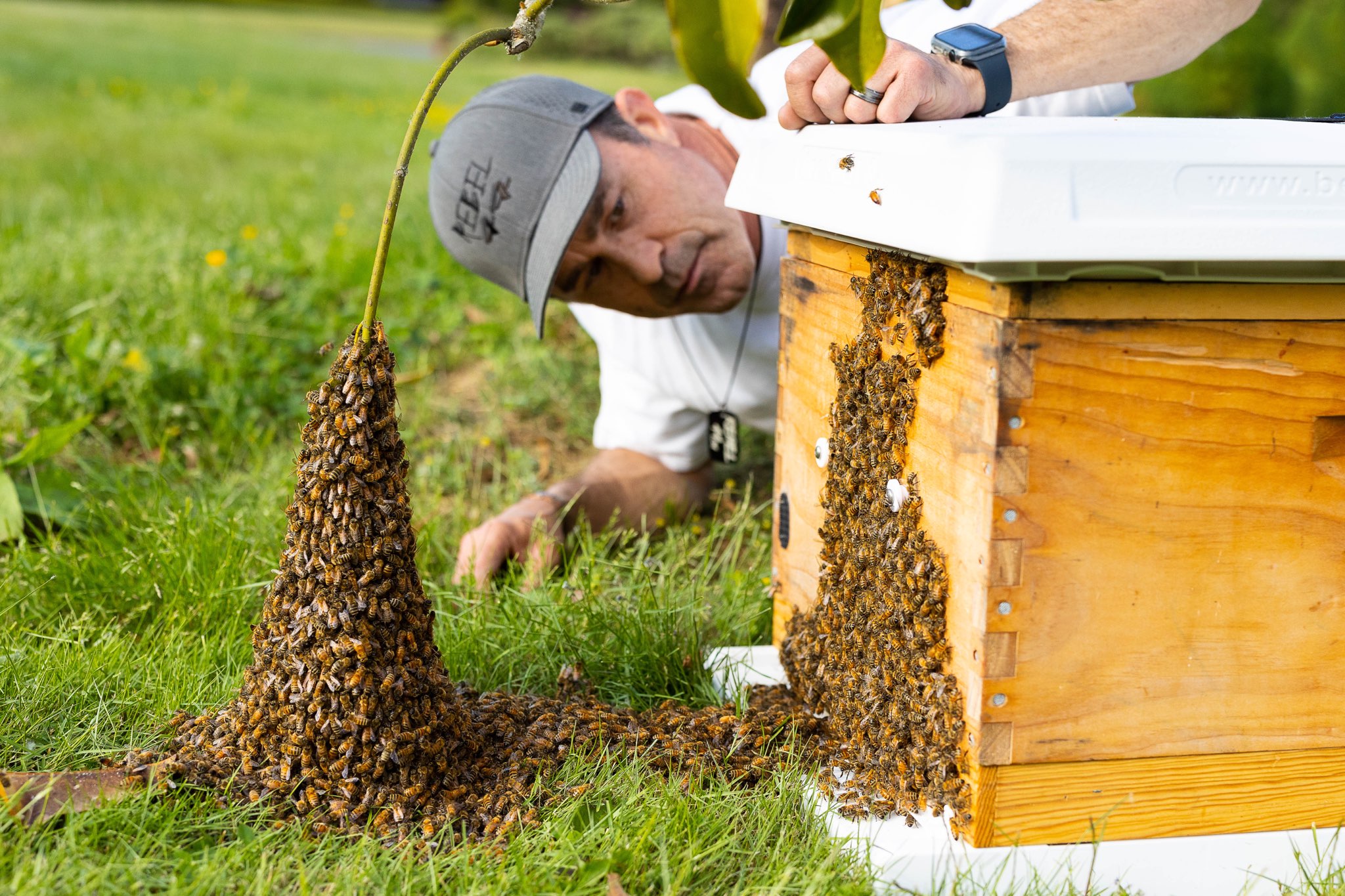
Founder - Worker Bee
As the founding Bee Steward of REBEL44, AJ Gardner serves as a conduit and voice for the regenerative stewardship of honeybees and pollinators throughout the Snoqualmie Valley region of Washington State.
Our unique, evidenced approach to stewardship has increased the vitality and environmental resilience of honeybees, empowering them to thrive as interactive superorganisms within our food system and broader ecosystems.
We sustainably harvest a radiant spectrum of premium raw, honeys via targeted nectar flows throughout the spring and summer seasons and are honored to share these sacred gifts and nature intelligence with our valued local community and beyond.
'LOVE YOUR BEES AND THEY'LL LOVE YOU BACK'