Apple Podcasts
 Spotify
 YouTube
 Goodpods
 Amazon Music
 Overcast
 Castro
 PocketCasts
 Podchaser
 RadioPublic
 RSS Feed
 Honey Bee Viruses with Declan Schroeder (362)
Virologist Dr. Declan Schroeder joins Becky and guest co-host Bridget Mendel to explore the evolving world of honey bee viruses—how they spread, how Varroa changes the equation, and what current research reveals about colony health. This clear, accessible conversation helps beekeepers understand the viral pressures inside their hives and what the latest science means for managing bees today.
This week on Beekeeping Today Podcast, Becky welcomes guest co-host Bridget Mendel as they sit down with virologist Dr. Declan Schroeder from the University of Minnesota’s College of Veterinary Medicine. Together, they explore the unseen world of honey bee viruses—how they evolve, how they spread, and why understanding them is essential for modern beekeeping.
Declan brings a fresh perspective to virus ecology, sharing how his early research on marine viruses led him into honey bee health just as colony losses began escalating worldwide. He describes why viruses were overlooked for so long and how the arrival of Varroa shifted viral dynamics from background agents to major colony-level threats.
Becky and Bridget dig into what this means for beekeepers: why Varroa management remains the cornerstone of reducing virus pressure, how viruses move within and between colonies, and what new research is revealing about potential spillover concerns between honey bees and native bees. Declan discusses findings from a multi-year Minnesota study showing that while bumblebees may encounter honey bee viruses, they are rarely infected—an important distinction in ongoing conservation conversations.
The discussion wraps with a look ahead: evolving virus–vector interactions, improved surveillance efforts, and the growing role of researchers and veterinarians in supporting beekeeper decision-making. It’s an engaging, approachable dive into a complex subject—one that every beekeeper will benefit from hearing.
Websites from the episode and others we recommend:
-
University of Minnesota Schroeder Bee Lab: https://vetmed.umn.edu/bio/college-of-veterinary-medicine/declan-schroeder
- Project Apis m. (PAm): https://www.projectapism.org
- Honey Bee Health Coalition: https://honeybeehealthcoalition.org
- The National Honey Board: https://honey.com
- Honey Bee Obscura Podcast: https://honeybeeobscura.com
Copyright © 2025 by Growing Planet Media, LLC

______________

Betterbee is the presenting sponsor of Beekeeping Today Podcast. Betterbee’s mission is to support every beekeeper with excellent customer service, continued education and quality equipment. From their colorful and informative catalog to their support of beekeeper educational activities, including this podcast series, Betterbee truly is Beekeepers Serving Beekeepers. See for yourself at www.betterbee.com

This episode is brought to you by Global Patties! Global offers a variety of standard and custom patties. Visit them today at http://globalpatties.com and let them know you appreciate them sponsoring this episode!

Thanks to Bee Smart Designs as a sponsor of this podcast! Bee Smart Designs is the creator of innovative, modular and interchangeable hive systems made in the USA using recycled and American sourced materials. Bee Smart Designs - Simply better beekeeping for the modern beekeeper.

Thanks to Strong Microbials for their support of Beekeeping Today Podcast. Find out more about their line of probiotics in our Season 3, Episode 12 episode and from their website: https://www.strongmicrobials.com

HiveIQ is revolutionizing the way beekeepers manage their colonies with innovative, insulated hive systems designed for maximum colony health and efficiency. Their hives maintain stable temperatures year-round, reduce stress on the bees, and are built to last using durable, lightweight materials. Whether you’re managing two hives or two hundred, HiveIQ’s smart design helps your bees thrive while saving you time and effort. Learn more at HiveIQ.com.

Thanks for Northern Bee Books for their support. Northern Bee Books is the publisher of bee books available worldwide from their website or from Amazon and bookstores everywhere. They are also the publishers of The Beekeepers Quarterly and Natural Bee Husbandry.
_______________
We hope you enjoy this podcast and welcome your questions and comments in the show notes of this episode or: questions@beekeepingtodaypodcast.com
Thank you for listening!
Podcast music: Be Strong by Young Presidents; Epilogue by Musicalman; Faraday by BeGun; Walking in Paris by Studio Le Bus; A Fresh New Start by Pete Morse; Wedding Day by Boomer; Christmas Avenue by Immersive Music; Red Jack Blues by Daniel Hart; Original guitar background instrumental by Jeff Ott.
Beekeeping Today Podcast is an audio production of Growing Planet Media, LLC
** As an Amazon Associate, we may earn a commission from qualifying purchases
Copyright © 2025 by Growing Planet Media, LLC


362 - Honey Bee Viruses with Declan Schroeder
[music]
Jeff Ott: Welcome to Beekeeping Today podcast presented by Betterbee, your source for beekeeping news, information, and entertainment. I'm Jeff Ott.
Becky Masterman: I'm Becky Masterman. Today's episode is brought to you by the bee nutrition superheroes at Global Patties, family-operated and buzzing with passion. Global Patties crafts protein-packed patties that'll turn your hives into powerhouse production. Picture this; strong colonies, booming brood, and honey flowing like a sweet river. It's super protein for your bees, and they love it. Check out their buffet of patties tailor-made for your bees in your specific area. Head over to www.globalpatties.com and give your bees the nutrition they deserve.
Jeff: Hey, a quick shout-out to Betterbee and all of our sponsors whose support allows us to bring you this podcast each week without resorting to a fee-based subscription. We don't want that, and we know you don't either. Be sure to check out all of our content on the website. There, you can read up on all of our guests, read our blog on the various aspects and observations about beekeeping, search for, download, and listen to over 300 past episodes, read episode transcripts, leave comments and feedback on each episode, and check on podcast specials from our sponsors. You can find it all at www.beekeepingtoday.com.
Becky: Welcome to the podcast, everybody. My name is Becky Masterman, and I have a very special co-host, beekeeper friend, my co-bee culture writer, Bridget Mendel. Bridget, welcome.
Bridget Mendel: Thanks, Becky. I'm super excited to be here.
Becky: We do our little mini version of a podcast with our bee culture articles. Right?
Bridget: That's true. I feel like we also chat on Zoom a lot, which should be a podcast.
Becky: We should start recording that. I think people would love to hear our musings about beekeeping and writing. We have an interview article with Dr. Declan Schroeder, our favorite virologist, I think I can say, and that's about to be released. He's talking about viruses and honeybees and a project that both of us worked on with the University of Minnesota Bee Squad. I'm excited to talk to Declan.
Bridget: I'm so excited. Declan is our favorite virologist, and he just really challenges your natural dislike of viruses because he just brings the excitement and fascination. Also, it's very helpful.
Becky: It's helpful because he's able to take this really complex subject that it's hard to think of viruses because when you do, you just have to imagine all these things that you can't see all over the place. He gets so excited about them, not the bad ones, although about how they change. We're going to talk about that today. Let's hear these messages, and then we will invite Declan into this conversation.
[music]
Betterbee: If you're heading to the North American Honeybee Expo this January, be sure to check out Betterbee's exclusive show specials. Pre-order now and pick up your order at the show to save on shipping. Plus, start stocking up for the upcoming season with great deals on products like the Colorado Bee Vac, the Betterbee Packable Pullover, select licensed equipment, and more. Head to betterbee.com to check out all the sales and place your Bee Expo pre-order today. Please note, pre-orders are due by Sunday, December 14th, 2025, at 11:59 PM Eastern Time. Additional conditions apply.
Becky: Welcome back to the show, everybody. We've got Declan with us, Dr. Declan Schroeder. Declan, welcome to Beekeeping Today podcast.
Dr. Declan Schroder: Thanks for having me, Becky.
Becky: Can you start by introducing yourself to our listeners and telling them how you ended up here? You've got two minutes. No. I'm kidding. [laughs] I'm kidding. [laughs]
Declan: Only two? I'm a professor here in the College of Veterinary Medicine. Yes. This is a bee podcast, but I'm part of the veterinary group, so that's a long story in itself. My background is in virology, so it really doesn't matter which organism I work with. I started my graduate programs at the University of Cape Town in South Africa, where I've studied lots of different things; bacteria and viruses. I got my first postdoc in the UK, where I was working on viruses in algae.
While working on viruses in algae, I discovered that some of the viruses in algae are related to honeybees. That's in itself an interesting question. That opened up the whole area of viral ecology and viral evolution for me personally. I adopted the virus in honeybees about 20 years ago. I kept working on it, and I realized I need to move to a place where I can do more honeybee virus research.
That led me to the University of Minnesota, where I currently, as I say, I'm a professor in the College of Veterinary Medicine. I continue to work on viruses in honeybees, and they always seem to stump me. I always think I know what I'm doing, and then, suddenly, new things arrive. Yes. That's the background, a virologist who's moved around but is very interested in viruses and virus evolution.
Becky: The timing is actually pretty important, because when you were working with viruses and started looking at honeybee viruses, it was right around the time where we were having unprecedented collapsing honeybee colonies. When that happened, I think we looked around in the United States for our honeybee virus experts, and they were really hard to find, weren't they?
Declan: Yes. It wasn't just the United States. It was worldwide, to be honest. My introduction to honeybee viruses, as I said, I was working on viruses in algae. It was me walking on the moors in England, where there was a fellow scientist who was a zoologist, Dr. David Dixon. We were walking as part of a rambling club, and he was saying, "Oh, have you heard of honeybee viruses?" "Yes. Of course, I know honeybee viruses." He said, "Don't you want to work on it?" I said, "Well, interesting enough, I've just discovered some, but it's the relatives in the marine environment."
He was also at the Marine Institute, where I was at. He said, "This is something you should really be looking at." I said, "Why?" He said, "Well, because in the UK, the honeybee virologists are essentially just non-existent. They don't exist anymore." I found that quite peculiar. I asked him, "Why was that?" He said, "Well, it's because honeybees and the viruses are so cryptic, you can't really point to the fact that it was viruses." I said, "Well, that's not true. That can't be true."
That led me saying, "Well, actually, because I've discovered them in the marine environment, I was going to go do some reading." That started me on this track. I actually had a very small grant to look at the viral diversity in the UK. Again, this was quite unique, and because no one's been doing this, because that's what the literature, when I did that, it was showing. I'm going on a bit of a tangent here, Becky, but I'm coming back. I promise to.
Becky: Keep going. This is exciting. [laughs]
Declan: What ended up happening was that I actually got this grant funded, and we were then discovering this virus called deformed wing virus in pretty much every sample in Devon, where it was based in the UK. I spoke to Dave Dixon about this, and he said, "Wow. This is interesting. You know what? There's actually a massive collapse going on." I said, "Really?" [chuckles]
I actually started a few months before the colony collapses order kicked in, and then, before you knew it, I was getting emails and phone calls all over the place saying, "We need someone to talk about honeybee viruses because no one exists." Again, the story was that it's hard to work on something you can't see. Beekeepers can't see a virus. You can identify Varroa, so everybody's talking about Varroa, but they can't really identify a virus.
You need different sorts of techniques, which fortunately, I was using all the time, and I was advancing the technology associated with virus ecology. It was a natural progression for me to do this, but the local virus experts, people like Brenda Ball, legendary in virology. She had retired at the time, so just no one was working on it.
Yes, it doesn't surprise me when you say here in the US, it was just hard to find bee virologists because viruses in honeybees; covert, cryptic. You can't always see what you think you're meant to be seeing. The opportunity was just there in front of me. I just needed to grab it and run. Unfortunately, that's what I did.
Becky: Also, if the animal isn't dying in large numbers, there's not going to be any kind of an investment into finding out more just for the sake of finding out more, unfortunately.
Declan: Actually, that's true for everything we do. The whole reason why we know about viruses in humans is because we get sick and get ill. It's because of the death and the fear of what viruses can do to us at that level. That's why we research viruses, same with the food we eat, the plants we grow. It's when you see death, and you see disease and massive pandemic levels of destruction, that's where the investment is.
When you have it the opposite with honeybees, where nothing was happening, it was, if anything, a ticking time bomb, especially when the relationship of Varroa comes in, it was just a ticking time bomb. Eventually, it needed something like colony collapse disorder to put the light back on could viruses be responsible? I think looking back 20 years, yes, for sure. It's definitely been responsible.
Bridget: Declan, could you talk a little more about the relationship between your research and the beekeeping community and also the veterinarian community, because I think that's really interesting, and I know anyone who's listening to this podcast definitely knows that [chuckles] honeybees are really livestock because Becky is the host, so they know that.
When you've talked about this before to us, other kinds of livestock, like pigs or chickens or something like that, those caretakers or farmers tend to have really different relationships with, or understandings of viruses, and also support from folks who are on the veterinarian side. Can you talk about how that's evolved along with your career? You find yourself in the vet school now, which is also interesting. Then also working with beekeepers, and those relationships have changed. Right?
Declan: Absolutely. Part of that, the absence of virologists looking at virus interactions in honeybees meant you needed to build trust first. One of the first things I had to do was I was this new guy talking about viruses where the older generation had retired, and I was seeing a different tune.
I mean, even though the research was limited, even here in the US, there were a few key papers that came out, the USDA here in the US that said, "Hang on. It's viruses. There's something biological here." It wasn't just a chemical effect or just Varroa on its own. There was certainly something microbial, and there was a few key papers that were published saying viruses were at play.
So, it was me transitioning in trying to convince beekeepers that there's a different story here than what they were told when you go to beekeeping class. I was first building that relationship. Once they heard me speak-- I ended up, made a point of visiting various beekeeping associations, a lot of the local ones. I was invited to speak at Devon Beekeeping, the Cornell Beekeeping Associations right across the UK.
Various different organizations invited me, and I was starting to build that relationship that making the point that we were behind the curve in terms of honeybee virology. We were thinking of it based on data that's essentially redundant now. We needed to understand that viruses change and the relationship with the host change. I was then making the point that we should be, and I'm glad Becky echoes this, that bees are an agricultural species.
If you then look at swine, which I work on now and dairy cattle, I work with dairy cattle at the moment. When you think about the virus interaction in these species, it's clear no one will argue that a virologist needs to be involved. In fact, a virologist is key in all the veterinary sciences when it comes to disease, and that would be the same for human research like influenza for example.
As I say, building that trust and then there's beekeepers understanding the language that I was speaking and making sure that we should not be accepting losses the way we are. You would never accept a 10% loss annually for swine or dairy industry. It would just be crazy. What we are accepting now, 60%? I mean, [chuckles] that doesn't make sense.
You really needed to bring in the new concepts, what we talk a lot about in veterinary sciences, about population structure in terms about how you go about securing the population, not necessarily the individual. In terms biosecurity, when you visit a colony, what are you doing to transfer viruses from one colony to another? You should be thinking about that.
As I said, you can't see it, so what are the things you need to think about? It was really building that relationship trust, working through the logic as to if someone sneezes in a room, what would you do? Think about that in colonies, how the spread happens, washing of hands, some small things like this. It was just building that conversation, and I'm glad I did, and I'm glad this message is getting through, and hopefully, it'll continue to get through that we need to change our behavior.
Becky: I love the conversation when it comes to biosecurity because I'll never forget the meeting that we had with you and Bee Squad. I think we were in person, and we were talking about biosecurity, and literally everything that beekeepers do is against biosecurity. It's not only against it. It's like actively making things worse. It's like, "Well, we'll combine colonies. We'll move a frame of brood from one to the other. We'll take a hive tool and go from colony to colony to colony to colony in the yard."
I don't think we have really good data that shows what can happen, except for we understand we're giving the viruses a chance to really move from place to place faster when we are not operating with any kind of biosecurity measures.
Bridget: Becky, I remember that conversation, too.
Becky: Do you? [crosstalk]
Bridget: I remember we just really stressed Declan out, I think.
Becky: We did.
Bridget: I think we even asked, "Do you wash your beekeeping clothes between apiary visits?" We were just laughing. It is antithetical to beekeeping culture, maybe Bee Squad culture in particular, which I think maybe we could ask you, Declan, to talk about that relationship a little bit. You work at the vet school, but you also work very closely with the Bee Lab and, in particular, the Bee Squad team, which is a team that Becky and I both have ties to, [chuckles] and this team manages colonies all over the Twin Cities metro area, a number of different locations.
Could you talk a little about what you saw in that unique setup where there were so many different apiaries in drivable range and different settings? Then, also, how you conceived and set up, in particular this experiment about the way viruses might move between species of bees?
Declan: Yes. For sure. I just realized I didn't really address the previous question fully with Becky, but I'll transition into your question as well, Bridget. My position in the College of Veterinary Medicine, in the Department of Population Medicine, which is interesting.
There's the Department for Population Medicine where is about the population is about looking at how individuals interact and the scale of movement of viruses at the level of population. I'm starting there because it was quite unusual for me to go from a marine institute and then say I'm working on-- I mean, in furthering my understanding of viruses in bees to end up being in veterinary population medicine. It was because the vet school, and they themselves, were intrigued by what's going on here with the honeybees.
When I came, and I visited Marla Spivak's lab with the Bee Squad, I gave a talk there, and I was also invited to give a talk in the College of Veterinary Medicine. The audience, they were standing in the pews because they really wanted to hear what my conversation was because they too were interested in what was going on in the honeybees, because at the time, it was colony collapse disorder. It was this whole story.
For them, it was natural to think that this was a medical issue. This is about trying to stop a virus from spreading because they knew I was a virologist. For me, being embedded in this environment meant that I had different tools available to me. I had different things that I could use that is not necessarily or even readily available for beekeepers and/or an entomologist who seeks to understand what's going on in bees.
I had a completely new set of tools and toys to play with. All I needed was bees, and a group of scientists would really want to work with me, so it was amazing to meet you, Becky, and then you, Bridget. You were both involved in the Bee Squad at the time, and now Jessica's involved in running it.
When I then visited, it was just amazing to me how that interaction between either those managing the bees or the Bee Squad was doing that, or beekeepers on-site trying to navigate how they were working with these colonies just made me think that, "Well, we just have no idea what impact we were having on the system." Then at the same time, there were reports coming out about these viruses moving to other insects, and the Bee Lab was famous for identifying all these new native species in Minnesota.
I kept seeing how the numbers are going up. It was 350, then it was 500, now it's 550, a crazy amount of native bees, and so the question then arose by discussing this with you guys in terms of the Bee Squad, it's like, "Okay. You as an individual, how are you interacting?" Hence, the biosecurity, but we know the bees are flying everywhere, and the fact that the bees are interacting in a natural environment, how you can't have biosecurity in that level. It's not as if we are allowing our chickens to run wild, although free range is now more in fashion.
Similarly, pigs are controlled in similar environments, and the interaction with other farms, are limited or zero. You can't do that with honeybees. That all led to this idea of why in the literature you see a lot of talk about honeybees and spreading all these viruses because, as I said, the work that I've been doing and various other labs, not just my lab, various other labs across the world, have been discovering all these new viruses and the old culprits, like deforming virus. They were spreading and potentially spreading to other bee species, like the bumblebee. The question was, what was going on?
Again, through our discussions with those on the ground, like the Bee Squad, it was like, "How could we design an experiment to really understand what was going on, which direction viruses were going?" Now, in veterinary medicine, this is a pretty old story. This is something we talk about all the time, and this is where we talk about the risk of animal viruses spreading to humans. This term is called "zoonosis." It's well established how, for example--
Again, the best example for zoonosis is influenza. This is the time of the year where influenza is around and is moving around. Influenza originally came from, evolutionarily speaking, came from birds, but there's also still the possibility that even the current influenza in birds can move to humans. That's the zoonosis piece. It's from birds to humans. We also know that, for example, swine pigs are also a good mixing vessel for viruses, and influenza is one of them. We could get viruses from pigs, but it works both ways. Humans can give viruses to pigs. That's another interesting story.
Another way, the direction here, the directionality for zoonosis, is for animals to give virus to humans. That's why there's a lot of work going about and discussing this. Then there's vectors. Then you have vectors like mosquitoes, who move viruses between humans. We get these vector-borne diseases we talk about in virology and in veterinary science.
Now you go move to honeybees, and you say, "Wow. What's going on here?" The whole idea of how is this virus moving, and could they be moving from honeybees to, as I said, native species like bumblebees? Could we design an experiment? If I recall, we sat down on this whiteboard in the Bee Lab conference center, drawing out this elaborate plan. "How many colonies do we want to work on?" "Oh, minimum, with more than one space, so let's go three different places."
Then we said, "Well, the bees fly, and will they interact well on the flowers? We need the areas where there would be flowers." Then we need to know where the bumblebees were. We then contacted Elaine Evans, and she said, "Right. Okay." She works on bumblebees. Let's try and figure--
Yes. It took us months and weeks of discussion [chuckles] trying to figure out how to make this work. The key message was because these viruses were around everywhere, we need to make sure that the viruses were actually moving from honeybees to bumblebees and not just they were around. We expect to detect it everywhere. What we discovered was completely, completely wild.
Becky: This is a really good time to take a quick break, and then we are going to come back after words from our sponsors, and we're going to hear what Declan has figured out as far as this complex experiment and what the viruses are doing.
[music]
Bee Smart Design: Coming to NAHBE? Visit the Bee Smart Designs booth and get a free compact-type tool. Yes. You heard that right, free hive tools only at Bee Smart Designs. While you're there, check out our Universal Hive system and learn how it reduces losses, improves brood building, and increases honey yields. Our products are 8 and 10-frame compatible and proudly made in the USA. Don't forget to visit our Bee Smart dealers for great deals and show specials. Get your free compact hive tool and discover simply better beekeeping equipment at Bee Smart Designs. Mention "beekeeping today" and get a special gift while supplies last.
[music]
StrongMicrobial: Strong Microbials presents an exciting new product, SuperFuel, the probiotic fondant that serves as nectar on demand for our honeybees. SuperFuel is powered by three remarkable bacteria known as bacilli, supporting bees and breaking down complex substances for easy digestion and nutrient absorption. This special energy source provides all the essential amino acids, nutrients, polyphenols, and bioflavonoids just like natural flower nectar.
Vital for the bees' nutrition and overall health, SuperFuel is the optimal feed for dearth periods over winter survival or whenever supplemental feeding is needed. The big plus is the patties do not get hive beetle larvae, so it offers all bioavailable nutrients without any waste. Visit strongmicrobials.com now to discover more about SuperFuel and get your probiotic fondant today.
Becky: Welcome back, everybody. Okay, Declan, everybody's at the edge of their seats. They want to hear [chuckles] what you and your colleagues have figured out as far as what's going on with these viruses and the question about spillover.
Declan: Right. Part of our experiment design was to make sure we weren't getting a single snapshot. We didn't want to just say, "I'm collecting a set of samples. Now I'm going on flowers and collecting honeybees and bumblebees at the same time," and then conclude from that. Part of our experiment design said it was at least three sites, three apiaries, multiple bees would be collected over time. We made sure we would do this over here, and then we said, "Hang on. Let's do it for three years." Let's really nail this down.
We did a multi-year study. We would essentially collect bees from the apiaries, and then we would have Elaine and her wonderful group to go out, I think with the Bee Squad, and to go and collect bees on flowers, because that was in the literature at the time. That was the suggestion that honeybees and bumblebees would interact. This is where they would connect on a flower.
Through that interaction, you would get the transfer of honeybee viruses to bumblebees, and that would be the problem. We did this for three years, and we cleared all these samples, hundreds and hundreds of samples. This is part of the downside of science. You just have to sit. You have to invest in this and hope that everything will be revealed and will make sense of the three years.
Becky: When you say "hundreds and hundreds of samples," one sample would be multiple bees. Correct?
Declan: Correct. Actually, a very good point for clarification. When you sample the honeybees, especially a colony, because there's so many honeybees, you can't do individuals because it wouldn't be representative of the colony. What you do is you would collect a minimum of 30 bees, and that will be a pool, and that will represent a single time point for that colony. We wouldn't happy with that. We would do this on a monthly basis, especially over the summer. That's when they'll be flying, and they'll be interacting with the bumblebee.
We'd do this monthly, as I say, for three apiaries over three years. If you do the math, that's a lot of samples. That's the one data set. The other data set is you essentially go, and you would capture whatever is on the flower, so it would be net collection. Those samples will be fewer because you get what you get. There will be individual bees, Becky.
Sometimes, you might pool them if we were really lucky, especially with the honeybees. With bumblebees, we would do first to individuals, and in the end, we would pool it in terms of analysis. That was the idea, was you have two data sets. One is from the apiary, which were certain distances from where we're collecting these bees. What we would do is we wanted to match the viruses in the apiary to the viruses and the honeybees on the flowers. We knew that this was the sort of virus community and the viruses populations that were circulating at the time when we are doing our experiment. Would they match?
We didn't know that, but we were just hoping because, obviously, there are other bees from other apiaries that could have come into our system. That means hundreds of samples. These are pool bees collected at different time points. Then we do our magic. We bring them into the lab. It was a joke made by one of our postdocs in the lab, and say, "We make bee soup." I know for those who love honeybees, I'm sorry. Close your ears just for a little bit. We have to essentially get the virus out of the bees. This would be for honeybees or bumblebees.
Also, we need to say that the sampling effort was robust, but it wasn't destructive. We know that we weren't destroying the population, so our sampling methods went, in a sense, destroying the apiaries or destroying the colonies. That's not. We are sub-sampling. It's never enough to be destructive. Similarly, we weren't destroying the bumblebee population at the time because that's why we brought Elaine Evans on. We knew what the population structure was, and so our sampling effort would not destroy the population.
The honeybee colony, or the bumblebee colonies were fine. Okay. Just be sure of this. As I said, when we go into the lab, you need to be able to-- We weren't sure where these viruses were. Were they on the surface of the bee or the inside the bee? You have to basically extract everything from the bee. Then we play with really interesting tools. We do what we do. We do now full influenza routinely. We essentially sequence. We extract everything, and we sequence the genomes of all the viruses and any other pathogen.
We actually were looking for Nosema because this technology allowed to identify Nosema, because that was the other spillover. It wasn't just viruses that was spilling over, there was the talk that Nosema could move from honeybees to bumblebees, and vice versa. We wanted to have a look at that as well. That took a lot of time and effort to get extraction and sequencing done.
Then we have a new field in our world called "bioinformatics." That's where you take all these sequences that are now random because it's all mixed up. We have a way of assembling them and putting together. It's like playing Lego. I always talk about playing Lego, taking one sequence and matching it with another, and they click together, and before you know it, you have a beautiful structure.
This structure is called the genome. We would do this. This takes time. We were developing a whole new pipeline. It wasn't something that we could just pull off the shelf and use. These three years were really investment in time in making this genetic code and with really good robust dataset. What we end up finding was through all this effort of sampling, we found that the viruses in honeybees were different from the viruses in bumblebees. They were just different.
In fact, the viruses in bumblebees were unique to bumblebees. There were some new viruses in bumblebees that wasn't really described, and we weren't really discussing it in terms of the potential role that these viruses were playing in bumblebees. In fact, that story hasn't really been published. We still are writing up those manuscripts to describe what was going on in terms of the virus. This is the novel virus discovery we were having, but the main point that was--
This story was published recently this year, where we were essentially concluding that if you look at the viruses in the honeybees and you look at the virus in the bumblebees, that spillover we were discussing earlier, spillover, it goes from one species to another. It wasn't really happening. The evidence wasn't there in this data.
What we're certainly seeing is this exposure. Yes. You could still see honeybee viruses associated. The way we do our analysis, these genomes was essentially telling us that they were present, but that those viruses weren't infecting bumblebees. It was a very different group of viruses that either separated them, and then the viruses that were present in honeybees were so related to honeybees they weren't evolving in bumblebees.
Becky: That's actually great news for beekeepers because for beekeepers, when it comes to what's going on with honeybees, there's also another issue external about native bees and the potential competition between honeybees and native bees. There's a lot of negative press about honeybees and how negative they could be, that's a double negative, [chuckles] but how negative the honeybees could be on native bee populations. These data are actually handling one of those issues in this experiment, showing that the honeybees are not the source of infection that is actually seen a result in the fitness of the bumblebee. Is that fair to say?
Declan: Absolutely. We have to remember that just because they're bees and because they have wings and they fly around, that they naturally will be a host for the virus or the other. It's like saying my cats and my dogs, their viruses will automatically infect me as a human. We are different species. Yes. We all have legs and arms, but it doesn't mean we are naturally a host.
We will be exposed. For sure, we'll be exposed to our animals' diseases, but it's very rare that we have that manifest into a real outbreak and a real cause of damage for us as individuals as even as human population. This sounds contradictory when I talk about zoonosis and transfer of-- This is why we look for zoonosis. We look for evidence for this, but we know we can still coexist with our four-legged animals.
Same with honeybees and bumblebees. Why were we assuming automatically that honeybees and bumblebees couldn't coexist and that the diseases that are associated with each other would not necessarily be easily transferable because they are millions in years evolutionary apart/? It's not a natural conclusion that it had to be that viruses move from one species to another. It's an exceptional event.
Becky: It's not the simplest thing that could happen. It's interesting that people aren't looking at the problems that are going on with honeybees and native bees and not saying, "Well, there's obviously a habitat issue. Why don't we just put more out there, and then we don't have to worry about resource competition when it comes to food?"
Declan: Right. Just one other point I want to make here is that even with presence of Varroa, so Varroa is key. We know, for example, that Varroa vectors these viruses. The storyline was that we know that the Varroa co-occurred originally with the eastern honeybee, and now it's moved to the western honeybee or the Asian honeybee to the more western honeybee.
Becky: Western's good. We also call them "European." [laughs]
Declan: Yes. I know. I didn't want to say "European," but I was like, "Okay. Let's stick to western honeybee." It was that vectoring, it was the movement, and Varroa played key. What we also know is that Varroa is not a natural predator of bumblebees, so that transfer wasn't really happening through Varroa. Again, it wasn't clear how was this virus in honeybees going to manifest itself in bumblebees and really cause a problem? It just didn't add up.
The regional work was sound in the sense that, yes, you could see honeybee viruses associated with bumblebees, but it wasn't creating this pandemic problem like you saw with COVID, for example. It's not that. You can get individual exposure, but the population as a whole, the viruses weren't spreading like we thought with wildfire. Hence, our regional rationale for design, this complicated experiment. It was really they are in their own lanes, and they can coexist.
For sure, you've got to be careful about the other factors about coexistence; sharing habitat, sharing resources. For sure, that all needs to be taken into account. We should not be using honeybees as an excuse that they are viruses, and so we cannot mix them with native bees. No. I don't accept that. I think we should push that thought back now.
Bridget: Yes. Declan, that also brings up this unique thing about viruses in honeybees, which I think maybe you could talk a little bit more about, which is that even within honeybee populations, these devastating viruses are also viruses that have evolved to be fine with honeybees. That need for the vector, which, in this case, being Varroa, is so important for whether the virus is fine or whether it evolves with a vector, and it's devastating. That to me was helpful in thinking about why it makes sense that bumblebees could be exposed, but it's not a problem.
Declan: It's really hard for a pathogen because there's a virus to jump and actually really establish itself. It's really, really hard because there's so many things that it has to go through. A, first, have access to the other species on a consistent way. Then it has to go through the receptors to get into the actual animal itself, that species, and then find a way within the cell. Virology can be very complicated. Whether you go through the cytoplasm or the nucleus, so I won't get into the weeds here, but I'm just trying to get--
Becky: Oh, this is fascinating. Keep going. [laughs]
Declan: Just get to understand that it's not just, "Oh, the virus is present, so the virus will cause a disease." A virus has to do a lot of different things to get and become-- and to replicate. All that interaction has to coincide. It's really, really hard to just make that jump and say," the virus is present, so it'll cause a problem."
Trying to understand how this virus evolved is really, really important. That was one of the really key messages which I think is almost lost now, when I was working with a very good friend in the UK, Steven Martin, where we did a study in Hawaii. Hawaii, if you recall, had that situation where Varroa entered only recently, 2006. When everybody else in Europe and America was in the '80s, early '90s, Hawaii only got Varroa in 2006. We run a sample there.
First thing we found was in some of those islands in the archipelago of the Hawaii, where Varroa was still wasn't present, the honeybee virus was present naturally. That was the point I was getting to Bridget. We were trying to make was that these viruses co-evolved with the honeybee before Varroa. There was a natural equilibrium that happens there.
That's generally what happens with viruses in various other species. They'll coexist, and you won't necessarily see this disease outbreak because the virus needs the host. Believe it or not, we need viruses because viruses, in our evolution, has given us genes and genetic sequences that allowed us to exist as a species. This will be the same for other insects. The relationship is there. There's a natural balance.
With that same study in a way, when we looked at the islands where the Varroa was present, the virus balance just changed. It went from being very low-level viruses without Varroa to now millions of viruses. In some cases, even billions of viruses per honeybee when Varroa came in. Varroa changed what we call the viral landscape. That is important when I said you needed this third vector to come in, this third party, which was a vector, to change everything.
I said when the study that honeybee viruses and bumblebee viruses, there wasn't evidence at the moment. What I need to also make sure you understand that this is something that needs to be studied, and you can't just rest and say, "Now, this is done deal," because things change, just like in the Varroa changing the landscape, other things could trigger, so that now suddenly honeybee viruses could now migrate in bumblebees or vice versa.
Bumblebee viruses or native bees will likely have viruses could transfer their viruses to honeybees. We don't understand the natural ecosystem where they exist. We don't understand all the factors that could change. Climate change is real. We are seeing that even climate could change the way in which viruses behave, the way they move. We as humans are getting involved. We are entering habitats where these species would normally not have seen us.
When you have what we call perturbation of the system, when you get this complex natural system being interfered with, then you can speed up evolution and change the natural evolution trajectory. Then you get things like zoonosis and transfer. While I say now, as it stands, the evidence is weak that honeybee viruses are transferring to bumblebees.
In fact, just to have a virus is not a bad thing, they co-evolve. We need to have surveillance programs out there. That's one of my biggest subjects I would love to expand on is surveillance, surveillance, surveillance. We don't know, and we have to keep an eye on when something's changing. Without that, we'll always be in the dark.
Becky: Sometimes I go into the university to drop off samples in the freezer, and I see recent Bee Squad bees put in the freezer. I think your name is on those samples. It's exciting that you are still working with the Bee Squad and the bee lab, and at least collecting bees for screening. Is that something that all beekeepers should have on their radar? Obviously, screening takes money, and screening takes a relationship and a project, but it sounds like the future of keeping our bees healthy might be more of an understanding of what's going on with viruses.
Declan: Yes. Absolutely. It takes a village. We need everybody to get involved, and beekeepers can play a role. You're right. Those bees are for me. This is a really good example of citizen science and scientists get together, and the Bee Squad, being this fantastic intermediate between the citizens who want to get involved, who really want to say, "Right. We've got colonies. Bee Squad can look after them, but also what else can we use these colonies for?" They understand the merit of research. Yes. I'm so appreciative of all those who volunteered their colonies, who are investing in this project.
The whole idea is that let's sample while these bees are there and they are interacting, and let's get a baseline. Let's understand what's naturally going on. Fortunately, we're just here in Minnesota, so it's a Minnesota experiment that we're doing. We are just collecting data. We want to know that if we know what normal looks like, we can-- and something changes, can we identify what has changed?
That's essentially what the basis of a surveillance program is really understanding what is going on out there. I don't know of one. The closest we have is the Bee Informed Partnership type work that used to be done. We used to screen commercial bees, and that's now been taken over by Auburn University. This detailed type of analysis, so they don't do the same detailed analysis that I do with these bees, is the sequencing technology type analysis, so yes, it's ongoing.
If anybody wants to get involved, reach out to the Bee Squad, but it's very much understanding that it's about a research component. It's not just about maintaining bees for the sake of bees. We want to use it. What's also important as a virologist who works with multiple species, honeybees can be a really good canary in the mind-type species. You can learn so much how viruses evolve with a species, how they evolve within a population.
The interaction I'm learning for, that's the way these viruses behave within this individual population of a colony or community of multiple colonies and how they interact, especially in the absence of any medical intervention. We don't have vaccines that we can control these viruses in honeybees.
For me, as a viral evolution biologist, ecologist, it really is a way of me understanding natural behavior of viruses in a species like this. This data set will move beyond just honeybees. It'll tell me things about how to interpret what's going on in swine or in dairy or in humans. It goes far beyond the honeybee, which of course is important, but it's thinking long-term and big picture.
Becky: Okay. I have a big last question. I might be opening up a can of worms here. First, I'll say that, Declan, you have definitely influenced both me and Bridget as far as how we manage our bees and how we do our best to keep Varroa populations extremely low to keep the vector out of the factor of bee health as much as possible. It's been very successful for both of us in our own operations as well as with the Bee Squad when we were running it.
There are beekeepers out there who really want to be able to have higher populations of Varroa tolerated by their colonies. In my mind, if you're looking for Varroa tolerance where your bees are okay with high Varroa populations, it seems like what you're really saying is that you want the viruses to not be as lethal in that scenario because when we first got Varroa, it took a lot more Varroa to take a colony down, and now it does not take a lot of Varroa to do the same thing. Who's going to win, the viruses [chuckles] or the honeybees, as far as Varroa tolerance?
Declan: That is the key. As I said, it's about Varroa increasing the virus number. We went from being a very low-level background to millions. You're right that there's another level of granularity there we've been missing in terms of it's not every virus at that high level that can cause problems. As I said, we don't have vaccines for honeybees, but through evolution over time, you can get what you call a natural vaccine-type protection where the variant or the strain of virus that even gets transmitted by Varroa is non-lethal. It doesn't cause the disease that what we're currently seeing, the coin disease in honeybees.
It is possible for natural selection to take place, where you can have this return to natural balance even in the presence of Varroa. It's not straightforward in how to get there, how to get it universally is really, really hard to predict and hard to control when you have so much variation in a population, the way beekeepers manage bees, the way we move bees.
There's so many variables for you to really have a situation that you can consistently have Varroa only vector and non-lethal virus. That will be my goal. I hope eventually that'll win. I hope eventually that something will be selected for. I originally predicted that would happen, because there were scenarios where I was seeing this, especially in the UK, but there's now additional story.
Maybe I'll come back, Becky, and talk about recombinants as that's even more of a problem. Yes. I think it's possible there are examples where this happens. In the citrus industry, for example, where we have our oranges, there are examples where you actually naturally infect the citrus trees with a virus that prevents another virus from coming in and destroying the citrus trees, and so you won't have oranges, for example.
There are examples where having the right virus in the right colonies and the right time, even in the presence of Varroa, that'll actually protect that colony from another one coming in. That can happen naturally. At the same time, and this is why I'm in the veterinary college, is that we should think of medical intervention as well. That's an area that is really not addressed, and so it's a combination. I think we should win. Let me jump off the fence and say-
Becky: Okay. Here we go. [laughs]
Declan: -we have a chance. We have the technologies. We need to look across the aisle and say-- Well, actually, what's going on in the medical field on swine or on dairy or in humans, or in plants, and say, "What can we learn from them and how can we apply this to honeybees?"
Becky: That was very hopeful. For now, I'm going to keep using my formic and oxalic. I think Bridget's going to do the same. [laughs] Thank you. Thank you so very much, Declan. Bridget and I are just so appreciative of not just the work that you do in the College of Veterinary Medicine at the University of Minnesota, but also your great collaboration with the Bee Lab, and then your willingness to talk with us. It's been a pleasure, and I think we've all learned a lot.
[music]
Declan: Thank you for having me back here. Bridget, it was good seeing you again.
Jeff: [chuckles] That about wraps it up for this episode of Beekeeping Today. Before we go, be sure to follow us and leave us a five-star rating on Apple Podcasts or wherever you stream the show. Even better, write a quick review to help other beekeepers discover what you enjoy. You can get there directly from our website by clicking on the Reviews tab on the top of any page.
We want to thank Betterbee, our presenting sponsor, for their ongoing support of the podcast. We also appreciate our longtime sponsors, Global Patents, Strong Microbials, BeeSmart Designs, and Northern Bee Books for their support in bringing you each week's episode. Most importantly, thank you for listening and spending time with us. If you have any questions or feedback, just head over to our website and drop us a note. We'd love to hear from you. Thanks again, everybody.
[music]
Professor
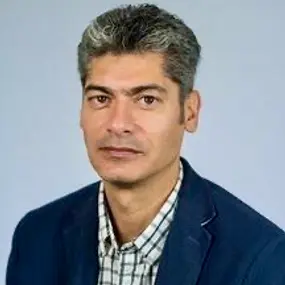
I am proud of my accomplishments as a PI, which is based on my high impact contributions to One Health and the opportunity to make a difference in helping our global food system become more sustainable. My team’s overarching research objectives are to develop molecular-based research approaches and tools, rooted in both the Life Sciences and Veterinary Medicine, to provide a mechanistic understanding as how to best intervene or mitigate the negative impact that viruses may have on food animals, wild-life and associated organisms in the modern food system. My research is focused on (1) the role of viral diversity (quasi-species) as it relates to seaweed production, bee pollination services, and swine or cattle production; and (2) establishing best detection and surveillance practices for viral pathogens responsible for significant losses to important wild-life, pollinator and agricultural species.
As it pertains to honey bees, we are driven to conduct meaningful, high impact research that contributes toward solving complex problems associated with viruses in U.S. and global agriculture. Honey bees are essential pollinators and food producers in the US and globally but more than 40% of them die on an annual basis. In 2025, this number increased to an alarming 60%. My research team was the first to confirm that Deformed wing virus (DWV) load, and its association with Varroa destructor (Varroa), are responsible for the death of millions of honey bee colonies worldwide. We are currently testing antiviral products capable of neutralizing and controlling the spread of … Read More
Mom/beekeeper / science write
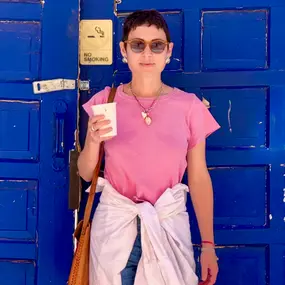
Bridget Mendel is the former Bee Squad Program Director. She is currently the Communications Director for the St. Anthony Falls Laboratory. She loves working with bees, beekeepers, and the public to make the world a more habitable place for all people and all pollinators.
Education: Bridget holds a B.A. from Northwestern University and an M.F.